


Listen to the article
Fact Check: Viral Story About Cher Confronting Trump Aide on MSNBC Revealed as Fiction
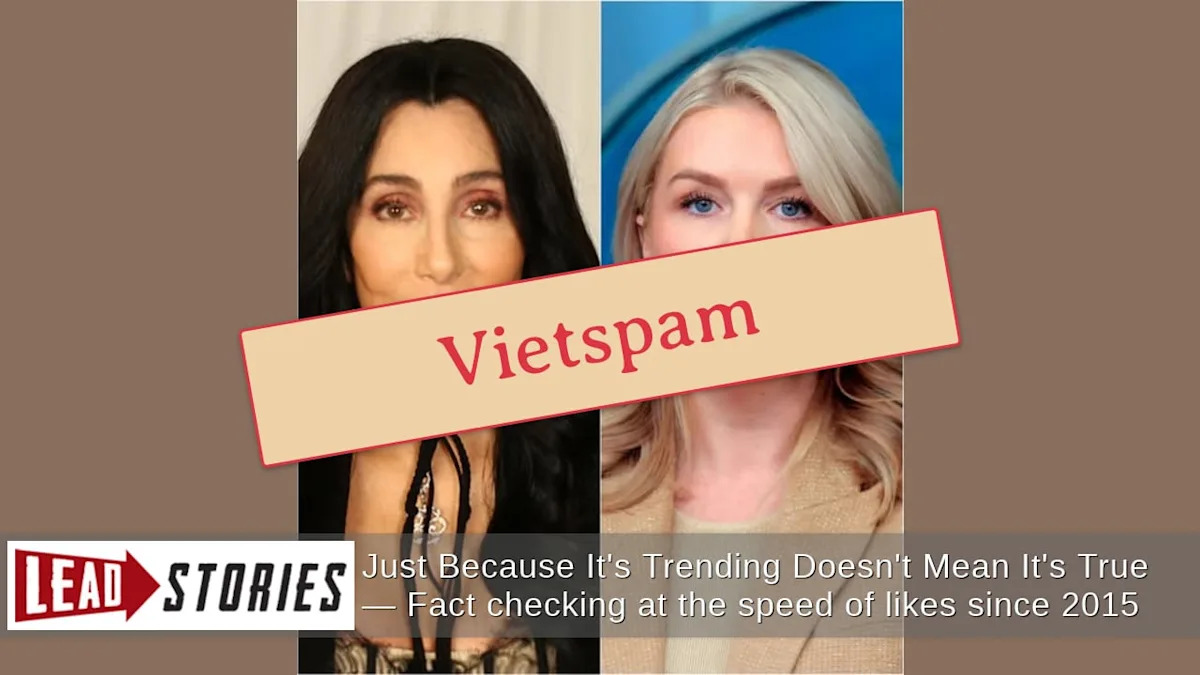
Claims that legendary singer Cher delivered a scathing rebuke to Trump spokesperson Karoline Leavitt during an MSNBC interview have been definitively debunked as fabrication. The widely shared anecdote, which depicted Cher reading Leavitt’s biography before telling her to “sit down, baby girl,” originated from a sophisticated network of misinformation sites with ties to Vietnam.
The fictional encounter first appeared on December 15 in a Facebook post from a page called “Venus of Sound.” The dramatically written narrative described Leavitt delivering a “fiery rant about out-of-touch celebrities,” followed by Cher responding with a devastating takedown that included reading Leavitt’s credentials from a prepared note.
“Baby girl, I’ve been fighting for rights, touring the world, and reinventing myself since before your parents went to prom,” the fabricated quote read. “I’ve faced critics louder, harsher, and far more meaningful than anything you can type. And yet – here I am. Still here. Still singing. Still Cher.”
The post quickly gained traction across social media platforms, with many users believing the exchange had actually occurred. However, multiple red flags point to its fraudulent nature.
Analysis of the “Venus of Sound” Facebook page revealed it is operated primarily from Vietnam, part of what fact-checkers have identified as a major source of AI-generated false content. Page transparency information confirmed multiple administrators based in Southeast Asia, consistent with patterns observed in similar fabricated stories.
The article linked from the Facebook post contained additional fictional details, including a supposed tweet from Cher’s account reading: “JUST LEFT MSNBC. MET A GIRL WHO NEEDS A HISTORY LESSON. SIT DOWN BABY GIRL. MOMMA IS BUSY. #ICON #FACTS.” A search of Cher’s actual social media accounts showed no such post exists.
Perhaps most revealing is the discovery that this exact narrative template has been recycled dozens of times with different celebrities substituted for Cher. The same basic storyline—with identical phrasing about reading Leavitt’s bio and telling her to “sit down, baby girl”—has been published featuring Barbra Streisand, Joan Baez, Ted Cruz, and numerous other public figures.
This mass production approach is characteristic of what researchers have termed “Viet spam”—a systematic operation that generates and distributes fabricated celebrity confrontations, medical miracles, and political controversies across social media. One fact-checking organization reported documenting over 70 such stories in 2025 alone.
The operation typically follows a consistent pattern: creating emotionally resonant fictional scenarios, attributing them to well-known figures to increase shareability, and then directing traffic to ad-heavy websites. The stories often incorporate just enough plausible elements to seem believable to casual readers.
Media literacy experts warn that such fabricated content is becoming increasingly sophisticated and difficult to distinguish from legitimate news. They recommend verifying claims through trusted news sources, checking publication dates, examining site credibility, and being skeptical of emotionally charged content that seems designed primarily to provoke strong reactions.
Neither Cher nor Karoline Leavitt has publicly commented on the fabricated exchange. The incident highlights the continuing challenge social media platforms face in combating coordinated misinformation campaigns, particularly those operating across international boundaries.
Users encountering similar celebrity confrontation stories are advised to verify claims through multiple sources before sharing, as these narratives represent a growing category of online misinformation designed specifically to exploit political and cultural divisions for profit.
Fact Checker
Verify the accuracy of this article using The Disinformation Commission analysis and real-time sources.

10 Comments
While celebrity-focused stories can be attention-grabbing, it’s critical to verify the accuracy of such claims before spreading them further. This fact check does a thorough job of tracing the origins of the fictional Cher-Leavitt encounter.
As someone interested in current events and the media landscape, I appreciate this careful fact-checking work. It’s concerning how easily fabricated stories can gain traction online, but efforts to combat misinformation are crucial.
The details in this fact check are really thorough. It’s helpful to understand how the fictional Cher-Leavitt encounter originated and spread across social media. Debunking false narratives like this is important for maintaining trust in the media.
Agreed. Exposing the source and tactics of these misinformation campaigns is key to preventing their proliferation in the future.
This is a good reminder to be skeptical of sensational stories, especially ones that seem too good to be true. It’s impressive how sophisticated these disinformation networks can be in creating convincing but completely made-up content.
Absolutely. Fact-checking is essential to combat the spread of misinformation, which can have real consequences if left unchecked.
Interesting fact check on the bogus story about Cher confronting a Trump aide on MSNBC. It’s important to call out misinformation like this, even when it involves celebrities. Fabricated narratives can spread quickly online, so verifying the facts is crucial.
It’s disheartening to see how sophisticated disinformation networks can be in manufacturing and disseminating false narratives. But fact-checking efforts like this one are crucial for combating the proliferation of misinformation online.
This fact check serves as a valuable lesson in the importance of media literacy and critical thinking when consuming news, especially on social media. Verifying sources and checking for credibility is key to avoiding the spread of falsehoods.
This is a good example of the value of rigorous journalism and fact-checking. Calling out false narratives, even ones involving high-profile figures, helps maintain the integrity of news reporting. It’s an important service to the public.