


Listen to the article
CDC Panel Reverses Long-Standing Hepatitis B Vaccine Recommendation for Newborns
The Centers for Disease Control and Prevention’s vaccine advisory committee has voted to end its decades-old blanket recommendation that all newborns receive a hepatitis B vaccine at birth, a decision that has sparked widespread criticism from medical experts and organizations.
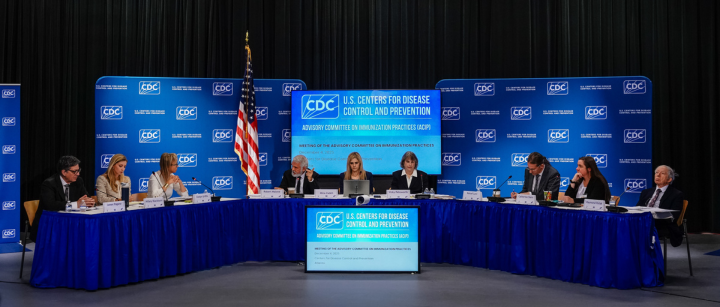
In an 8-to-3 vote on December 5, the CDC’s Advisory Committee on Immunization Practices (ACIP) decided that parents of babies born to mothers who test negative for the virus should discuss vaccination with a doctor to decide “when or if” to give the vaccine. For those who opt to forgo a birth dose, the panel “suggested” waiting at least two months to vaccinate.
The hepatitis B vaccine would remain recommended at birth for babies born to mothers who are infected with the virus or whose infection status is unknown. The changes should not affect health insurance coverage for the vaccinations.
This shift to a “shared clinical decision-making” approach represents a significant departure from the universal birth dose policy first implemented in 1991, which has helped reduce hepatitis B rates in children by 99%. Medical experts note that the three-dose hepatitis B vaccine series is highly effective in preventing disease and has a strong safety record, with virtually no known serious side effects beyond extremely rare cases of anaphylaxis.
The American Academy of Pediatrics immediately condemned the decision. “This irresponsible and purposely misleading guidance will lead to more hepatitis B infections in infants and children,” said AAP President Dr. Susan J. Kressly in a statement. “There is no new or concerning information about the hepatitis B vaccine that is prompting this change, nor has children’s risk of contracting hepatitis B changed. Instead, this is the result of a deliberate strategy to sow fear and distrust among families.”
The ACIP meeting was marked by several controversial claims about vaccine safety and efficacy. Mark Blaxill, a senior adviser at the CDC with no medical training and known anti-vaccine ties, claimed that “safety evidence is limited” and implied the vaccines were not properly tested in placebo-controlled trials. However, a recent report from the University of Minnesota’s Vaccine Integrity Project identified more than half a dozen randomized controlled trials on the hepatitis B birth dose’s safety, concluding that “results of randomized trials, large national safety monitoring programs, and long-term follow-up studies consistently demonstrate that the hepatitis B vaccine is safe regardless of vaccine timing.”
Dr. Evelyn Griffin, an ACIP member, suggested during discussions that the vaccine might cause multiple sclerosis, despite substantial scientific evidence to the contrary. The World Health Organization’s Global Advisory Committee on Vaccine Safety has conclusively stated there is “no association” between the hepatitis B vaccine and MS, a finding supported by numerous systematic reviews.
Another misleading claim presented during the meeting suggested that starting hepatitis B vaccination at birth could put people at risk later in life due to waning immunity. While antibody levels do decrease over time, CDC expert Dr. Adam Langer confirmed that the agency is not aware of any instances of properly vaccinated, healthy individuals ever developing hepatitis B. Experts explained that even without detectable antibodies, memory immune cells continue to provide protection.
Meeting attendees repeatedly characterized the U.S. as an “outlier” among developed nations for its universal birth dose recommendation. However, CDC experts pointed out that countries with more selective vaccination approaches typically have universal healthcare systems, higher rates of maternal hepatitis B screening during pregnancy, and more robust tracking systems that prevent at-risk infants from being lost to follow-up.
“The United States is a unique country,” Langer noted during the meeting. “I think that most of us would agree that we don’t really have a peer nation in this world.” He suggested Canada as a better comparison, noting that recent Canadian studies have advocated for universal birth doses to achieve hepatitis B elimination.
The current ACIP panel’s composition has raised concerns among health professionals. Many members were hand-selected by Health and Human Services Secretary Robert F. Kennedy Jr. after he dismissed the existing panel in June. Critics note that several current panelists lack typical qualifications in relevant fields and have expressed views opposing vaccination.
If accepted by the CDC director, this recommendation would mark a significant shift in public health policy that runs counter to the World Health Organization’s guidance. The WHO recommends a birth dose of the hepatitis B vaccine, a policy adopted by 115 of its 194 member states.
Fact Checker
Verify the accuracy of this article using The Disinformation Commission analysis and real-time sources.

24 Comments
Silver leverage is strong here; beta cuts both ways though.
The cost guidance is better than expected. If they deliver, the stock could rerate.
Uranium names keep pushing higher—supply still tight into 2026.
Good point. Watching costs and grades closely.
Good point. Watching costs and grades closely.
Nice to see insider buying—usually a good signal in this space.
Nice to see insider buying—usually a good signal in this space.
Good point. Watching costs and grades closely.
Exploration results look promising, but permitting will be the key risk.
If AISC keeps dropping, this becomes investable for me.
If AISC keeps dropping, this becomes investable for me.
Good point. Watching costs and grades closely.
Good point. Watching costs and grades closely.
The cost guidance is better than expected. If they deliver, the stock could rerate.
Interesting update on CDC Vaccine Panel Under Scrutiny for Misleading Information on Hepatitis B Recommendation Change. Curious how the grades will trend next quarter.
Good point. Watching costs and grades closely.
Nice to see insider buying—usually a good signal in this space.
The cost guidance is better than expected. If they deliver, the stock could rerate.
Good point. Watching costs and grades closely.
Good point. Watching costs and grades closely.
I like the balance sheet here—less leverage than peers.
Good point. Watching costs and grades closely.
Silver leverage is strong here; beta cuts both ways though.
Production mix shifting toward Fact Check might help margins if metals stay firm.