


Listen to the article
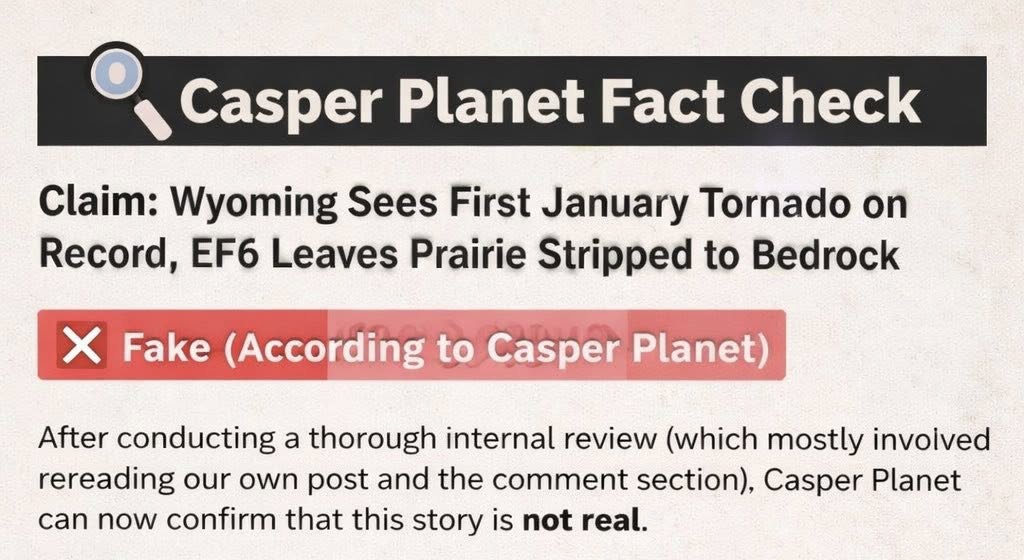
In a rare case of misinformation correcting itself, satirical news outlet Casper Planet has issued a fact check on one of its own fictional stories about a supposed record-breaking tornado in Wyoming.
The original claim suggested that Wyoming had experienced its first-ever January tornado, described as an “EF6” that allegedly stripped prairie land down to bedrock. Casper Planet rated this claim as “Fake” after what they described as a “thorough internal review,” which they humorously admitted “mostly involved rereading our own post.”
This self-fact-check highlights several layers of misinformation within the original claim. First, the Enhanced Fujita (EF) scale, which meteorologists use to categorize tornado intensity, only ranges from EF0 to EF5, with EF5 representing the most devastating tornadoes with wind speeds exceeding 200 mph. The mention of an “EF6” tornado is itself a red flag that the story was fabricated.
Wyoming’s climate and geography make winter tornadoes extremely rare in the state. While January tornadoes can occur in the United States, particularly in southern states with access to warm, moist Gulf air, they are virtually unheard of in Wyoming during winter months when cold, dry conditions typically prevail.
Casper Planet, known for publishing satirical content about Wyoming, appears to be poking fun at both extreme weather reports and the fact-checking industry with this post. The outlet frequently creates fictional news stories meant to entertain rather than inform, similar to publications like The Onion or The Babylon Bee.
This incident occurs against a backdrop of increasing concerns about weather misinformation on social media. During actual severe weather events, false or exaggerated claims can spread rapidly online, potentially causing unnecessary panic or complacency. Meteorologists and emergency management officials have repeatedly warned about the dangers of sharing unverified weather information during crisis situations.
The National Weather Service (NWS) remains the authoritative source for tornado information in the United States. The NWS conducts damage surveys after suspected tornadoes to officially determine if a tornado occurred and, if so, its strength on the EF scale. These assessments typically take place after the event and involve trained meteorologists examining damage patterns on the ground.
Media literacy experts suggest this type of satirical content, while intended as humor, can sometimes be mistaken for real news when shared out of context on social media platforms. When audience members encounter only a headline or brief excerpt without clear satirical indicators, the line between fact and fiction can blur, potentially contributing to the broader challenge of misinformation online.
Wyoming does experience tornadoes, primarily during spring and summer months, though they are less frequent than in states across the Central Plains. According to NWS data, Wyoming averages about 10 tornadoes annually, with most occurring between May and August when atmospheric conditions are more favorable for severe thunderstorm development.
For accurate information about severe weather events, meteorologists recommend following official sources such as the National Weather Service, local emergency management agencies, and reputable meteorologists rather than relying on unverified social media posts.
As for Casper Planet, their self-fact-check serves as both a humorous admission of their satirical nature and a reminder to readers to maintain healthy skepticism when consuming media, particularly stories about extraordinary or record-breaking weather events.
Fact Checker
Verify the accuracy of this article using The Disinformation Commission analysis and real-time sources.

7 Comments
Kudos to Casper Planet for the thorough internal review and fact-checking. Knowing the limits of the Enhanced Fujita scale is key when reporting on extreme weather events. This case highlights the need for diligence in verifying claims, even in the context of humor or satire.
The fact that Casper Planet went through the effort to fact-check and correct their own misinformation is refreshing. It’s a responsible approach that helps maintain trust in their satirical reporting. Kudos to them for upholding journalistic standards, even in the realm of humor.
Glad to see Casper Planet took responsibility for the inaccurate report. Fact-checking one’s own work is a commendable practice, even for a satirical news outlet. This serves as a valuable lesson on the importance of verifying claims, especially regarding rare natural phenomena.
Absolutely. Responsible journalism, even in the realm of satire, helps combat the spread of misinformation. Self-correction is a mark of integrity.
Interesting case of self-correcting misinformation. Good on Casper Planet for owning up to their fictional tornado claim and setting the record straight. Always important to verify extreme weather reports, especially anything involving unheard-of categories like an ‘EF6’ tornado.
This serves as a good reminder that even satirical news outlets can sometimes get carried away with sensational claims. It’s commendable that Casper Planet took the time to correct the record and acknowledge their mistake. Maintaining journalistic integrity is important, even in the world of parody.
A valuable lesson in the importance of verifying claims, even for a satirical news source. Casper Planet’s self-fact-check demonstrates a commitment to accuracy that is admirable. This helps strengthen the credibility of their brand of parody journalism.