


Listen to the article
Trump Repeats False Claims About US Aid to Ukraine During White House Meeting
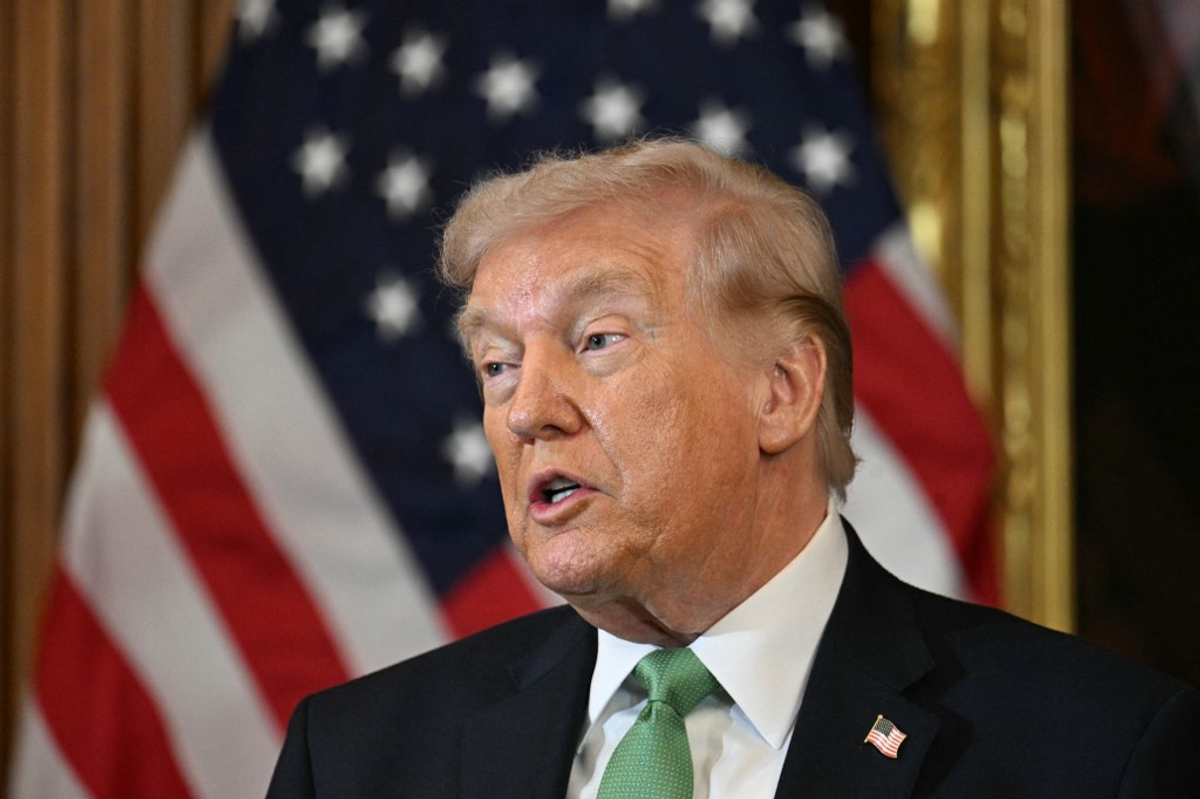
President Donald Trump made several misleading statements about U.S. assistance to Ukraine during a White House meeting with Irish Prime Minister Micheál Martin on Monday, repeating claims that have been widely debunked by experts and independent analysts.
The comments came during a question-and-answer session with reporters that primarily focused on the ongoing U.S.-Israeli military operations against Iran. Trump’s remarks about Ukraine, however, contained significant factual inaccuracies regarding both the scale of American aid and its impact on the conflict.
According to data from the Kiel Research Institute and other independent sources, total U.S. assistance to Ukraine between 2022 and 2024 amounted to approximately $125 billion, with weapons accounting for about $75 billion. This is substantially lower than Trump’s assertions, which overestimated the figure by $175-225 billion.
The president’s characterization of Ukraine aid as a unilateral decision by the Biden administration also misrepresented the process. U.S. foreign military assistance requires congressional approval under the Constitution’s “purse string” rule and received bipartisan support throughout the conflict until Trump terminated it in 2026.
Trump further claimed that massive U.S. weapons deliveries in the early stages of the war prevented a quick Russian victory. Historical records contradict this timeline. The first significant U.S. heavy weapons—approximately 200 M777 towed howitzers, some donated by allies including Australia, Britain, and Canada—didn’t reach Ukraine until May 2022, roughly two months after Ukrainian forces had already repelled Russian troops in the Battle of Kyiv.
The president also repeated unsubstantiated allegations about corruption diverting American aid in Ukraine. Both Pentagon and Ukrainian government reviews have found that while some inefficiencies occurred, the vast majority of military equipment reached its intended users. Neither Trump nor other critics have provided evidence supporting claims of widespread misappropriation.
In a separate but related exchange, Trump drew a questionable parallel between U.S. support for Ukraine and what he considers insufficient NATO assistance in the current Iran conflict. He suggested European allies should reciprocate American support for Ukraine by committing naval forces to help the U.S. open the Strait of Hormuz, currently blockaded by Iran.
This comparison overlooks fundamental differences between the two situations. NATO functions as a defensive alliance, while the U.S. and Israel initiated military operations against Iran. International norms and laws recognize distinctions between providing assistance to countries defending against invasion (as with Ukraine) versus joining offensive operations as active belligerents.
The meeting with Prime Minister Martin took place against the backdrop of escalating tensions in the Middle East and Trump’s continued criticism of American foreign policy priorities. A full transcript and video of the March 17, 2026 remarks are available through official White House channels.
Trump’s statements reflect ongoing debates about America’s role in global conflicts and the appropriate allocation of resources to overseas engagements. However, the significant discrepancies between his claims and documented facts highlight the challenges of maintaining fact-based discussions on complex geopolitical issues during politically charged periods.
The gap between reality and Trump’s characterization of Ukraine aid is particularly noteworthy given that some analysts have suggested that if U.S. assistance had actually reached the levels the president claimed, Ukraine might have had greater success in repelling Russian forces during the earlier phases of the conflict.
Fact Checker
Verify the accuracy of this article using The Disinformation Commission analysis and real-time sources.

10 Comments
I’m curious to learn more about the specific breakdown of US aid to Ukraine – the $125 billion figure, with $75 billion in weapons, is quite substantial. It would be helpful to understand the rationale and intended impact of this assistance.
That’s a good point. Deeper analysis of the aid package, its composition, and its strategic objectives would provide important context for evaluating the effectiveness and appropriateness of US involvement.
The discrepancy between Trump’s statements and the independent data is quite stark. It’s important that public discourse on foreign aid is grounded in verifiable facts, not partisan rhetoric.
Agreed. Accuracy and accountability should be the top priorities when it comes to reporting on sensitive foreign policy matters.
While I appreciate the president’s intent to support Ukraine, it’s concerning to see such significant discrepancies between his claims and the available data. Accurate, impartial reporting is essential for informed public discourse on this issue.
I agree. Maintaining public trust in institutions and the democratic process requires a commitment to truthfulness and transparency, even when it’s politically inconvenient.
This case highlights the need for rigorous fact-checking and transparency around military and humanitarian aid, particularly in the context of an ongoing conflict. Reliable data sources are crucial.
Absolutely. Maintaining public trust requires that leaders and the media adhere to the highest standards of factual reporting, even on politically charged issues.
It’s concerning to see the president making misleading claims about aid to Ukraine. Factual data and independent analysis are crucial for understanding the true scale and impact of US assistance.
Absolutely. Transparent and evidence-based reporting is essential, especially on such an important geopolitical issue.