


Listen to the article
Trump Launches $5 Billion Lawsuit Against BBC Over Edited Speech Claims
Former President Donald Trump has filed a substantial lawsuit against the BBC, claiming the network manipulated his January 6, 2021, speech through selective editing rather than using artificial intelligence as he suggested during recent remarks.
The legal action, seeking $5 billion in damages, was initiated on December 15, 2025, with Trump’s legal team alleging that BBC producers deliberately spliced together statements made nearly an hour apart to create a misleading impression about his rhetoric during the events preceding the Capitol riot.
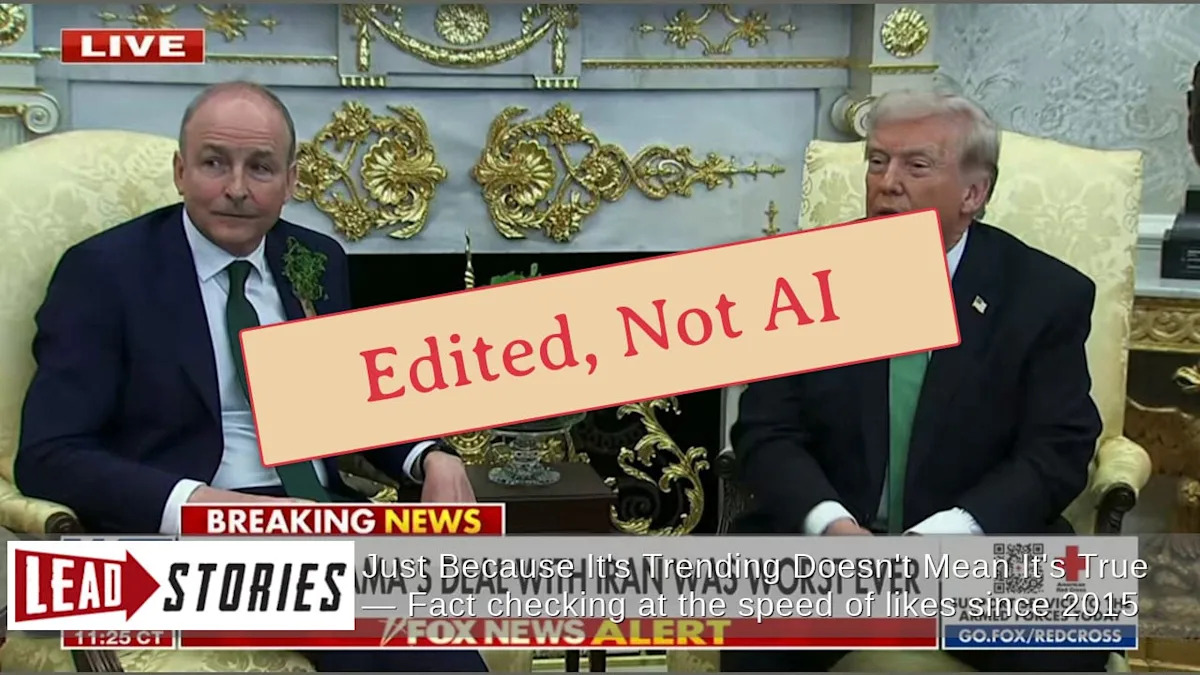
During a St. Patrick’s Day meeting with Irish Prime Minister Micheál Martin at the White House, Trump addressed the lawsuit when questioned by reporters. “They put words in my mouth and said I said some pretty bad things. And I didn’t say it; it was AI-generated,” Trump claimed, adding, “I’m very proud of the term fake news.”
However, a review of the actual legal documents reveals no mention of artificial intelligence or AI-generated content in the lawsuit itself. The 54-page filing instead focuses on allegations of malicious editing, claiming BBC producers intentionally combined two separate segments of Trump’s speech to suggest he encouraged supporters to engage in violent actions as Congress prepared to tabulate electoral votes.
“It would have been impossible for BBC’s journalists and producers to splice together two distinct parts of the Speech from nearly 55 minutes apart unless they were acting intentionally,” the lawsuit states. “Such a dramatic distortion could never have occurred by accident.”
The discrepancy between Trump’s public statements characterizing the BBC’s actions as AI manipulation and the actual contents of his legal filing highlights the ongoing tension between the former president’s rhetoric and formal legal positions taken by his attorneys.
This case represents another chapter in Trump’s long-standing conflict with news organizations he has frequently labeled as “fake news” – a term he referenced with pride during his remarks about the lawsuit. Media law experts note that proving actual malice in libel cases involving public figures presents a significant legal hurdle.
The BBC has already issued an apology to Trump regarding the documentary, which aired shortly before the 2024 election. The British broadcaster filed a motion on March 16, 2026, asking a federal judge to dismiss the libel case entirely.
Media ethics specialists have observed that this lawsuit touches on broader concerns about journalistic integrity in political coverage, especially regarding the context in which statements by public figures are presented. The case also arrives at a moment of heightened scrutiny around the potential for both traditional editing techniques and newer AI technologies to manipulate public perception.
Legal analysts suggest the $5 billion figure sought in damages is primarily symbolic and would face substantial challenges in court, as plaintiffs must demonstrate actual financial harm resulting from alleged defamation. The exceptionally high amount appears designed to generate publicity rather than reflect realistic compensation expectations.
As the case proceeds, it will likely fuel ongoing debates about media responsibility, the nature of political speech, and the increasingly complex relationship between traditional editing practices and emerging technologies in news production.
The BBC has declined further comment beyond acknowledging their motion to dismiss, citing the active litigation. Trump’s legal team maintains that the editing was deliberate and designed to damage the former president’s reputation ahead of his political comeback efforts.
Fact Checker
Verify the accuracy of this article using The Disinformation Commission analysis and real-time sources.

8 Comments
Interesting case – it seems the BBC may have selectively edited Trump’s speech in a misleading way, rather than using AI as he claimed. I’m curious to see how this lawsuit plays out and whether the allegations of manipulated footage hold up.
This is a complex issue that touches on thorny questions of free speech, media bias, and accountability. While Trump is a polarizing figure, the BBC shouldn’t escape scrutiny if they are found to have manipulated footage. Fact-checking and responsible journalism are vital.
The AI claims seem dubious, but the underlying issue of media bias and accountability is an important one. I’ll be following this case closely to see if the BBC’s actions hold up to scrutiny.
I’m not surprised to see Trump filing another high-profile lawsuit, though the $5 billion damages claim seems quite steep. The allegations of AI-generated content appear to be unfounded, but the selective editing claims warrant further investigation.
This lawsuit highlights the ongoing tensions around media bias and misinformation. While Trump has a history of making dubious claims, the BBC should be held accountable if they did indeed splice footage in a deceptive manner. Transparency and journalistic integrity are crucial.
This is a tricky situation where both sides have incentives to exaggerate or obfuscate. I hope the courts can get to the bottom of whether the BBC deliberately manipulated footage, or if Trump is simply making unsubstantiated claims as he has done in the past.
Curious to see how this lawsuit unfolds. Given Trump’s track record, I’m skeptical of his AI claims, but the BBC should still be held to high standards of accuracy and fairness. Transparency around their editorial process would help clarify what really happened.
Given Trump’s history, I’m skeptical of his claims, but the BBC shouldn’t escape scrutiny if they are found to have manipulated footage. Fact-checking and responsible journalism are vital, regardless of who is making the accusations.