


Listen to the article
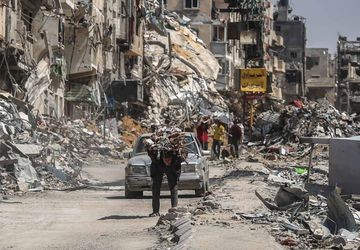
The ongoing conflict in Gaza has left behind unprecedented destruction, raising urgent questions about the massive reconstruction effort that will be needed once hostilities end. With thousands of buildings reduced to rubble and critical infrastructure systems severely damaged, experts are now examining potential pathways to rebuild the devastated territory.
According to United Nations estimates, more than 70% of Gaza’s housing stock has been damaged or destroyed since October 2023. Essential services including water treatment facilities, electrical grids, hospitals, and schools have been rendered inoperable across large swaths of the territory, creating a humanitarian crisis that will outlast the current conflict.
“The scale of destruction is unlike anything we’ve seen in recent conflicts,” said Ahmed Yousef, a UN development specialist who has worked on post-conflict reconstruction in several regions. “This will require a coordinated international effort of significant magnitude.”
The Palestinian Authority, which maintains limited governance in the West Bank but not Gaza, has proposed taking a central role in the reconstruction process. However, questions remain about its capacity to manage such a massive undertaking and its ability to operate effectively in Gaza without broader political reconciliation.
International donors will likely play a crucial role in financing reconstruction. The European Union, Japan, and several Arab states have signaled willingness to contribute substantial funding, though most have indicated that any aid package would be contingent on governance reforms and security guarantees.
Some reconstruction experts have drawn parallels to the Marshall Plan that rebuilt Europe after World War II, suggesting a similar framework could be applied to Gaza. However, others note that the ongoing security situation and lack of political resolution create fundamentally different challenges.
“The immediate needs are enormous,” said Sarah Collins, humanitarian response coordinator with an international aid organization operating in Gaza. “Beyond emergency shelter and basic services, we’re looking at a complete rebuilding of civil infrastructure that could take a decade or longer.”
The United Nations Relief and Works Agency (UNRWA), despite facing funding challenges and political scrutiny, remains one of the few organizations with the operational capacity and institutional knowledge to assist with immediate humanitarian needs. However, a more comprehensive reconstruction effort would require broader participation from development agencies and private sector partners.
Infrastructure experts point to several critical priorities beyond housing, including rebuilding Gaza’s water purification system, restoring electrical generation capacity, and reconstructing medical facilities. The territory’s sole power plant has been offline for months, forcing reliance on generators amid severe fuel shortages.
“We’re not just talking about rebuilding what existed before,” explained Omar Shaban, an economist based in Gaza. “The previous infrastructure was already insufficient. This is an opportunity to address long-standing deficiencies and build systems that can actually meet the needs of the population.”
The role of neighboring Egypt could prove crucial, particularly regarding the movement of construction materials through border crossings. Historical restrictions on importing building materials into Gaza, implemented due to security concerns, have complicated previous reconstruction efforts.
Financial estimates for rebuilding Gaza vary widely, with preliminary assessments suggesting costs could exceed $20 billion – a staggering sum for a territory with limited economic activity even before the current crisis. This figure does not account for the longer-term economic development needed to create sustainable livelihoods.
“Reconstruction isn’t just about physical buildings,” noted Michael Keating, former UN Special Coordinator for the Middle East Peace Process. “It must include rebuilding human capital, institutions, and the economy. That means investing in education, healthcare, and creating conditions for private sector growth.”
As the international community begins planning for Gaza’s eventual reconstruction, experts emphasize that successful rebuilding efforts will require not just financial resources but also political will, governance reforms, and a durable cessation of hostilities. Without addressing these root causes, any reconstruction effort risks becoming merely a temporary solution to a recurring crisis.
Fact Checker
Verify the accuracy of this article using The Disinformation Commission analysis and real-time sources.

10 Comments
Rebuilding Gaza after such devastation will be an immense challenge. Coordinating the reconstruction effort across international stakeholders will be crucial to address the massive scale of damage to housing, infrastructure, and essential services.
Interesting that the scale of destruction in Gaza is being described as unlike recent conflicts. This suggests the reconstruction effort will need to be unprecedented in scope and resources committed.
Impressive that the UN estimates over 70% of Gaza’s housing has been damaged or destroyed. Restoring essential services and utilities across such a large area will be a daunting challenge.
This conflict has left Gaza’s infrastructure in ruins. Rebuilding water treatment plants, hospitals, schools, and housing will be a massive undertaking requiring significant funding and logistical coordination.
The sheer scale of destruction in Gaza is truly staggering. Restoring basic utilities, housing, and critical facilities will require a colossal international relief effort. Securing adequate funding and resources will be a major obstacle to overcome.
You’re right, the reconstruction task is daunting. Ensuring transparency and equitable distribution of aid will also be key to avoid exacerbating existing tensions.
Curious to see how the international community mobilizes to support the reconstruction of Gaza. Securing adequate funding and coordinating aid distribution will be key to the success of this effort.
The humanitarian crisis unfolding in Gaza is truly heartbreaking. Rebuilding homes, hospitals, and critical infrastructure will be crucial to alleviate the suffering of the local population.
Curious to see if the Palestinian Authority can effectively lead the reconstruction process given its limited governance in Gaza. Rebuilding the territory’s economy and services will be a monumental undertaking.
Good point. The PA’s capacity and credibility in Gaza will be heavily scrutinized. Securing broad-based international support and coordination will be essential for the reconstruction effort to succeed.