


Listen to the article
Despite billions in federal funding and numerous programs aimed at addressing homelessness across America, questions are emerging about the effectiveness of current approaches and whether they’re truly reducing the problem or simply sustaining it.
Recent data from the U.S. Department of Housing and Urban Development (HUD) shows homelessness has risen in many major metropolitan areas despite increased spending, prompting experts to examine the complex network of government agencies, nonprofits, and service providers managing these resources.
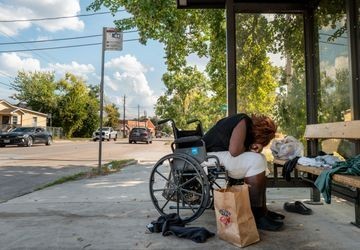
In cities like Houston, where one in five residents lives below the poverty line according to the U.S. Census Bureau, visible homelessness remains a persistent issue. The city has the highest poverty rate among America’s 25 largest urban centers, highlighting the connection between economic inequality and housing instability.
“We’re seeing a disconnect between funding levels and outcomes,” says Dr. Maria Gonzalez, urban policy researcher at Rice University. “Federal grants have increased substantially over the past decade, but we haven’t seen proportional decreases in homelessness in many regions.”
Critics point to what some call the “homeless industrial complex” – an ecosystem of organizations that receive ongoing government funding but may lack accountability measures tied to reducing homelessness rates. A recent analysis by the Capital Research Center found that in some major cities, administrative costs consume up to 30% of homeless services budgets.
California exemplifies these challenges. Despite allocating over $17 billion to homelessness programs since 2018, the state has seen its homeless population grow by approximately 15% during that period. Los Angeles County alone has more than 75,000 people experiencing homelessness on any given night, according to the latest point-in-time count.
“The issue isn’t necessarily a lack of resources,” explains Robert Johnson, former director of a regional housing authority. “It’s how those resources are being deployed and whether we’re measuring the right outcomes. Are we incentivizing permanent solutions or just maintaining emergency services?”
The “Housing First” approach, which prioritizes placing individuals in permanent housing before addressing other issues like substance abuse or mental health, has become the dominant federal strategy. While studies show it has succeeded in keeping people housed in some communities, implementation varies widely across the country.
“Housing First works when it’s properly funded and includes robust supportive services,” notes Dr. Elaine Chang, who studies homelessness policy at the University of Washington. “But in practice, many programs labeled ‘Housing First’ don’t have adequate follow-through or complementary services to address root causes.”
Veterans represent a significant portion of America’s homeless population, though targeted interventions have shown progress. The Veterans Affairs Supportive Housing program (HUD-VASH), which combines housing vouchers with case management services, has reduced veteran homelessness by 55% since 2010. This targeted approach suggests that specialized programs addressing specific populations can be effective.
Beyond federal efforts, innovative local initiatives are showing promise. Houston’s “The Way Home” collaborative reduced homelessness by 54% between 2012 and 2019 through coordinated entry systems and data-driven resource allocation before recent increases during the pandemic.
“Communities that coordinate services across agencies, use real-time data, and hold providers accountable for housing outcomes – not just service delivery – tend to see better results,” says Michael Torres, executive director of a national housing advocacy organization.
As inflation and housing costs continue rising nationwide, experts warn that without addressing structural economic factors and housing affordability, even well-funded programs will struggle to reduce homelessness substantially.
“We need to examine whether current funding models are creating dependency or sustainable solutions,” says economist Jennifer Miller. “The goal should be systems that help people exit homelessness permanently, not just manage it indefinitely.”
With federal, state, and local governments collectively spending over $20 billion annually on homelessness programs, stakeholders are increasingly calling for greater transparency, outcome-based funding models, and comprehensive approaches that address both immediate needs and underlying causes.
Fact Checker
Verify the accuracy of this article using The Disinformation Commission analysis and real-time sources.

8 Comments
The data highlighting the connection between homelessness and economic inequality is sobering. It underscores the need for policymakers to address the root causes, not just the symptoms. A more holistic, systemic approach is warranted.
The article raises some valid questions about the effectiveness of current homelessness programs and policies. While the intent is good, the outcomes don’t seem to match the investment. It’s worth exploring alternative models that take a more holistic, evidence-based approach.
It’s concerning that homelessness remains a persistent issue in many cities despite increased funding. This suggests the current approaches may be overly focused on short-term relief rather than long-term, sustainable solutions. A shift in perspective is needed.
Interesting analysis of the complex issue of homelessness in America. It’s clear that simply throwing more money at the problem isn’t enough – we need to examine the underlying socioeconomic factors driving it and find more holistic, sustainable solutions.
The connection between economic inequality and housing instability is an important one. Tackling homelessness will require addressing broader societal issues like poverty, lack of affordable housing, and access to social services. A multipronged strategy is needed.
The data showing rising homelessness despite increased spending is concerning. Clearly the current approaches are not adequately addressing the root causes. More research is needed to understand what’s working and what needs to change.
Homelessness is a complex, multifaceted problem without easy solutions. I’m curious to learn more about the alternative models and policy approaches that experts believe could be more effective at reducing homelessness in a sustainable way.
Yes, exploring alternative, evidence-based approaches is crucial. The status quo is clearly not working, so we need innovative thinking and a willingness to try new strategies.