


Listen to the article
A social media hoax claiming Israeli Prime Minister Benjamin Netanyahu has died is gaining traction online, but investigation reveals the video to be an AI-generated fake.
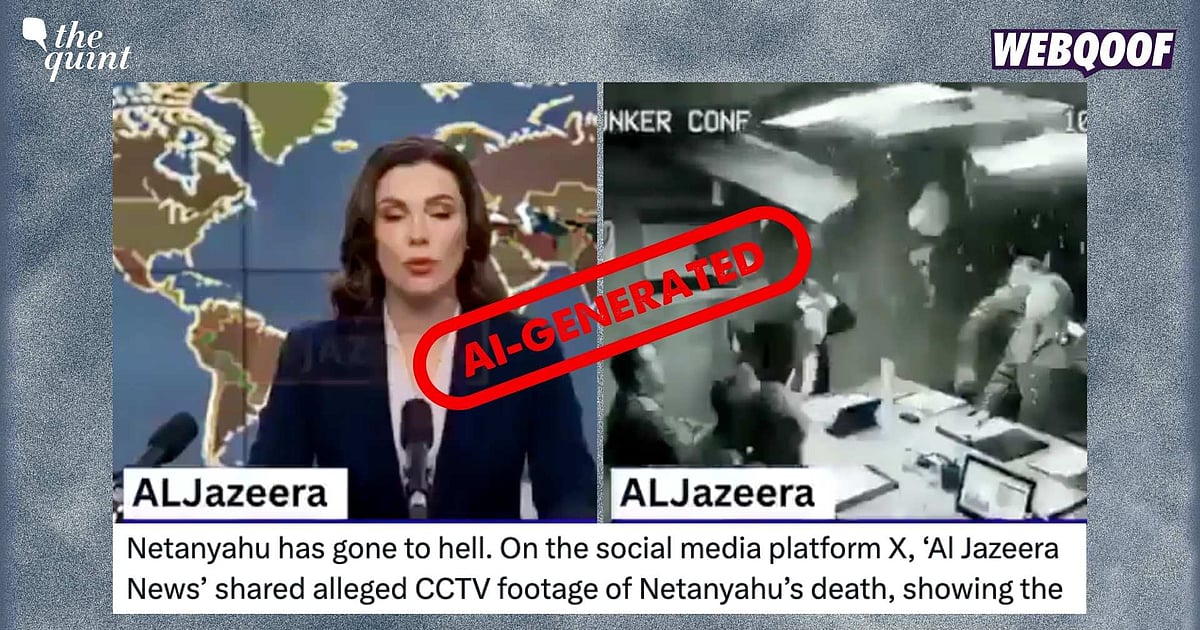
The fabricated footage, falsely attributed to Al Jazeera news network, purportedly shows Netanyahu meeting with military generals in a bunker when the ceiling suddenly collapses. Accompanying posts claim the Israeli leader and other officials were killed in an Iranian missile attack.
Digital forensic experts have conclusively identified the video as synthetic media created using artificial intelligence technology. The clip contains visual inconsistencies and artifacts typical of AI-generated content, including unnatural movements and lighting discrepancies that would not appear in authentic footage.
Al Jazeera has not reported any such incident on its official platforms. The Qatari-based news network, which maintains significant coverage across the Middle East, would have prominently featured such a momentous event across all its channels if it were true.
The Israeli government continues to function normally, with Netanyahu making public appearances and statements since the alleged “attack.” Official channels from Israel, Iran, and international monitoring organizations have reported no missile strikes matching the description in the viral claims.
This fabrication emerges amid heightened tensions between Israel and Iran, following months of conflict in Gaza and concerns about regional escalation. Misinformation experts note that major geopolitical crises often spawn sophisticated disinformation campaigns designed to manipulate public opinion and potentially provoke real-world reactions.
“These AI-generated hoaxes represent a dangerous evolution in misinformation,” said Dr. Claire Wardle, a digital media researcher at Brown University. “When fabricated content is attributed to legitimate news sources, it creates a double layer of deception that can be particularly convincing to casual viewers.”
Social media platforms have struggled to contain the spread of the fake video, which has been shared across multiple networks and messaging apps. Despite content moderation efforts, the clip continues to circulate, often reappearing in slightly modified forms to evade automated detection systems.
The incident highlights growing concerns about the potential for AI technology to create increasingly realistic false media. As generative artificial intelligence tools become more accessible and sophisticated, distinguishing between authentic and fabricated content grows more challenging for average consumers.
Security analysts warn that such fabrications could potentially trigger diplomatic incidents or military responses if believed by government officials. Several international organizations have called for improved digital literacy and more robust fact-checking infrastructures to combat the rise of synthetic media.
In the Middle East, where political tensions run high and information warfare is commonplace, false claims about high-profile figures can spread rapidly through both social media and messaging applications like WhatsApp and Telegram.
The Israeli Prime Minister’s Office has not formally addressed this specific fabrication, typically avoiding direct responses to obvious misinformation to prevent giving such content additional visibility.
This incident serves as a reminder for media consumers to verify information through multiple reliable sources, particularly during periods of conflict when disinformation campaigns typically intensify. Social media users are encouraged to check official government statements and mainstream news organizations before sharing dramatic claims about world leaders.
As artificial intelligence capabilities continue to advance, experts predict that the struggle between those creating deceptive content and those working to detect and debunk it will only intensify, placing greater responsibility on both technology platforms and individual users to maintain information integrity.
Fact Checker
Verify the accuracy of this article using The Disinformation Commission analysis and real-time sources.

12 Comments
It’s good to see that the Israeli government is functioning normally and that Netanyahu is still making public appearances. This helps confirm that the video was indeed a hoax.
Absolutely. The continued normal operations of the Israeli government are a clear indication that the alleged attack was fabricated. Verifying facts is essential in these situations.
This is a timely reminder of the importance of media literacy and critical thinking when consuming news and information, especially in the digital age. Fact-checking is crucial to avoid falling for hoaxes and misinformation.
Well said. With the proliferation of AI-generated content, it’s more important than ever for people to be cautious and verify the accuracy of news and information before sharing or believing it.
It’s good to see that the authorities were able to quickly identify this video as an AI-generated fake. This demonstrates the importance of having the right tools and expertise to detect synthetic media.
Agreed. Developing advanced digital forensic capabilities is crucial to staying ahead of the curve and maintaining the credibility of news and information in the digital age.
Interesting that this AI-generated video footage was falsely attributed to Al-Jazeera. It’s important to verify the source of news and information, especially in today’s media landscape.
Absolutely. Spreading misinformation, even unintentionally, can have serious consequences. Fact-checking and critical thinking are essential.
The technical details about the visual inconsistencies and artifacts in the video are quite fascinating. It’s impressive how advanced AI technology has become in creating such convincing, yet fabricated, content.
You’re right. The ability to generate realistic-looking footage is both impressive and concerning from a media integrity standpoint. Fact-checking is crucial to combat the spread of misinformation.
The use of AI technology to create fake footage is a concerning trend that highlights the need for robust digital forensics and fact-checking procedures. Maintaining the integrity of news and information is critical.
Absolutely. As AI capabilities continue to evolve, the potential for malicious actors to exploit this technology for disinformation campaigns is a growing threat that must be addressed.