


Listen to the article
In a world increasingly fraught with misinformation, a purported image showing Iran’s Supreme Leader Ali Khamenei’s body being recovered from rubble has been debunked as an AI-generated fabrication.
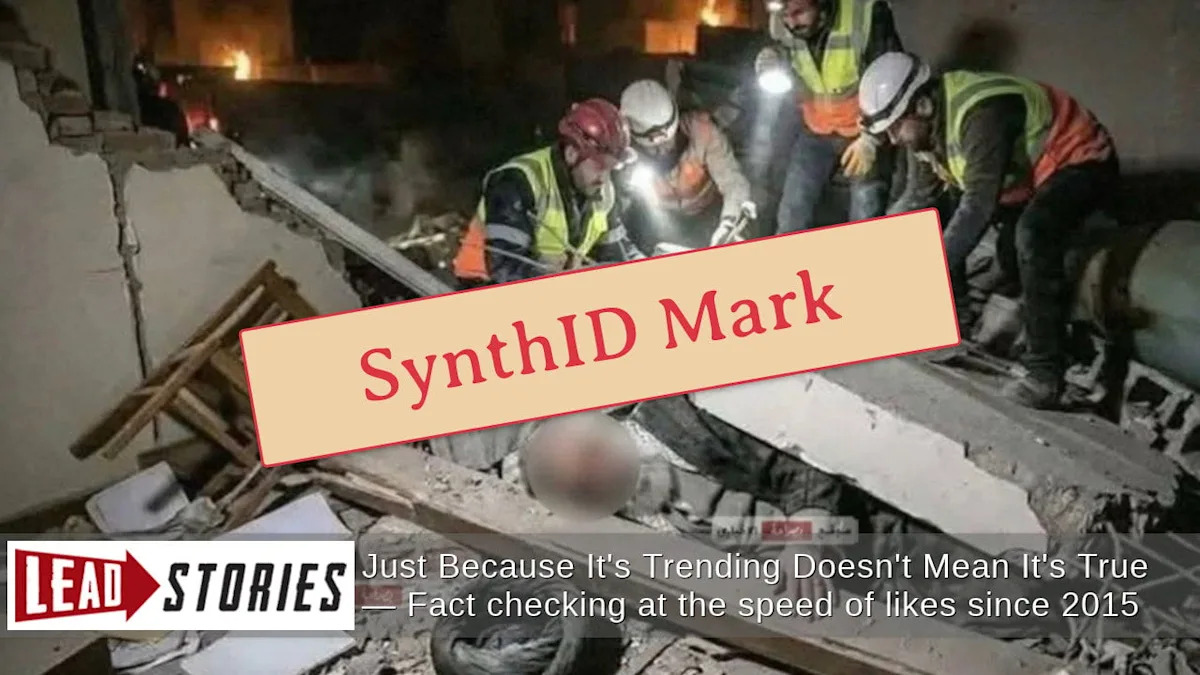
The image, which began circulating on social media platforms on March 1, 2026, showed what appeared to be rescue workers extracting Khamenei’s body from beneath concrete debris. The post on X (formerly Twitter) was captioned: “IRAN RELEASES IMAGE OF KHAMENEI’S BODY BENEATH RUBBLE.”
Multiple digital forensic analyses have conclusively determined the image to be artificially created. Google’s Gemini tool identified a SynthID watermark embedded in the image, a digital signature specifically designed to flag content generated or modified using Google’s AI systems.
“This image contains a SynthID watermark, which indicates that it was either fully generated or partially edited using Google’s AI tools,” Gemini reported when analyzing the image.
The AI detection tool highlighted several telltale signs of artificial generation, including anatomical impossibilities and physical inconsistencies. Among these were peculiar lighting effects from the rescue workers’ headlamps and unusual structural elements like the positioning of wooden beams and metal rods emerging from concrete.
Beyond the technical indicators, the scene depicted in the image defies logical human behavior. None of the rescue workers appear to be paying attention to the body supposedly being recovered. Instead, they’re inexplicably focused on surrounding rubble. One rescuer seems to be adding his body weight to a large piece of concrete pressing down on the purported victim while attempting to remove a smaller piece of debris – an action that makes little practical sense in an actual rescue operation.
Further casting doubt on the image’s authenticity, a comprehensive reverse image search restricted to Iranian websites (.ir domain) yielded no matches. This is particularly significant, as an official Iranian release of such a momentous image would almost certainly appear on domestic news outlets or government websites.
The Hive Moderation AI-Generated Content Detection tool provided additional confirmation, assessing with 64.1% certainty that the image was AI-generated, with the strongest signal matching Google’s Gemini3 model specifically.
This incident highlights the growing sophistication of AI-generated imagery and its potential to spread misinformation regarding high-profile international figures. Supreme Leader Khamenei, who has held Iran’s highest political and religious authority since 1989, remains a central figure in Middle Eastern geopolitics. False reports regarding his status could potentially impact regional stability and international relations.
The rapid spread of this fabricated image underscores the challenges faced by media consumers in an era where artificial intelligence can create increasingly convincing visual hoaxes. Digital watermarking technologies like SynthID represent an emerging countermeasure, allowing for the identification of AI-generated content, though awareness of these verification tools remains limited among general users.
Media literacy experts continue to recommend multiple verification steps before accepting sensational imagery, particularly regarding major international figures. These include checking official government sources, verifying across multiple reputable news organizations, and utilizing reverse image search tools to establish provenance.
As AI generation technologies become more accessible and sophisticated, distinguishing between authentic and fabricated imagery will likely require increased vigilance and more advanced detection methods from both technology platforms and individual users.
Fact Checker
Verify the accuracy of this article using The Disinformation Commission analysis and real-time sources.

11 Comments
Kudos to the disinformation commission for this thorough and well-researched fact check. The identification of the SynthID watermark is a strong indicator of the image’s artificial nature. It’s a valuable example of the importance of digital forensics in the age of AI-generated content.
Fascinating to see how advanced AI-generated imagery has become. It’s crucial to be vigilant about verifying the authenticity of online content, especially regarding sensitive political figures. This example highlights the importance of digital forensics in debunking misinformation.
The technical details provided in this fact check, such as the identification of the SynthID watermark, are fascinating. It’s remarkable to see how AI detection tools can reliably flag artificially created content. This serves as an important lesson on the need for critical thinking and fact-checking in the digital age.
This fact check is a valuable reminder of the importance of verifying the authenticity of online content, particularly when it involves high-profile figures. The use of advanced AI detection tools like Google’s Gemini is an impressive and necessary approach to combating the spread of misinformation.
This is a timely and important fact check. The proliferation of AI-generated content poses significant challenges for information verification. I’m glad to see the diligent work done here to uncover the true nature of this dubious image. Fact-checking is crucial in the digital age.
I appreciate the thorough analysis provided in this fact check. It’s reassuring to see the use of advanced tools like Google’s Gemini to detect telltale signs of AI-generated content. Maintaining trust in media is crucial, and articles like this help uphold journalistic integrity.
I appreciate the thorough and well-researched nature of this fact check. The use of digital forensics to uncover the true nature of this dubious image is commendable. Maintaining trust in media and combating the spread of misinformation is crucial, and articles like this play a vital role in that effort.
This is a timely and important fact check. The proliferation of AI-generated content poses significant challenges for information verification. I’m glad to see the diligent work done here to uncover the true nature of this dubious image. Fact-checking is crucial in the digital age.
This fact check highlights the importance of maintaining journalistic integrity and the responsibility of media outlets to thoroughly verify information, especially when it involves sensitive political figures. The use of digital forensics is a crucial tool in the fight against misinformation.
The identification of the SynthID watermark is a fascinating technical detail. It’s impressive to see how AI detection tools can now reliably flag artificially created content. This serves as a valuable lesson on the need for critical media consumption and fact-checking in the digital landscape.
This fact check is a prime example of the importance of digital forensics in the age of AI-generated content. The identification of the SynthID watermark is a clear indicator that this image was not an official release, but rather an artificial fabrication. Maintaining journalistic integrity and critical media consumption is paramount.