


Listen to the article
#
Viral Image of AIMIM Spokesperson Meeting ‘Mohammad Deepak’ Proven to be AI-Generated Fake
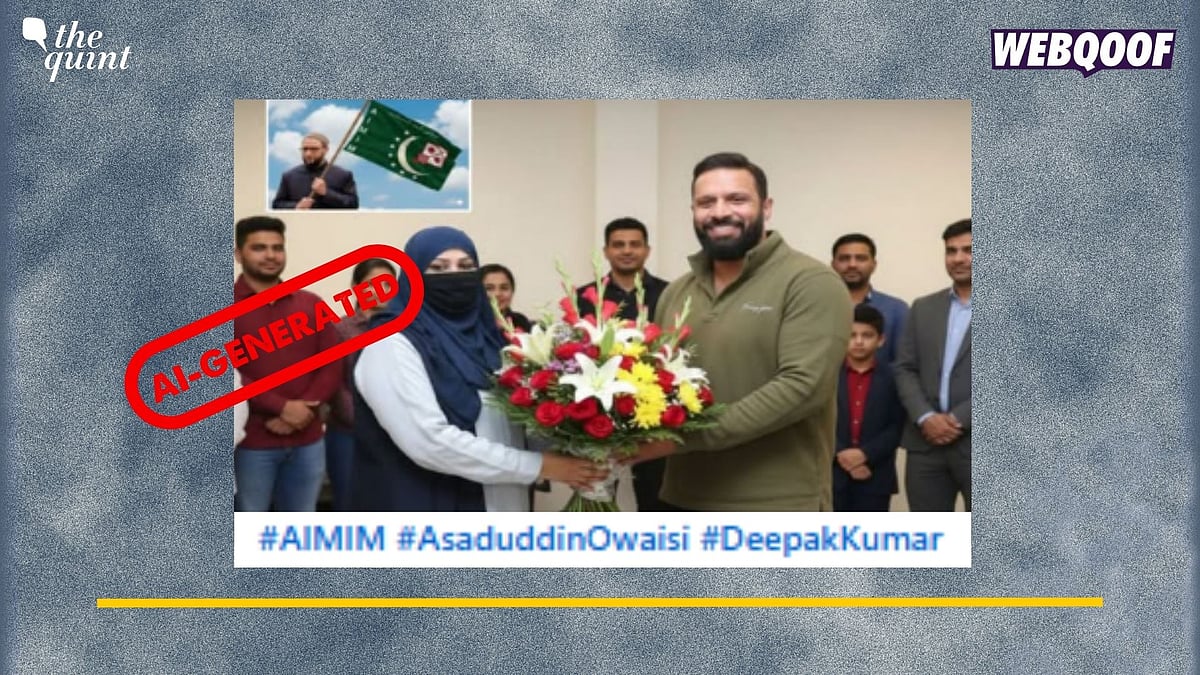
A digitally fabricated image purporting to show a meeting between the All India Majlis-e-Ittehadul Muslimeen (AIMIM) women’s wing spokesperson and a man identifying himself as “Mohammad Deepak” has been circulating widely across social media platforms, fact-checkers have confirmed.
The manipulated image shows what appears to be AIMIM women’s president Rubina greeting a person identified as Mohammad Deepak. Analysis by digital forensic experts has conclusively determined the image was created using artificial intelligence technology, making it entirely fictional.
The viral image gained traction in connection with a recent incident in Kotdwar, Uttarakhand, where Deepak, a local fitness instructor, had intervened in a confrontation involving a 70-year-old Muslim shopkeeper. According to reports, the elderly shopkeeper was allegedly being pressured by a group of men to remove the word “Baba” from his shop’s signage.
During the confrontation, which was captured on video and subsequently went viral, Deepak was asked to identify himself, to which he responded in Hindi, “Mera naam Mohammad Deepak hai” (“My name is Mohammad Deepak”). This moment from the video became a focal point of discussion on social media platforms.
The incident highlights ongoing tensions in parts of India regarding religious identity and business naming practices. In several regions, there have been sporadic incidents where businesses owned by religious minorities have faced pressure to alter their branding or signage.
AIMIM, founded and led by Asaduddin Owaisi, is a prominent political party with significant presence in Telangana, Maharashtra, and other states. The party has frequently positioned itself as a defender of Muslim minority rights in India and often comments on incidents involving religious tensions.
The circulation of this AI-generated image appears to be an attempt to create a narrative suggesting formal political support for Deepak from AIMIM leadership. Such digitally manipulated content has become increasingly common in India’s politically charged social media landscape, where religious and identity politics often dominate public discourse.
Digital disinformation experts have noted a troubling trend in the sophisticated use of AI to create convincing false imagery around politically sensitive issues. This incident represents part of a growing pattern where artificial intelligence tools are being deployed to manufacture evidence of meetings or endorsements that never occurred.
“The increasing quality of AI-generated images makes it more difficult for ordinary social media users to distinguish between authentic and fabricated content,” explained Dr. Rajiv Patel, a digital media analyst at the Center for Media Studies in New Delhi. “This particular image was designed to further polarize public opinion around an already sensitive incident.”
Social media platforms have implemented various measures to combat such misinformation, though the rapid evolution of AI technology has presented ongoing challenges to these efforts. Fact-checking organizations have emphasized the importance of verifying the authenticity of images before sharing them, particularly those depicting public figures in politically charged contexts.
The original Kotdwar incident that sparked this wave of misinformation remains under investigation by local authorities. Meanwhile, digital rights activists have called for greater media literacy programs to help citizens better identify AI-generated content in an increasingly complex information ecosystem.
For AIMIM, which frequently finds itself at the center of manufactured controversies, this incident represents yet another instance where the party’s name and representatives have been used without authorization in digitally manipulated content designed to inflame tensions or create false impressions of political alignments.
Fact Checker
Verify the accuracy of this article using The Disinformation Commission analysis and real-time sources.

10 Comments
This case serves as a reminder that we should always approach viral content with a critical eye and verify the facts before sharing or engaging with it. Fact-checking is crucial in the digital age.
This case highlights the need for greater digital literacy and fact-checking, especially with the rise of AI-generated media. Spreading misinformation can have real consequences.
Absolutely. We should all be more vigilant about verifying sources and content before engaging with or amplifying it online.
I’m curious to learn more about the digital forensic analysis that conclusively identified this image as AI-generated. The technical details would be interesting to understand.
Same here. Insights into the specific techniques used to detect AI-generated media could help improve our ability to spot fake content in the future.
This fact check is a good example of how important it is for media outlets to thoroughly investigate viral content before reporting on it. Spreading unverified information can be harmful.
Agreed. Responsible journalism is crucial in the age of digital misinformation. Kudos to the disinformation commission for their work on this case.
Interesting that this image was determined to be AI-generated. It’s important to be cautious about viral content and verify its authenticity before sharing.
The intervention by the local resident, Mohammad Deepak, to support the elderly shopkeeper is commendable. It’s unfortunate that an AI-generated image is being used to distort the facts.
The use of AI to create fake images is a concerning trend. It’s critical that we develop robust tools and strategies to detect and combat this type of manipulated content.