


Listen to the article
AI Infrastructure Expansion Sparks Community Resistance Nationwide
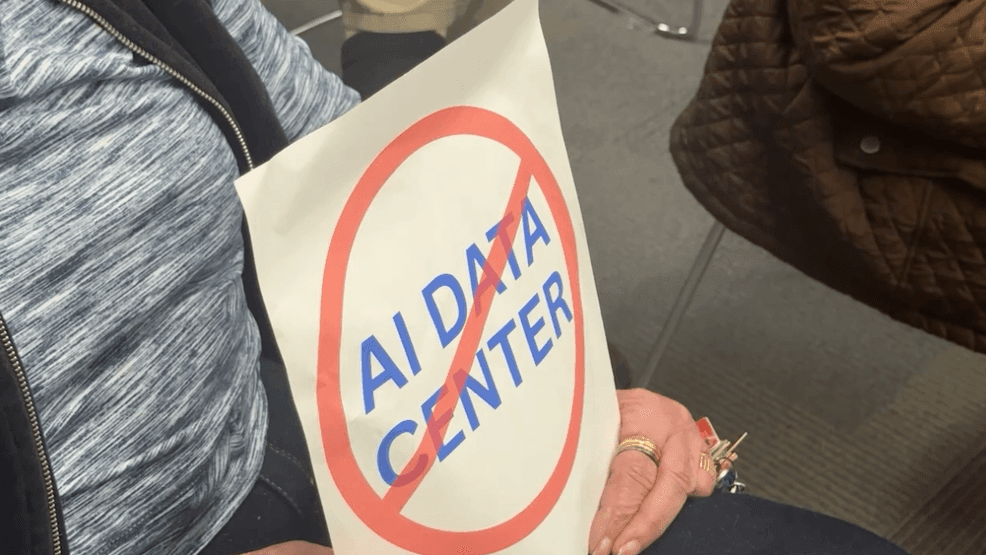
Communities across America are increasingly pushing back against the physical infrastructure powering artificial intelligence, as concerns over resource consumption, environmental impact, and cost shifting from corporations to residents gain momentum.
While public discourse about AI often centers on job displacement and misinformation, the tangible impacts of massive data centers are becoming a flashpoint for local opposition. These facilities, which form the backbone of AI systems, require extraordinary amounts of electricity and water to operate, placing significant strain on local resources.
The economic consequences are already being felt nationwide. According to data from the U.S. Energy Information Administration and Axios, several states are experiencing notable increases in electricity costs directly attributable to new data centers. Maine leads with a striking 36% increase, while New York, Louisiana, and Washington State are all seeing 13-14% spikes. Nearly every state except Montana, North Dakota, Nevada, and Iowa is experiencing some level of utility cost increase.
“These aren’t just minor fluctuations,” explains Dr. Eleanor Simmons, an energy policy analyst at Georgetown University who has studied the phenomenon. “When data centers move in, they fundamentally alter the energy consumption profile of entire regions, and those costs often get passed down to regular consumers.”
The strain goes beyond just electricity. Water usage for cooling these facilities has become particularly contentious in drought-prone regions, where residents question the allocation of limited resources to corporate interests rather than community needs.
Noise pollution presents another challenge. The constant hum of cooling systems and backup generators has disrupted previously quiet neighborhoods, with some residents reporting difficulty sleeping and decreased property values in areas adjacent to these facilities.
In response to these concerns, a grassroots movement is emerging across political lines. In Wisconsin, residents successfully used a ballot measure to block a proposed AI facility. Independence, Missouri voters took more direct action by ousting city council members who had supported a local data center development.
Boulder City, Nevada residents have organized ongoing protests against a planned AI project, while tensions in Indianapolis escalated dramatically when a city councilor who backed a data center had shots fired through his window – an extreme incident that authorities are still investigating.
The pushback has reached the federal level as well. Senator Bernie Sanders, along with Representative Alexandria Ocasio-Cortez, introduced the AI Data Center Moratorium Act in March 2026. The legislation would temporarily halt new AI data center construction nationwide.
“We cannot sit back and allow a handful of billionaire Big Tech oligarchs to make decisions that will reshape our economy, our democracy and the future of humanity,” Sanders stated in a press release. “We need serious public debate and democratic oversight over this enormously consequential issue. The time for action is now.”
Industry advocates counter that these facilities create jobs and tax revenue while positioning the United States as a leader in AI development. Tech companies have begun responding to criticism by exploring more energy-efficient designs and locations with access to renewable energy sources.
In Maryland, residents in Frederick and Prince George’s counties have formed monitoring committees to track the growth of local data centers and document resulting utility cost increases. These citizen-led initiatives represent a new front in the oversight of tech infrastructure.
The emerging conflict highlights the complex tradeoffs between technological advancement and community impact. As AI continues its rapid evolution, the physical infrastructure enabling it is increasingly becoming subject to the democratic process, with local communities asserting their right to shape the development of these consequential facilities in their backyards.
The outcome of these disputes may determine not just where AI infrastructure is built, but potentially the pace at which artificial intelligence itself develops across the country.
Fact Checker
Verify the accuracy of this article using The Disinformation Commission analysis and real-time sources.

12 Comments
It’s understandable that communities would push back against the significant resource demands of these AI data centers. Developers should prioritize sustainability and work closely with local stakeholders to address their concerns.
Agreed. A collaborative, transparent approach that balances innovation and community impact will be essential as this technology continues to scale.
This is a complex issue with valid concerns on both sides. While the technological and economic benefits of AI are significant, the local impacts on resources and costs cannot be ignored. Careful planning and community engagement will be key.
The data on rising utility costs is quite sobering. Local leaders will need to weigh these economic impacts against the potential benefits of hosting these data centers. Striking the right balance will be critical.
Absolutely. Constructive dialogue and creative solutions that share the benefits and burdens more equitably will be essential to resolving these tensions.
This is an interesting case study on the tradeoffs involved with scaling up AI infrastructure. While the technology has many benefits, the physical infrastructure can create real challenges for host communities.
Agreed. Transparent communication and collaborative problem-solving will be key to addressing these issues constructively as AI continues to advance.
The data showing spikes in utility costs across multiple states is quite concerning. Local leaders will need to carefully weigh the economic development potential of these data centers against the increased costs to residents.
Absolutely. Ensuring that the benefits and burdens are equitably distributed will be critical to maintaining community support for this type of infrastructure.
This highlights an important tension between the centralized needs of AI infrastructure and the decentralized impacts on local communities. Developers would be wise to proactively engage with residents to address their valid concerns.
I can understand the community concerns over the resource demands and costs of these AI data centers. It’s important to find the right balance between technological progress and environmental/economic impacts on local areas.
You raise a good point. Corporations should work closely with communities to mitigate the strain on local resources and share the economic benefits more equitably.