


Listen to the article
AI Data Centers Face Growing Community Resistance Amid Utility Price Hikes
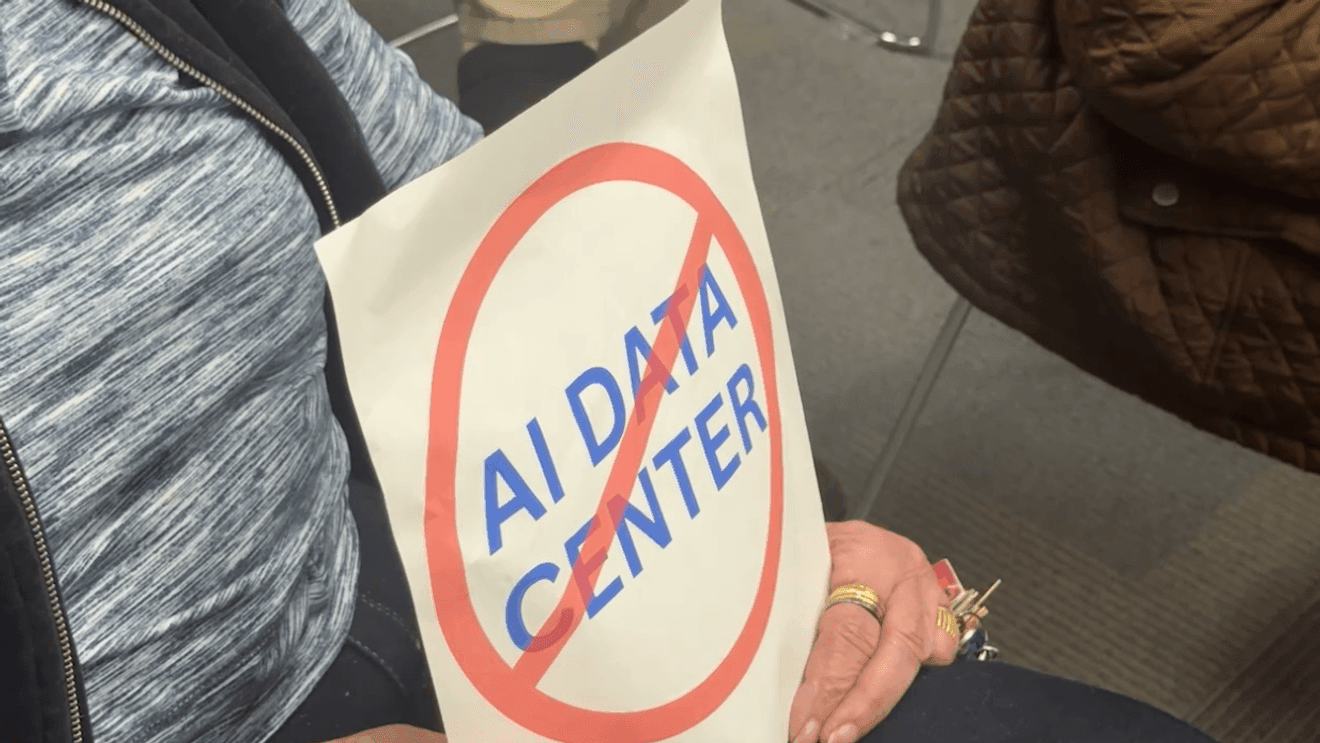
WASHINGTON — As artificial intelligence technology continues its rapid expansion across the United States, a growing wave of community resistance is emerging—not against the technology itself, but against the massive data centers that power it. Residents and local officials are increasingly voicing concerns over strained resources, environmental impacts, and rising utility costs.
Unlike the more abstract debates about AI’s effect on jobs or information integrity, these protests focus on immediate, tangible impacts being felt by communities hosting these facilities. From Wisconsin to Maryland, citizens are organizing against what they see as a technological expansion that brings more costs than benefits to their communities.
“We’re seeing unprecedented power consumption from these facilities,” said a utility analyst who tracks infrastructure development across multiple states. “The physical footprint of AI is becoming impossible to ignore, especially for residents who live near these developments.”
Data from the U.S. Energy Information Administration reveals alarming spikes in electricity costs directly linked to AI data center operations. Maine has experienced a staggering 36% increase in electricity rates, while New York, Louisiana, and Washington state have all seen increases of 13-14%. Nearly every state except Montana, North Dakota, Nevada, and Iowa is experiencing some level of price increase, with the most affected regions showing deep red on energy usage maps.
These centers don’t just consume electricity. They require enormous amounts of water for cooling systems and occupy large land parcels that often receive generous tax incentives from municipalities hoping to attract tech development. The combination of resource strain and preferential tax treatment has fueled growing resentment in affected communities.
In Wisconsin, residents successfully used a ballot initiative to block a proposed AI facility. Citizens of Independence, Missouri took more direct political action, voting out city council members who had supported a local data center development. Boulder City, Nevada has become a hotspot for organized protests against planned AI infrastructure.
The backlash has occasionally turned violent. In Indianapolis, a city councilor who backed a data center project had shots fired through his window, marking an alarming escalation in what has primarily been peaceful, democratic resistance.
Some communities are taking a more measured approach. Residents in Frederick and Prince George’s counties in Maryland have established monitoring groups to track data center development and document utility cost increases, creating community databases to inform future policy decisions.
The growing resistance has now reached federal lawmakers. Senator Bernie Sanders and Representative Alexandria Ocasio-Cortez introduced the AI Data Center Moratorium Act in March 2026, which would temporarily pause new AI data center construction nationwide.
“We cannot sit back and allow a handful of billionaire Big Tech oligarchs to make decisions that will reshape our economy, our democracy and the future of humanity,” Sanders stated in a press release announcing the legislation. “We need serious public debate and democratic oversight over this enormously consequential issue. The time for action is now.”
The proposed moratorium would give communities, regulators, and utility providers time to assess infrastructure needs and environmental impacts while establishing stronger oversight mechanisms before further expansion.
Energy policy experts note that the rapid deployment of AI infrastructure has outpaced regulatory frameworks, creating a policy vacuum that communities are trying to fill through local action. The electricity demands of large language models and other advanced AI systems require infrastructure upgrades that many regional grids weren’t designed to support.
“What we’re seeing is a classic case of technological advancement outrunning our planning capacity,” said an energy policy researcher at a major university. “These facilities can consume as much electricity as small cities, but are being approved and built without comprehensive impact assessments.”
As AI continues to transform industries from healthcare to finance, the physical infrastructure enabling these advances has become the unexpected frontline in a debate about resource allocation, community rights, and who ultimately benefits from technological progress. For now, the resistance shows no signs of diminishing as more communities face the prospect of hosting the physical backbone of artificial intelligence.
Fact Checker
Verify the accuracy of this article using The Disinformation Commission analysis and real-time sources.

10 Comments
The increasing resistance to AI data centers highlights the need for a more holistic, integrated approach to technology deployment. Addressing community concerns around resource impacts, environmental effects, and equitable outcomes should be a top priority.
This article highlights the real-world implications of AI infrastructure expansion that often get overlooked in the broader technology discourse. It’s critical that policymakers and industry leaders work closely with affected communities to address their valid concerns.
The rising utility costs linked to AI data centers is an important issue that deserves further investigation. I wonder what specific steps local governments and communities could take to manage the impacts and ensure equitable distribution of benefits and burdens.
Good point. Exploring innovative regulatory approaches, incentives, and public-private partnerships may help strike the right balance between technological progress and community needs.
This is an interesting development. I’m curious to learn more about how local communities are being impacted by the growth of AI data centers and the associated infrastructure demands. It sounds like a complex issue with both benefits and drawbacks that need to be carefully weighed.
Yes, the rising utility costs and environmental impacts seem to be major concerns. It will be important for AI companies and local authorities to work together to find sustainable solutions that balance technological progress with community needs.
This is a complex issue without easy solutions. While the benefits of AI are clear, the local costs and disruptions also warrant serious consideration. Collaborative, transparent decision-making will be key to finding the right balance.
The environmental impacts and utility price spikes associated with AI data centers are concerning. I hope this growing local opposition helps drive more sustainable, community-centric approaches to siting and operating this essential infrastructure.
It’s understandable that residents would be concerned about the strain these data centers are placing on local resources and infrastructure. Proper planning and mitigation measures will be crucial as AI continues to expand its physical footprint across the country.
Agreed. Transparent communication and community engagement from AI companies will be key to addressing these challenges constructively and finding mutually beneficial outcomes.