


Listen to the article
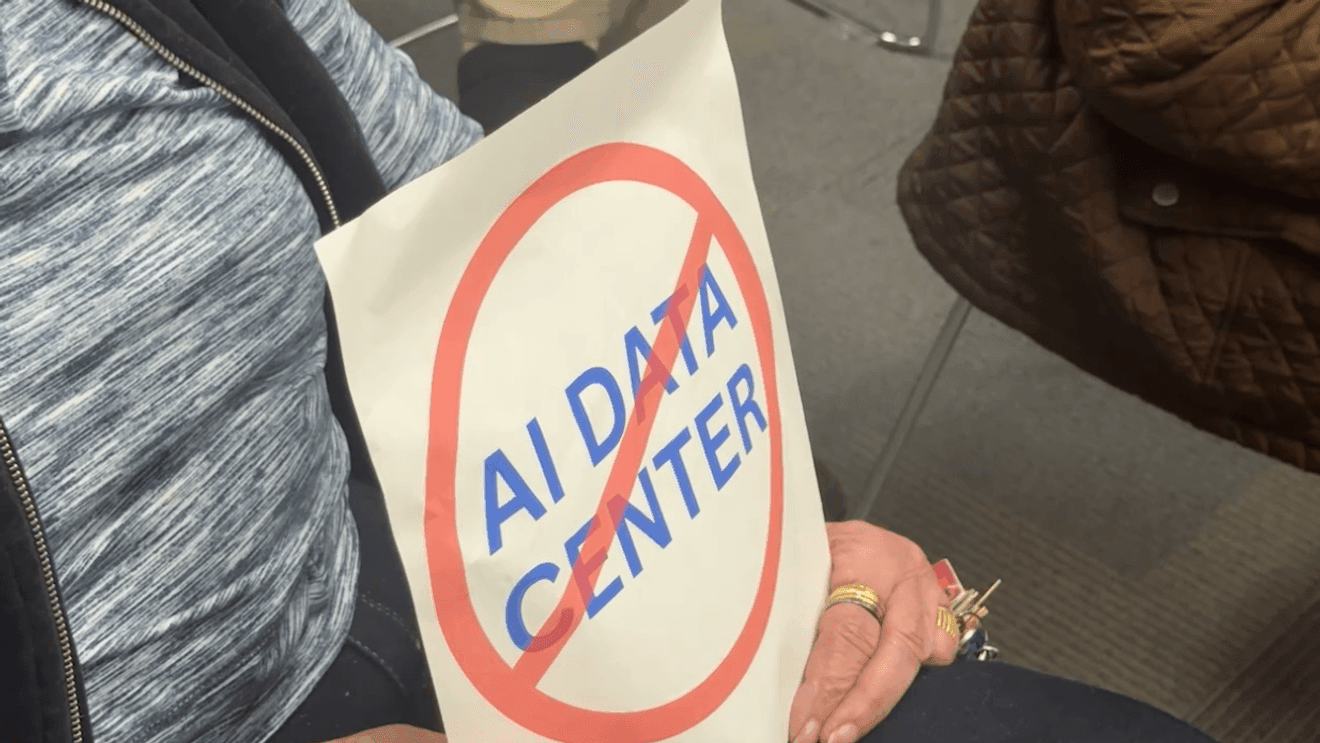
As artificial intelligence technology surges across the United States, a growing resistance is emerging not against the algorithms themselves, but against the physical infrastructure powering them. Communities nationwide are organizing against massive data centers, citing concerns that range from resource depletion to rising utility bills.
The opposition marks a shift in the public AI debate, which has typically focused on job displacement and misinformation risks. Now, attention is turning to the concrete consequences of AI’s rapid expansion: enormous facilities consuming vast amounts of electricity and water in local communities.
“These aren’t just digital concerns anymore,” explains a local activist from Frederick County, Maryland, where residents are tracking utility cost increases. “When your monthly electric bill jumps because of a facility that provides few local jobs but consumes resources at industrial scales, it becomes personal.”
The utility impact is already measurable. According to data from the U.S. Energy Information Administration analyzed by Axios, AI-related data centers are driving significant electricity price increases across multiple states. Maine has experienced a 36% surge, while New York, Louisiana, and Washington State have all seen increases of 13-14%.
Almost every state is experiencing some level of price increase, with only Montana, North Dakota, Nevada, and Iowa avoiding the trend. Energy usage maps show alarming “deep red” hotspots in regions where these facilities are concentrated.
The backlash has materialized in concrete political action. In Wisconsin, residents successfully used a ballot measure to block a proposed AI facility outright. Independence, Missouri voters took a more direct approach by ousting city council members who had supported a local data center project.
Boulder City, Nevada has become a hotspot for organized protests against a planned AI installation, while tensions in Indianapolis escalated to alarming levels when a city councilor who supported a data center had shots fired through his window – an extreme incident highlighting the emotional intensity of the debate.
The financial arrangements between tech companies and local governments have also come under scrutiny. Many communities question the value of tax incentives offered to attract these facilities, particularly when residents end up paying higher utility rates while tech companies receive preferential treatment.
“The infrastructure requirements are staggering,” notes an environmental engineer familiar with several data center projects. “A single large-scale AI data center can use as much electricity as tens of thousands of homes and millions of gallons of water for cooling systems. Communities are asking whether that’s a fair trade for the limited number of permanent jobs these automated facilities actually create.”
Federal legislators have taken notice of the growing discontent. Senator Bernie Sanders and Representative Alexandria Ocasio-Cortez have introduced the AI Data Center Moratorium Act, which would temporarily halt new AI data center construction nationwide.
“We cannot sit back and allow a handful of billionaire Big Tech oligarchs to make decisions that will reshape our economy, our democracy and the future of humanity,” Sanders stated when introducing the legislation in March 2026. The bill aims to create a pause for lawmakers and communities to evaluate infrastructure demands, environmental impacts, and utility consequences.
Industry analysts suggest this community-level resistance could potentially slow AI’s explosive growth in ways that abstract debates about AI ethics have not. When development directly affects residential power bills or consumes limited water resources, the opposition becomes tangible rather than theoretical.
The conflict represents a classic tension between technological progress and community autonomy. While tech companies promote AI as essential to America’s competitive future, local communities are increasingly asserting their right to determine whether the physical footprint of that progress belongs in their backyards – especially when they bear the costs through higher utility bills and environmental impacts.
As more communities organize against these facilities, the path forward for AI infrastructure remains uncertain, potentially creating geographic constraints on an industry that has, until recently, faced few limitations to its explosive growth.
Fact Checker
Verify the accuracy of this article using The Disinformation Commission analysis and real-time sources.

20 Comments
This is a good example of how the adoption of new technologies can have unintended consequences for local communities. Increased utility costs and resource depletion are real issues that need to be carefully considered.
Agreed. Hopefully policymakers and tech companies can work together with communities to find sustainable solutions.
It’s concerning to see how the expansion of AI data centers is directly impacting utility costs and resource usage in these communities. This is a complex challenge that will require innovative solutions to address both technological needs and local priorities.
Absolutely. I’m curious to see what kind of policy frameworks or public-private partnerships could help strike that balance.
Interesting to see the backlash against AI data centers. Seems like the community impact and resource usage is a major concern. I wonder what kind of solutions or compromises could be reached to address both the technology needs and local priorities.
Absolutely, it’s a complex issue with valid concerns on both sides. Finding the right balance will be crucial.
The opposition to AI data centers is an interesting development. It seems the community impact, in terms of utility costs and resource usage, is becoming a major point of contention. This is a complex issue that will require nuanced solutions.
Definitely. Technological progress shouldn’t come at the expense of local communities. Finding ways to mitigate the negative impacts will be critical.
The backlash against AI data centers is a compelling example of how technological progress can have unintended consequences for local communities. The utility and resource impact is a significant issue that deserves careful consideration as the industry continues to expand. Finding the right balance will be crucial.
Agreed. This highlights the importance of inclusive, collaborative approaches to technology deployment that prioritize the needs of all stakeholders, not just the industry.
The community resistance to AI data centers highlights an important aspect of technological progress that is often overlooked. The real-world consequences, like increased utility costs and resource depletion, need to be carefully weighed against the benefits of new technologies. Finding the right balance will be essential.
Well said. This is a nuanced challenge that requires input from all affected parties to find sustainable solutions.
This highlights an important tension between the rapid growth of AI and the real-world consequences for local communities. Resource depletion and rising utility bills are significant issues that need to be carefully considered as the technology continues to evolve.
Agreed. Striking the right balance will be crucial, and will likely require cooperation between tech companies, policymakers, and community stakeholders.
This is a fascinating development in the AI debate. It’s clear that the physical infrastructure supporting these technologies has significant implications for local communities, in terms of both resource usage and economic impact. Navigating this challenge will require careful consideration of all stakeholders’ priorities.
Absolutely. It’s a complex issue with no easy answers, but one that will be crucial to address as AI continues to expand its footprint.
The rise of AI is undoubtedly transformative, but it’s important that the infrastructure supporting it doesn’t come at the expense of local communities. Balancing innovation and environmental/economic impact will be critical going forward.
Well said. This is a nuanced issue that requires thoughtful dialogue and compromise from all stakeholders.
This is an interesting shift in the public discourse around AI. Instead of just focusing on the algorithms and their potential societal impacts, attention is now turning to the physical infrastructure that powers these technologies. The community concerns around utility costs and resource usage are valid and will need to be addressed.
Absolutely. As AI continues to grow, it’s critical that the real-world implications for local communities are taken into account and proactively addressed.