


Listen to the article
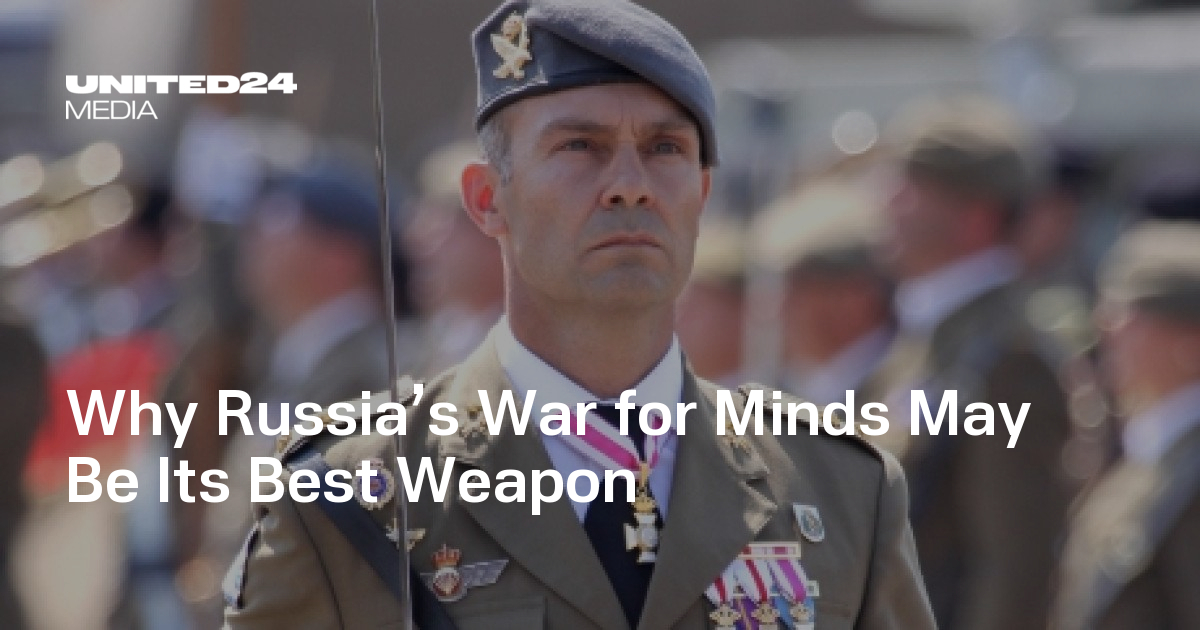
In an increasingly digitalized world, Colonel Juan Bustamante warns that Europe faces a severe threat it has largely ignored: cognitive warfare. While European nations invest billions in conventional military assets, the battlefield has expanded to include the human mind itself.
“There is no longer a rear guard,” warns Bustamante, a Spanish military officer and former Chief of Strategic Communication at the Operations Command of the Defense Staff. His stark assessment depicts a reality where civilians aren’t merely spectators but primary targets in a sophisticated campaign to reshape public perception.
Bustamante brings extensive battlefield experience from missions spanning Bosnia to Afghanistan. His military memoir “Afghan Dispatches” earned acclaim for its analytical depth, but his most urgent warnings focus on what he describes as the “fifth domain” of warfare – the cognitive battlespace that complements land, sea, air, and cyber operations.
“It’s incredible how the cognitive domain has been ignored,” Bustamante explains. “There’s barely any study of how decisions are made, how information and perception influence decision-making. Information warfare seeks to modify the human behavior of civilian and military populations.”
According to Bustamante, Russia has perfected this approach, deploying sophisticated disinformation operations with strategic precision. Rather than imposing a single narrative, Russia’s strategy aims to confuse populations, generate noise, and deepen social divisions within democratic societies.
“Russia is the country that uses cognitive warfare without limits the most,” he notes. “The most autocratic countries use it more because they go directly for the effect. It’s much cheaper than maintaining soldiers: giving whatever information they want, affecting our information, adding a manipulation charge.”
Recent events support his analysis. Earlier this year, UNITED24 Media documented how Russia intensified its information war through the “Matryoshka” bot network, which deployed fabricated accusations against French President Emmanuel Macron using Epstein files as cover, spreading disinformation across multiple social platforms while impersonating Western media outlets.
The stark asymmetry in institutional response capacity particularly alarms Bustamante. While Russia maintains organizations like the Internet Research Agency – commonly known as the “troll farm” in St. Petersburg where hundreds work around the clock – Western democracies lack comparable defensive structures.
“We don’t even understand what a cognitive defense structure should look like,” Bustamante says. “We would need something like a cognitive joint command: a structure capable of analyzing how you’re attacked, planning responses, and measuring the effectiveness of both our own and the adversary’s efforts.”
The mathematical disadvantage is striking: “Out of 100 disinformation attacks, you only respond to two. It’s useless,” he explains. Without coordinated institutional response, Western democracies remain perpetually reactive, unable to develop comprehensive defensive strategies.
Polarization serves as both a weapon and an objective in this new form of warfare. “NATO’s weak point is social cohesion,” Bustamante observes. “They seek essential polarization: it simplifies and divides. The more nationalist you are, the less pro-alliance you will be.”
This polarization exploits what Bustamante identifies as democracy’s central tension: “What is democracy’s weak point? I tolerate everything as long as what you’re thinking doesn’t affect my security. When I notice my security is wavering, then I say: wait, wait, wait.”
The European Union faces particular vulnerability since its strength depends on cooperation and trust between member states. By amplifying nationalist sentiments and eroding cross-border solidarity, disinformation campaigns strike at the foundation of European cooperation.
Ukraine represents a case study in this dynamic. President Zelenskyy must not only lead military operations but constantly reaffirm governmental legitimacy and alliance solidarity against a backdrop of coordinated disinformation designed to fragment Western support.
Our cognitive vulnerability is worsened by what Bustamante calls “hypocognition” – a state where people know many topics superficially but lack depth. “We have four clear ideas about each topic, but nothing deep,” he says. The “infinite scroll” of social media exacerbates this problem, keeping users in a perpetual state of superficial engagement.
Despite this concerning landscape, Bustamante rejects fatalism. His solution prioritizes education in critical thinking over technological fixes or restrictive regulations. “We have to educate in school, in discussions with friends, and in the way we inform ourselves,” he advises, while acknowledging this approach faces headwinds from platform algorithms designed to maximize engagement through polarization.
For organizations, Bustamante emphasizes the protective value of robust internal communication. Drawing from his experience commanding the Spanish Cavalry Regiment No. 11, he describes monthly meetings with all 650 soldiers: “They have to know what you’re like, because that cuts off rumors, because that cuts off disinformation, because with that they start trusting you.”
This trust-building approach creates resilient social networks less susceptible to manipulation. Without such foundations, societies remain vulnerable to what Bustamante bluntly describes as being “dumbed down” by information warfare.
As democratic societies face this evolving threat landscape, Bustamante’s warnings raise a crucial question: Do Western democracies possess the political will and intellectual discipline to build effective cognitive defenses before further damage to social cohesion occurs? As Bustamante himself concludes: “We cannot afford not to know how to do it.”
Fact Checker
Verify the accuracy of this article using The Disinformation Commission analysis and real-time sources.

12 Comments
Fascinating insights from Colonel Bustamante on the cognitive warfare threat facing Europe. It’s a sobering reminder that the battlefield has expanded well beyond physical domains. Protecting our citizens’ minds from manipulation is crucial in this digital age.
Agreed, the human mind is the new frontier of warfare. Investing in cognitive defense capabilities is as vital as traditional military assets these days.
This article highlights a critical vulnerability that Western nations need to address. Cognitive warfare is a powerful tool that can undermine our decision-making and sway public opinion. Protecting the human mind should be a key focus of our national security efforts.
Absolutely. Cognitive defense must be elevated alongside traditional military capabilities. Failing to do so leaves us dangerously exposed in the modern battlespace.
This article highlights an important vulnerability that Western nations need to address urgently. Cognitive warfare is a stealthy but powerful weapon that can undermine our decision-making and sway public opinion. We must strengthen our cognitive defenses.
Absolutely. Cognitive warfare is the 21st century equivalent of psychological operations. Failing to study and counter it leaves us dangerously exposed.
Colonel Bustamante’s assessment of the cognitive warfare threat is sobering. The idea that civilians are now primary targets in a campaign to reshape public perception is deeply concerning. Strengthening our cognitive defenses should be a top priority.
Agreed. Cognitive warfare is a complex and insidious threat that requires a multifaceted response. We must develop a comprehensive strategy to safeguard our decision-making processes and public discourse.
Interesting to see the military’s perspective on the cognitive warfare threat. Bustamante’s warnings about the ‘fifth domain’ of warfare ring true. We need a much deeper understanding of how information and perception influence decision-making in the modern age.
Absolutely. Cognitive defense is a vital but often overlooked component of national security. We must invest in research, training, and capabilities to protect our citizens from manipulation.
The concept of the ‘cognitive battlespace’ is a concerning one. Bustamante makes a compelling case that Europe has been too complacent in this domain. Shoring up our cognitive defenses should be a top priority alongside conventional military preparedness.
Agreed. Cognitive warfare is a complex challenge that requires a multidisciplinary approach, drawing on psychology, communications, and emerging technologies. We can’t afford to fall behind in this critical area.