


Listen to the article
UN Expert Warns of Growing Environmental Threats from Conflict, Mining and Misinformation
Two years into her mandate as the UN special rapporteur on the right to a healthy environment, Astrid Puentes Riaño is sounding the alarm about emerging threats to environmental rights worldwide.
In an interview with Geneva Solutions during her recent visit to Switzerland, Puentes Riaño highlighted how armed conflicts, a new wave of mining operations, and widespread misinformation are undermining global progress toward ensuring healthy environments for all.
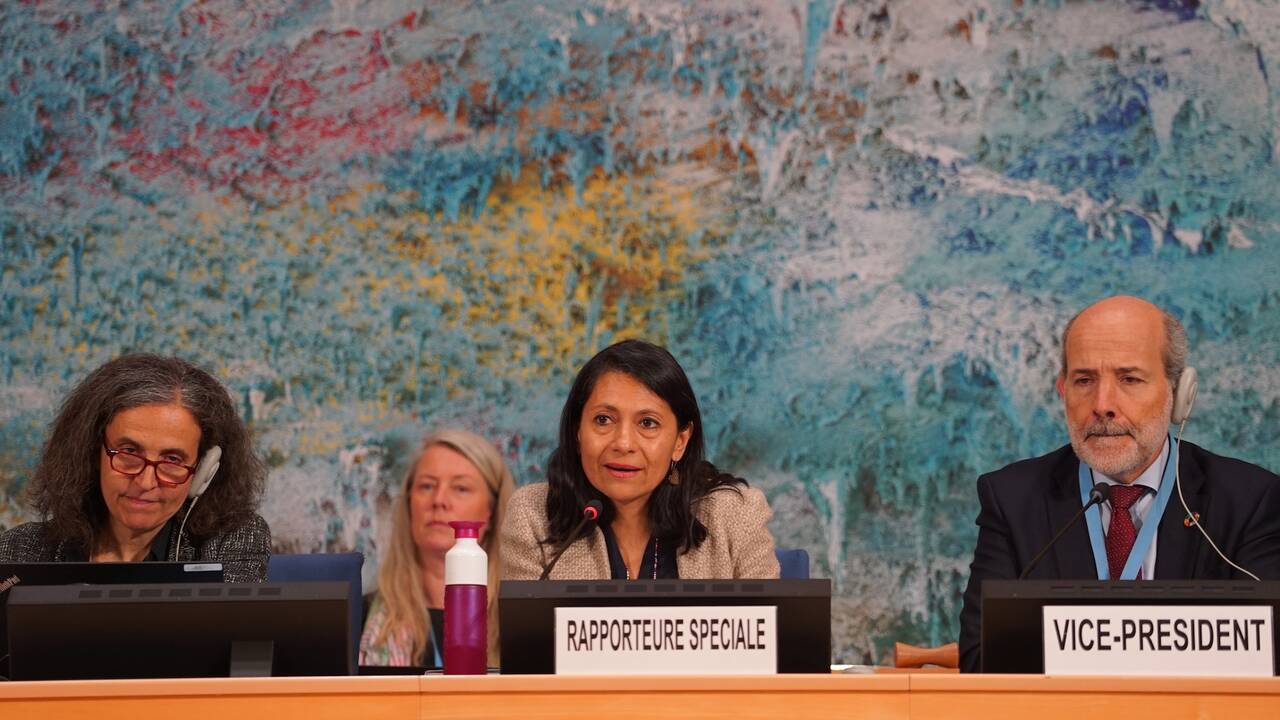
The Colombian-born lawyer, who teaches at the Universidad Iberoamericana in Mexico City, was in Geneva last week to present her latest report on air pollution to the Human Rights Council. Her document begins with a stark reminder: “Breathing clean air is vital for all.”
This message took on urgent significance when, just a day after her presentation, military strikes by the United States and Israel on oil storage facilities in Tehran left residents struggling to breathe as smoke filled the sky and acid rain fell over Iran’s capital.
“We are definitely seeing a rise, in conflicts, of the use of natural resources and the environment as a weapon of war,” Puentes Riaño observed. “Scientists also found a sharp increase in carbon emissions since the start of the war in Gaza. In spite of all efforts in the Middle East, Europe and the rest of the world to mitigate carbon emissions, just a week of war in Iran has hugely increased emissions.”
Puentes Riaño brings significant credibility to her role. Before her 2024 appointment as the first woman and first representative from a developing country to hold this mandate, she won a landmark case for communities in La Oroya, a Peruvian mining town devastated by toxic contamination. The decision ordered the government to compensate residents and hold mining companies accountable.
“That matters because the vast majority of the world’s population lives in cities,” she explained. “Human rights, health and the environment are not only about forests and Indigenous peoples. They concern all of us.”
The right to a healthy environment has gained substantial international recognition, with 166 states acknowledging it following a 2022 United Nations General Assembly resolution. Notable holdouts include China, Russia, and Iran, which abstained during the adoption vote.
“The International Court of Justice also provided very clear recognition of it recently,” Puentes Riaño noted, referring to the ICJ’s advisory opinion on climate change published in July 2025. “The ICJ said it is unthinkable how states may fulfill human rights, including the right to life and health, without enforcing and guaranteeing the right to a healthy environment.”
In her report on clean air, Puentes Riaño identified fossil fuel extraction and usage as major contributors to air pollution. She specifically called out the practice of flaring—burning off natural gas during oil extraction—which occurs globally despite being banned in some nations.
“States need to better monitor the sector, and emissions and toxics linked to fossil fuel facilities,” she urged. “I recommended that states use the best available science and technology, for a just energy transition.”
The rapporteur also expressed deep concern about environmental destruction during armed conflicts. Beyond air pollution from bombings and fires, she pointed to other environmental impacts, including “the destruction of ecosystems and water sources” and the demolition of olive trees in Palestine, which threatens both food security and environmental health.
Military emissions represent another blind spot in climate accounting. “States are not required to include emissions linked to the military in their emissions inventories,” Puentes Riaño explained, highlighting how this undermines global climate targets.
As the world rushes toward mining critical minerals for renewable energy technologies, Puentes Riaño warns of repeating past mistakes. She referenced the Australian documentary “Yurlu,” which chronicles an Indigenous community’s contamination from an abandoned asbestos mine.
“Whenever there is an extractive industry, there is a risk of impacts on human rights including the right to a healthy environment,” she stated. “States need to have strong regulations, good planning and carry out environmental, social and human rights impact assessments. It’s not enough after finishing activities to put a lock on the door and leave.”
Despite growing recognition of environmental rights, Puentes Riaño faces significant headwinds. Budget cuts to the Office of the High Commissioner for Human Rights threaten to limit the effectiveness of special rapporteurs, who work on a pro bono basis but require funding for country visits and report preparation.
“With fewer resources, we will be able to contribute less,” she warned. “If we decrease the already limited funding it will compromise our ability to be impactful.”
Fact Checker
Verify the accuracy of this article using The Disinformation Commission analysis and real-time sources.

11 Comments
This UN report underscores the urgent need to protect the fundamental right to a healthy environment in the face of war, mining, and the spread of misinformation. Ensuring access to clean air, water, and a thriving natural environment should be a top global priority.
The UN expert raises critical issues about the growing environmental threats from war, extractive industries, and disinformation campaigns. These challenges undermine global progress on environmental rights and human health. Urgent action is needed to address these interlinked problems.
Agreed. Governments and corporations must be held to higher standards when it comes to environmental protection, transparency, and respect for human rights. The public also has a role to play in staying informed and advocating for positive change.
This is deeply concerning. The right to a healthy environment should be a fundamental human right, yet it is being threatened by armed conflicts, predatory mining, and the spread of misinformation. We must hold leaders accountable and demand action to protect our planet and the wellbeing of all.
This article underscores the fragility of environmental rights in an increasingly volatile world. Ensuring access to clean air, water, and a healthy natural environment should be a fundamental human right, not a luxury. More must be done to enshrine these protections in law and hold bad actors accountable.
It’s alarming to see how armed conflicts are now directly impacting air quality and environmental health, as seen with the recent strikes in Iran. Protecting the right to a healthy environment requires a comprehensive approach to address the root causes of these problems.
This report highlights how conflict, mining, and misinformation are a toxic cocktail for the environment and human health. Ensuring a healthy environment should be a top global priority, not an afterthought. What specific steps can be taken to address these complex, intersecting challenges?
The UN expert raises important points about the need to safeguard environmental rights in the face of extractive industries, conflict, and misinformation. This will require bold action and collaboration across governments, businesses, and civil society. What are some of the key policy levers that could make a difference?
This report highlights the complex, interrelated challenges of armed conflict, extractive industries, and disinformation when it comes to safeguarding the environment and human health. Protecting environmental rights will require a multi-pronged approach addressing the root causes of these problems.
Agreed. Addressing these issues will require greater transparency, accountability, and collaboration between governments, businesses, and civil society. The stakes are high, and we must find ways to put environmental rights and human wellbeing at the center of policymaking.
The expert’s warnings about the growing threats to the right to a healthy environment are deeply concerning. Conflict, predatory mining, and the spread of misinformation are a toxic combination that jeopardizes progress on critical environmental and human rights issues. Urgent, coordinated action is needed.