


Listen to the article
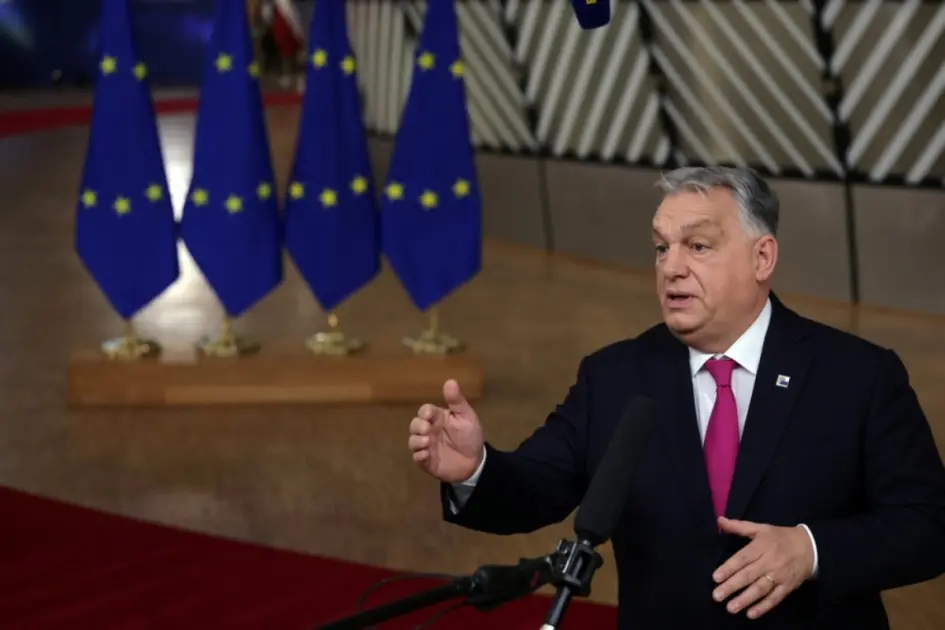
Hungarian Prime Minister Viktor Orbán has alleged Ukrainian interference in Hungary’s upcoming April 12 election, though he has provided no public evidence to support these claims. On January 26, Orbán stated that Hungarian national security services had identified what he described as “a coordinated attempt to influence” the vote, announcing that Hungary would summon Ukraine’s ambassador over the matter.
Ukraine swiftly rejected the accusation and summoned Hungary’s ambassador to Kyiv two days later. The diplomatic tension escalated when Hungarian Foreign Minister Péter Szijjártó reinforced the allegations on January 28, warning of “open and crude interference” benefiting the opposition Tisza party, which currently leads in polls.
The allegations come amid a global trend of increasing claims about misinformation and disinformation. The World Economic Forum’s Global Risks Report 2026 highlights growing concerns about false information and declining trust in news media. Since Orbán’s last electoral victory in April 2022, accusations of disinformation have become a more common campaign tactic globally.
Similar patterns emerged in Brazil’s 2022 election, where sophisticated disinformation campaigns questioned electoral integrity, and in Turkey’s 2023 elections, when President Erdoğan accused the opposition of collusion with the United States. In America, Secretary of State Marco Rubio recently dismantled counter-disinformation efforts, characterizing them as censorship mechanisms.
Orbán’s accusations fit within his established campaign strategy. He’s linking opposition leader Péter Magyar to both Ukraine and the EU while framing the election as a choice between war and peace. Simultaneously, he has launched a “national petition” against EU funding for Ukraine, claiming without evidence that the bloc might force Hungary to send soldiers to Ukraine if the opposition wins.
The credibility of Orbán’s claims is questionable given Ukraine’s ongoing existential struggle against Russia’s invasion. While Ukraine has clear motives to encourage greater Hungarian support, diverting scarce resources to interfere in a neighboring country’s election seems implausible. Relations between the countries have deteriorated in the information sphere, with reciprocal blocking of media websites, but this friction doesn’t necessarily constitute election meddling.
The foundation for anti-Ukraine narratives in Hungary was established years ago, particularly regarding Ukraine’s 2017 education law that affected Hungarian-language education in Zakarpattia, a region with a significant ethnic Hungarian population. Budapest leveraged this dispute to portray Ukraine as intolerant and unfit for Euro-Atlantic integration.
Pro-government Hungarian media outlets have consistently portrayed Ukraine as corrupt and nationalistic, with narratives sometimes crossing into explicit disinformation. Meanwhile, Hungarian investigative journalists have documented connections between Russian state media and Hungary’s public broadcaster, highlighting the government’s selective approach to foreign influence concerns.
Orbán’s government has a history of manufacturing dominant narratives to control political discourse. In 2015, during the European migration crisis, the government launched campaigns linking migration to terrorism despite UN criticism of their “extremely biased” messaging. This strategy successfully diverted attention from other issues, including the war in neighboring Ukraine.
The current allegation against Ukraine follows the same pattern: it’s designed to be repeatable, expandable, and resistant to disproof. If no evidence emerges, the absence itself can be reframed as proof of conspiracy. Ultimately, Orbán’s accusation functions less as security policy and more as campaign strategy—creating an environment where facts remain perpetually “under investigation” until election day.
Fact Checker
Verify the accuracy of this article using The Disinformation Commission analysis and real-time sources.

10 Comments
Allegations of foreign interference in elections are becoming increasingly common, though evidence is often lacking. It will be important for independent observers to closely monitor the situation in Hungary and ensure the integrity of the electoral process.
You raise a good point. Unsubstantiated claims can sow division and undermine faith in democratic institutions. Robust election monitoring and fact-based reporting will be crucial here.
This is a troubling development. While election security is critical, these allegations require rigorous, independent verification. Unfounded claims of interference, without clear proof, could undermine the legitimacy of the entire electoral process.
I agree, transparency and factual evidence are vital here. Unsubstantiated accusations, regardless of their source, should be met with caution and scrutiny to uphold the democratic process.
This is a complex geopolitical situation. While election security is vital, I’m concerned that these allegations lack sufficient evidence. Transparent, impartial investigation is needed to determine the facts and protect the democratic process.
I share your concerns. Voters deserve accurate information to make informed choices. Unfounded claims of interference, without clear proof, could unfairly influence the outcome.
Disinformation around elections is a growing global concern. However, these specific allegations seem to lack solid evidence. Maintaining the integrity of the electoral process should be the top priority, not political point-scoring.
You make a fair point. Inflammatory rhetoric and unproven claims can erode public trust. A calm, impartial approach focused on facts is essential for preserving democratic norms.
This seems like a concerning case of election disinformation. While I understand the need for election security, making unsubstantiated claims of interference could undermine trust in the democratic process. Transparency and evidence-based reporting are essential for fair elections.
I agree, unfounded allegations of election meddling are troubling. It’s critical that officials provide clear proof to back up such serious claims, rather than fueling political tensions.