


Listen to the article
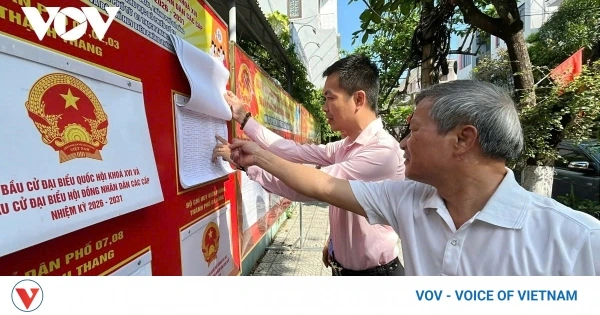
Vietnamese voters will cast their ballots on March 15 to elect deputies to the 16th National Assembly and local People’s Council for the 2026-2031 term, marking a significant political moment that reflects the people’s right to participate in governance.
As Vietnam approaches this important electoral event, authorities are working to combat a rise in disinformation campaigns on social media platforms, a common occurrence during major political moments in the country. These efforts underscore the importance of maintaining electoral integrity in an increasingly digital landscape.
The rapid expansion of the internet and social media has created unprecedented opportunities for social interaction and development while simultaneously providing hostile actors with a “soft battlefield” to undermine political stability. In recent weeks, misleading information about Vietnam’s electoral process has surfaced across various platforms, from social media to personal blogs and unofficial media channels.
These disinformation campaigns typically employ familiar tactics: distorting the nature of Vietnam’s political system, spreading misinformation, manipulating images, or exaggerating social issues to generate public skepticism. Security experts note that such activities rarely operate in isolation. Networks of fake accounts often disseminate similar messages across multiple platforms simultaneously, creating an illusion of widespread public sentiment and blurring the line between truth and falsehood.
One common narrative claims that elections in Vietnam are merely “symbolic” or “non-competitive,” often stemming from attempts to impose Western political models as the sole standard for evaluating democratic processes. In reality, Vietnam’s electoral system is clearly defined in the 2013 Constitution and the Law on the Election of Deputies to the National Assembly and People’s Councils.
The election process follows several structured stages, with a key component being the consultation mechanism led by the Vietnam Fatherland Front. This process helps ensure candidates meet standards of competence, integrity, and public trust through multiple rounds of discussion involving socio-political organizations and voter representatives.
Associate Professor Dr. Cao Van Trong, scientific secretary of the Party’s Central Theoretical Council, explains that the consultation mechanism serves dual purposes: reviewing candidates’ political and ethical qualifications while testing their social credibility. “Without such a mechanism, elections could easily be influenced by money, media campaigns or interest groups,” he noted. “Vietnam’s consultation process aims to reduce such risks and ensure relatively fair opportunities for candidates.”
Another disinformation tactic involves exaggerating isolated cases of individual misconduct as evidence of systemic failure. Associate Professor Dr. Bui Hoai Son, a member of the National Assembly’s Committee for Culture and Social Affairs, counters this narrative: “The true strength of a democratic system lies in its ability to correct itself and maintain accountability. Publicly addressing violations does not weaken democracy; it reinforces public confidence that power remains subject to the law.”
Vietnam has established legal frameworks to ensure a healthy information environment, including the 2025 Law on Cybersecurity and the 2015 Law on Cyberinformation Security. These laws stipulate that misusing the internet to spread misinformation, distort policies, or incite social division will face legal sanctions.
Countering disinformation requires collective effort across society. Media organizations play a crucial role in providing accurate and transparent information about election preparations, candidate lists, and the consultation process. Citizens also bear responsibility when participating in online spaces by verifying information before sharing it.
Vietnam’s efforts to protect election integrity come at a time when many countries worldwide are grappling with similar challenges. Digital disinformation has become a global concern, with electoral processes particularly vulnerable to manipulation through social media platforms.
The upcoming elections represent not merely a legal procedure but a fundamental expression of democratic rights in Vietnam’s political system. When laws are strictly enforced, media provides transparent information, and citizens understand both their rights and responsibilities, attempts to spread disinformation are less likely to undermine public confidence.
Authorities are also ensuring inclusive participation, with detention facilities in provinces like Nghe An and Ha Tinh making preparations for people in temporary custody to exercise their voting rights, reflecting Vietnam’s commitment to universal suffrage.
As March 15 approaches, the battle against electoral disinformation highlights the delicate balance between freedom of expression and maintaining the integrity of democratic processes in the digital age.
Fact Checker
Verify the accuracy of this article using The Disinformation Commission analysis and real-time sources.

15 Comments
The proliferation of disinformation campaigns on social media platforms is a growing concern for many countries. Vietnam’s efforts to address this issue before their upcoming elections are encouraging. I wonder what specific tactics or tools they’re using to identify and counter misleading narratives online.
Interesting to see Vietnam cracking down on online disinformation ahead of elections. Maintaining electoral integrity is crucial in the digital age, though it’s a constant challenge with hostile actors spreading misinformation. I wonder what specific tactics they’re using to combat this issue.
The rise of disinformation campaigns on social media is a growing threat to democratic processes around the world. Vietnam’s efforts to crack down on this ahead of their elections are encouraging. I’m curious to learn more about the specific tactics and tools they’re using to identify and counter misleading information online.
Efforts to crack down on online disinformation are important, especially around critical political events like elections. Vietnam’s approach is interesting, and I wonder how effective their counter-measures have been so far in identifying and addressing misleading information campaigns. It’s a complex issue without easy solutions.
Combating online disinformation is a growing challenge for many countries, especially ahead of elections. It’s encouraging to see Vietnam taking proactive steps to maintain the integrity of their political process. I wonder what specific tactics or technologies they’re using to identify and counter misleading information.
It’s good to see Vietnam taking proactive steps to combat online disinformation ahead of their elections. Maintaining the integrity of the political process in the digital age is crucial, though it’s an ongoing battle against hostile actors. I’m curious to learn more about their approach and the challenges they’re facing.
Disinformation campaigns can be very disruptive, especially around important political events. It’s good to see Vietnam taking steps to address this problem and protect the integrity of their electoral process. Curious to learn more about the tactics they’re deploying against misleading information online.
Agreed, these efforts are crucial. Curious to see if Vietnam’s approach could provide lessons for other countries facing similar disinformation challenges around elections.
The spread of disinformation online is a growing threat to democratic processes worldwide. Vietnam’s efforts to address this challenge before their upcoming elections are commendable. I’m curious to learn more about the specific tactics and tools they’re deploying to combat misleading narratives and maintain electoral integrity.
The rapid expansion of the internet and social media has certainly created new opportunities for disinformation campaigns to undermine political stability. Vietnam’s efforts to crack down on this ahead of key elections are commendable. I’m curious to learn more about the strategies they’re employing to combat misleading information online.
Disinformation is a serious issue that can undermine public trust and electoral integrity. It’s commendable that Vietnam is taking steps to address this challenge before their upcoming elections. I wonder what types of misleading information they’ve been seeing and how their counter-measures are working so far.
Protecting the integrity of the electoral process in the digital age is a critical challenge. Vietnam’s crackdown on online disinformation ahead of their elections is a positive step. I’m curious to learn more about the strategies and technologies they’re deploying to combat the spread of misleading information.
It’s encouraging to see Vietnam taking proactive steps to address online disinformation before their upcoming elections. Maintaining electoral integrity is crucial in the digital landscape, where hostile actors can easily spread misleading narratives. I’m curious to learn more about the specific tactics and technologies they’re using to combat this issue.
Protecting the integrity of the electoral process in the digital age is a major challenge for many countries. Vietnam’s crackdown on online disinformation ahead of their elections is a positive step. I wonder what lessons their approach could provide for others facing similar issues around political misinformation campaigns.
Maintaining electoral integrity in the digital age is such an important but complex challenge. It’s good to see Vietnam taking proactive steps to address online disinformation before their upcoming elections. I wonder what lessons their approach could provide for other countries facing similar issues.