


Listen to the article
In a growing effort to combat misinformation, Hanoi authorities have issued a warning about coordinated attempts to manipulate public opinion regarding the city’s land clearance projects. The Hanoi Police Department has identified what they describe as deliberate campaigns to distort information about urban development initiatives currently underway in Vietnam’s capital.
These development projects, according to city officials, are designed to boost socio-economic growth, modernize urban infrastructure, and improve living conditions for Hanoi residents. However, the land acquisition and clearance processes necessary for these initiatives have reportedly become targets for what authorities characterize as “hostile forces and politically opportunistic individuals.”
Law enforcement claims these actors are systematically spreading false information about the nature of land acquisition procedures in the city. Their tactics allegedly include exaggerating implementation challenges and fabricating stories about inadequate compensation and resettlement provisions. The apparent goal, according to police statements, is to provoke public outrage, encourage mass complaints, and ultimately disrupt social order.
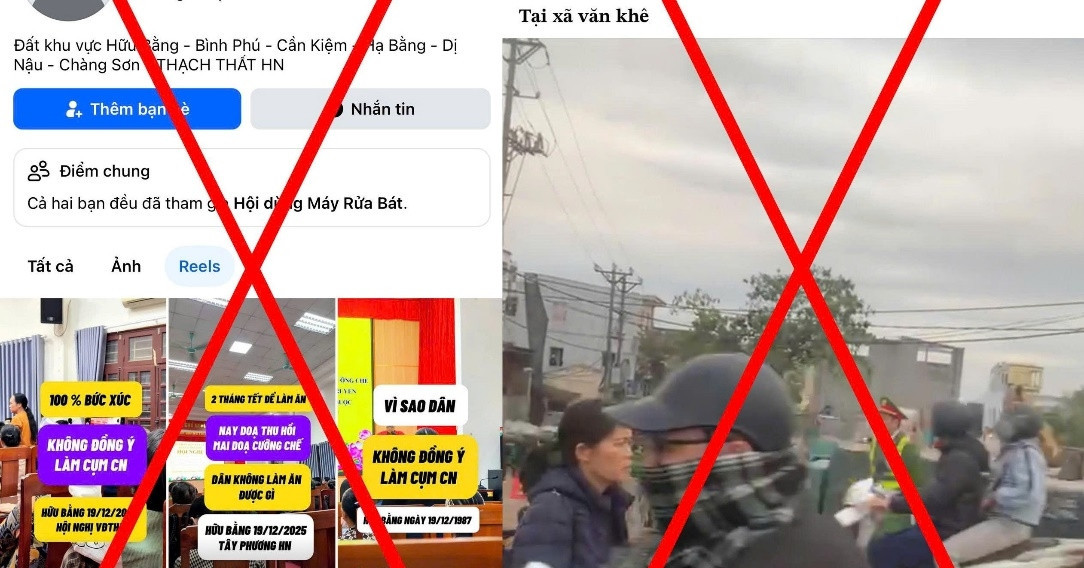
Evidence provided by Hanoi Police includes examples of manipulated content circulating online. These materials reportedly feature altered images and doctored videos misrepresenting the actual clearance process, which authorities say are strategically designed to create distrust between citizens and government institutions.
In contrast to these narratives, city officials maintain that Hanoi’s land clearance procedures adhere to legal standards and are conducted with transparency. They assert that compensation and resettlement policies are formulated to balance multiple interests: those of the state, development companies, and affected residents.
Officials acknowledge that challenges do arise during implementation. In these cases, they claim local authorities have made efforts to engage directly with affected citizens through dialogue sessions and have worked to resolve issues promptly within existing legal frameworks.
The situation highlights Vietnam’s ongoing urban transformation challenges. As Hanoi expands and modernizes to accommodate its growing population and economic ambitions, land-use conflicts have become increasingly common. Urban development projects often require significant land acquisition in areas that may have been residential or agricultural for generations.
Land compensation disputes are not unique to Hanoi but represent a nationwide challenge in Vietnam’s rapidly developing economy. The government has repeatedly updated land laws to address these issues, though implementation remains complex due to the intersection of traditional land-use practices, market forces, and administrative procedures.
The Cybersecurity and High-Tech Crime Prevention Division (PA05) of the Hanoi Police Department has urged the public to exercise caution when encountering information about these projects online. Citizens are specifically advised to avoid sharing, commenting on, or spreading unverified content that appears designed to provoke emotional responses.
For residents with legitimate concerns about their rights during the land acquisition process, authorities recommend contacting government agencies through official channels rather than pursuing information through unofficial sources, which they warn could lead to manipulation or involvement in unlawful activities.
In their statement, Hanoi Police emphasized the legal consequences awaiting those who exploit public issues to distort facts, incite unrest, or defame government policies. Such actions, they warned, would be treated as threats to national security and social stability, subject to prosecution under Vietnamese law.
The situation underscores the ongoing tension between Vietnam’s ambitious development agenda and the challenges of managing the social impacts of rapid urbanization, particularly in politically sensitive areas such as land rights and compensation.
Fact Checker
Verify the accuracy of this article using The Disinformation Commission analysis and real-time sources.

8 Comments
Disinformation campaigns targeting infrastructure projects are all too common these days. It’s good to see the Vietnamese authorities taking a strong stance against these tactics and working to provide the public with accurate information. Maintaining public trust will be essential for the success of this bridge project.
This seems to be a concerning case of disinformation around an important infrastructure project. It’s good to see the authorities taking steps to combat the spread of false narratives and correct the record. Transparent communication and engagement with the public will be key to ensuring this project can proceed without undue disruption.
Agreed. Misinformation can be very damaging, especially for critical development initiatives. I hope the authorities are able to effectively counter the disinformation campaign and provide clarity to the public.
This is a classic example of how disinformation can be used to undermine necessary development initiatives. I’m glad to see the Vietnamese government taking proactive steps to counter the false narratives and provide accurate information to the public. Upholding transparency will be key.
Agreed. Disinformation can be a significant obstacle to progress, especially for complex projects like this. The authorities’ efforts to expose the truth and engage the public constructively are crucial.
It’s unfortunate to see politically motivated actors trying to distort information about this important infrastructure project. I hope the authorities’ efforts to combat disinformation are effective in maintaining public support and ensuring the successful completion of the Red River bridge.
Disinformation around urban development projects is a common tactic used to sow discord and undermine progress. It’s reassuring to see the Vietnamese authorities taking this threat seriously and working to expose the truth. Maintaining public trust will be crucial for the success of this bridge project.
Absolutely. Addressing misinformation head-on is the best way to prevent it from taking hold. Transparency and open communication from the authorities will be essential to address any legitimate concerns the public may have.