


Listen to the article
Turkic Nations Consider Joint Fact-Checking Center to Combat Disinformation
Uzbekistan has proposed creating a shared fact-checking center for Turkic nations as part of a broader strategy to combat disinformation across the region. The initiative was presented during the Forum of Turkic States on Combating Disinformation held this week in Ankara, Türkiye.
Hamza Jumayev, Uzbekistan’s State Advisor on Language, Spirituality, and Education, outlined the proposal, stressing that Turkic countries need a unified approach to counter false information that threatens regional stability and security.
“In today’s digital landscape, disinformation spreads faster than truth,” Jumayev told forum participants, according to reports from The Caspian Post. “A collaborative fact-checking center would allow our nations to pool resources and expertise to identify and neutralize misleading content more efficiently.”
The proposal goes beyond fact-checking, encompassing a comprehensive media development strategy for the Turkic world. Jumayev called for establishing specialized media schools and journalism academies that would train a new generation of media professionals equipped to navigate the complex information environment.
This initiative emerges against a backdrop of growing concerns about foreign influence operations targeting the Central Asian region. The Turkic states—which include Azerbaijan, Kazakhstan, Kyrgyzstan, Turkey, Turkmenistan, and Uzbekistan—have increasingly sought to coordinate their approaches to information security as digital threats become more sophisticated.
Media experts note that the region faces unique challenges when combating disinformation. With multiple languages, varying levels of press freedom, and different regulatory frameworks, coordinating fact-checking efforts has historically been difficult.
“The proposal represents an important recognition that disinformation doesn’t respect national boundaries,” said Aida Sultanbekova, a Central Asian media analyst. “These countries share historical and cultural ties, but they’ve lacked institutional frameworks for media cooperation.”
Jumayev also suggested that representatives from allied Turkic countries should participate in each other’s press councils. This cross-representation would help present a unified position against external information campaigns and ensure consistent standards for journalistic integrity across the region.
The Organization of Turkic States, formerly known as the Turkic Council, has become increasingly active in fostering cooperation on security and communications issues. Established in 2009, the intergovernmental organization has evolved from primarily cultural and economic collaboration to addressing shared challenges in cybersecurity and information warfare.
Regional media observers view the proposal as part of a broader trend toward deeper integration among Turkic nations, which has accelerated in recent years. These countries collectively represent a significant geopolitical bloc with growing economic and strategic importance.
“What we’re seeing is an attempt to build resilience against information operations that have historically exploited divisions between these nations,” explained Dr. Metin Aktas, a communications professor at Ankara University. “A joint fact-checking center would provide an institutional backbone for what has mostly been ad hoc cooperation.”
The practical implementation of such a center would face numerous challenges, including funding mechanisms, operational independence, and potential political interference. Questions remain about how such a center would maintain credibility while navigating the varying political environments of member states.
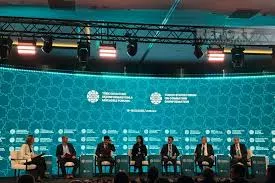
The forum in Ankara brought together media representatives, government officials, and technology experts from across the Turkic world. It highlighted growing recognition that disinformation represents a significant national security challenge requiring multinational responses.
Forum participants are expected to develop concrete recommendations for implementing the proposal in the coming months, with a follow-up meeting planned for later this year.
Fact Checker
Verify the accuracy of this article using The Disinformation Commission analysis and real-time sources.

16 Comments
This is an interesting initiative to combat disinformation in the Turkic region. Fact-checking centers can play a vital role in verifying information and combating the spread of false narratives. Collaboration between Turkic states could strengthen the effort.
Agreed. Shared resources and expertise would make the fact-checking more effective. Building media literacy skills is also crucial for empowering citizens to identify and reject misinformation.
This proposal demonstrates the growing recognition of the need to address disinformation across the Turkic region. A collaborative fact-checking center could be an important tool, but its success will depend on its independence and credibility.
Absolutely. Maintaining high journalistic standards and ensuring transparency will be crucial for the center to be effective and trusted by the public.
The idea of a shared fact-checking center for Turkic states is an intriguing one. Coordinating efforts and resources could enhance the reach and impact of fact-checking in the region.
Agreed. Investing in media development and training programs is also a smart long-term strategy to build resilience against disinformation campaigns.
This is a timely initiative given the growing concerns around disinformation, especially in the digital age. Establishing a fact-checking center for Turkic states could be an effective way to combat the spread of false narratives in the region.
Pooling resources and expertise across Turkic nations is a smart approach. Coordinated fact-checking and media development efforts can help build resilience against disinformation campaigns.
This proposal highlights the growing importance of fact-checking and media literacy in the Turkic region. A collaborative approach could strengthen the ability to identify and respond to disinformation threats.
Absolutely. Disinformation knows no borders, so a unified, cross-border initiative makes a lot of sense. Effective implementation will be key to the center’s success.
While the proposal sounds promising, the success will depend on the center’s independence, transparency, and credibility. Ensuring it maintains high standards of journalism and fact-checking will be crucial.
Good point. The center will need strong safeguards against political interference or bias to be truly effective. Rigorous, impartial fact-checking is essential for building public trust.
Disinformation poses a real threat to regional stability, so this proposal is a step in the right direction. A unified, collaborative approach across Turkic nations could help address the problem more comprehensively.
It’s good to see Uzbekistan taking the lead on this issue. Strengthening media professionalism through specialized training programs is an important part of the solution.
Combating disinformation is a complex challenge, but a regional fact-checking center could be a valuable tool. Coordinating efforts across Turkic states could enhance the impact and reach of the initiative.
Agreed. Establishing specialized media training programs is also a smart move to develop a new generation of journalists equipped to navigate the digital information landscape.