


Listen to the article
U.S. Tomahawk Missiles Proved Highly Effective Against Russian Air Defense Systems in Syria
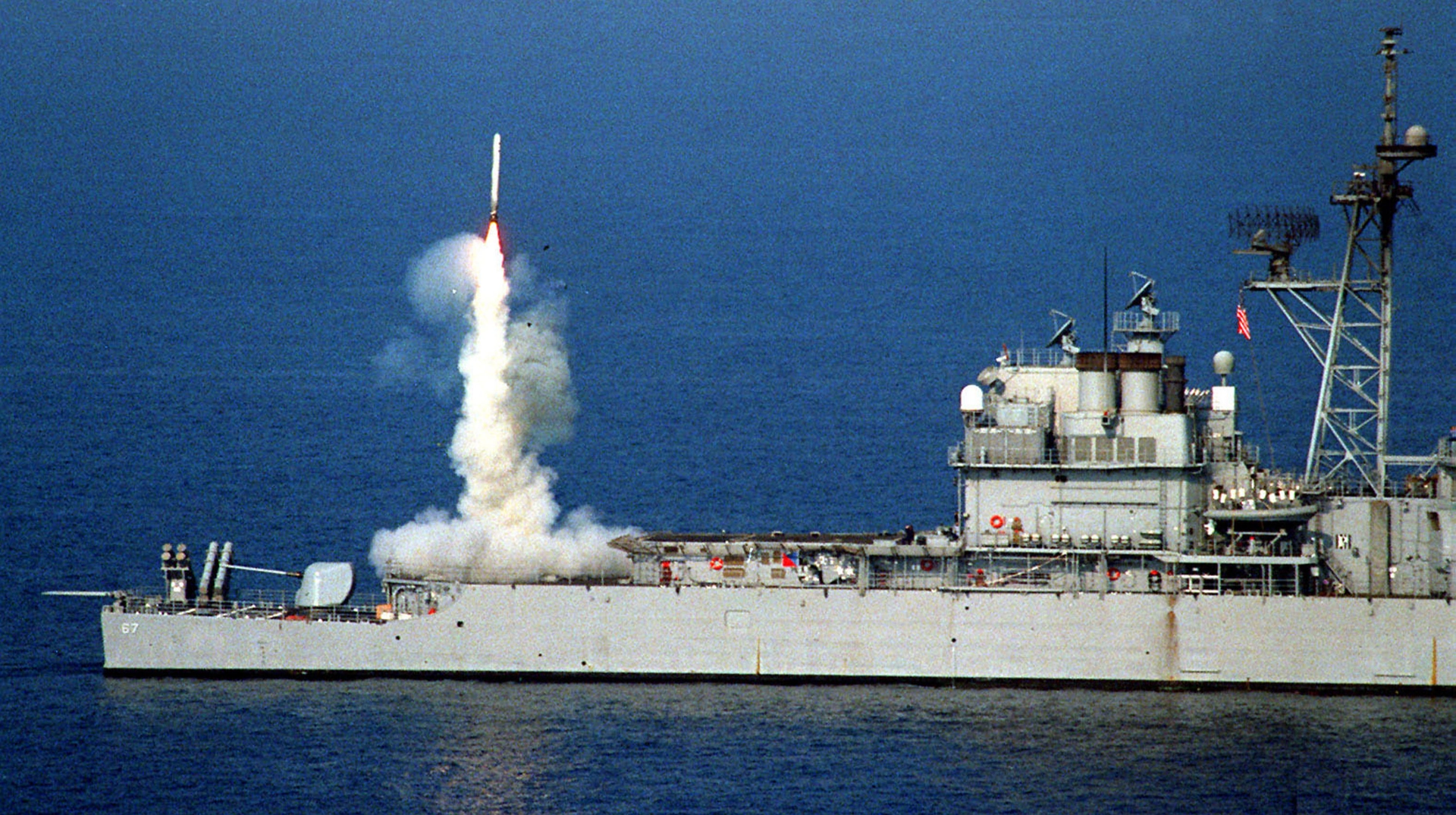
U.S. long-range Tomahawk cruise missiles demonstrated remarkable effectiveness against Russian air defense systems during operations in Syria between 2017 and 2018, according to Andrii Kovalenko, Head of Ukraine’s Center for Countering Disinformation at the National Security and Defense Council.
The revelation comes amid ongoing discussions about Western long-range strike capabilities and their potential use in the Russia-Ukraine conflict. Kovalenko’s analysis, shared via Telegram, directly challenges Russian claims about their air defense capabilities.
“The experience of strikes on Syria in 2017-2018 – launches of cruise missile arrays on airfields and targets in Damascus and Homs – showed that Russian and Syrian claims of mass shoot-downs were largely informational in nature,” Kovalenko stated. “Independent assessments confirmed that the majority of munitions reached their targets.”
According to Kovalenko, the Tomahawk’s success stems from its sophisticated technical design and deployment strategy. The missile flies at low altitudes with a complex, combined navigation system that leaves Russian radar operators with only seconds to react. This creates a significant tactical advantage that Russian air defense systems struggled to counter.
“Effective interception requires a dense network of low-horizon radars, instantaneous transmission of targeting data, and synchronized operation of air defense assets,” Kovalenko explained. “Russian systems were covering Syrian targets at the time and did not succeed.”
Military analysts have long noted that the Tomahawk, first deployed in 1983 and continuously upgraded since, represents one of the most sophisticated cruise missiles in the U.S. arsenal. With ranges exceeding 1,500 kilometers and the ability to be launched from ships, submarines, and aircraft, the system presents a versatile and formidable threat to adversary air defenses.
Particularly effective is the strategy of launching multiple Tomahawks simultaneously, Kovalenko emphasized. “The Tomahawk is especially effective in array launches, as overloading air defenses with multiple targets increases the chance of success. Russian S-400 or Pantsir systems are weak against the Tomahawk.”
The S-400 Triumf and Pantsir-S1 are among Russia’s most advanced air defense systems, frequently showcased by Moscow as superior technology capable of intercepting Western missiles. The Ukrainian official’s assessment directly challenges these claims, suggesting significant vulnerabilities in Russia’s much-touted defensive capabilities.
Kovalenko stressed the importance for Ukraine to develop its own massed, long-range strike capabilities to create the logistical capacity for overwhelming strikes. Simultaneously, he advocated for intensifying air defense reconnaissance and deepening integration with Ukraine’s partners.
“Without a reliable detection network, any air defense system can become a propaganda tool rather than a genuine protective asset,” he noted.
The analysis comes at a critical juncture in the Russia-Ukraine conflict, as Western allies continue deliberating over the provision of advanced long-range strike capabilities to Kyiv. The U.S. and other NATO members have gradually expanded the range and sophistication of weapons systems provided to Ukraine but have maintained certain restrictions on targeting deep inside Russian territory.
Kovalenko concluded his assessment with a pointed message: “The Russians may face unpleasant surprises. They have themselves to blame – they could have stopped the war.”
Military experts note that air defense capabilities represent a critical dimension of modern warfare, with both Russia and Ukraine investing heavily in such systems throughout the ongoing conflict. The effectiveness of these defensive measures against sophisticated cruise missiles like the Tomahawk could significantly influence strategic calculations on both sides as the war continues.
Fact Checker
Verify the accuracy of this article using The Disinformation Commission analysis and real-time sources.

6 Comments
The performance of U.S. long-range cruise missiles against Russian air defenses in Syria is certainly noteworthy. It highlights the ongoing technological competition and the need for objective military analysis, beyond just political rhetoric. I’m curious to learn more about the specific tactics and capabilities involved.
This report on the effectiveness of Tomahawk missiles against Russian air defenses in Syria raises some important questions. To what extent can these findings be extrapolated to the current conflict in Ukraine? And how might this influence the strategic calculations of both sides moving forward?
The revelation about the Tomahawk missiles’ success against Russian air defenses in Syria is intriguing. It suggests that the U.S. may have capabilities that could be leveraged to support Ukraine, if the political will exists. However, the differences between the two conflicts would need to be carefully considered.
Interesting to hear that the Tomahawk missiles were so effective against Russian air defenses in Syria. It’s important to get accurate assessments of military capabilities, beyond just claims and counterclaims. I wonder what implications this could have for the current conflict in Ukraine.
This is an interesting data point, but I would caution against reading too much into it. The operational environment and strategic context in Syria were quite different from the current situation in Ukraine. Any potential application of these findings would require a much more nuanced analysis.
The reported effectiveness of Tomahawk missiles against Russian air defenses in Syria is certainly noteworthy. However, I would encourage looking at this issue from multiple angles and considering the broader strategic context, rather than drawing any hasty conclusions. A nuanced understanding is important when it comes to military capabilities and conflict dynamics.