


Listen to the article
The United States has imposed visa bans on five Europeans, including a former European Union commissioner, accusing them of pressuring tech companies to censor and suppress American viewpoints on social media platforms.
Secretary of State Marco Rubio announced the sanctions on Tuesday, describing the targeted individuals as “radical activists” who had collaborated with foreign governments to restrict free speech online. The move represents a significant escalation in transatlantic tensions over digital governance and content moderation.
“For far too long, ideologues in Europe have led organized efforts to coerce American platforms to punish American viewpoints they oppose,” Rubio wrote on X, formerly Twitter. “The Trump Administration will no longer tolerate these egregious acts of extraterritorial censorship.”
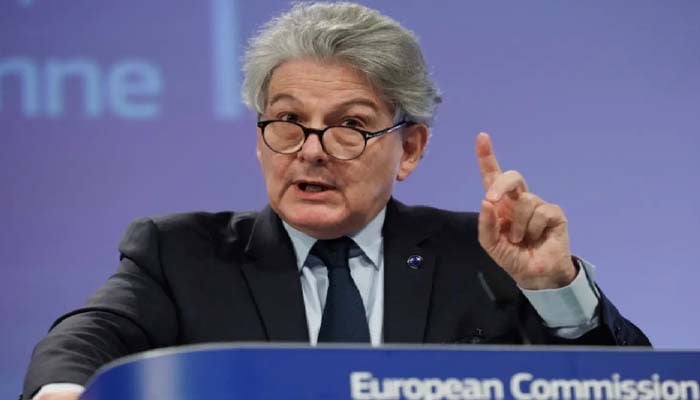
The most high-profile figure sanctioned is Thierry Breton, a prominent French businessman who served as European Commissioner for the Internal Market from 2019 to 2024. Breton was instrumental in developing and implementing the EU’s Digital Services Act (DSA), a sweeping regulatory framework designed to combat online hate speech, misinformation, and illegal content.
Sarah Rogers, the U.S. Undersecretary for Public Diplomacy, specifically identified Breton as the “mastermind” behind the DSA, characterizing the legislation as a tool used to suppress speech rather than protect users. Rogers claimed Breton used the DSA to threaten Elon Musk, the owner of X and a close ally of President Donald Trump, ahead of Musk’s interview with Trump during the 2022 presidential campaign.
The sanctions come at a time of increasing friction between the United States and Europe over digital policy. The EU has taken a more aggressive approach to regulating tech platforms through measures like the DSA and the Digital Markets Act, while the Trump administration has signaled its intent to roll back regulations on American tech companies.
Digital rights experts note that the DSA was designed to create a safer online environment by requiring platforms to quickly remove illegal content and limit the spread of harmful material. However, critics of the legislation, particularly in the United States, have argued that it gives European regulators too much power to determine what speech is acceptable online.
The visa bans effectively prevent the five sanctioned individuals from entering the United States, representing both a practical limitation and a symbolic rebuke. While the immediate impact may be limited, the move signals the Trump administration’s confrontational stance toward European digital regulations that it views as overreaching.
The timing of the sanctions is notable, coming shortly after Trump’s return to office and amid his renewed criticism of social media content moderation. Trump has frequently characterized content moderation decisions as politically motivated censorship, particularly following his own temporary bans from major platforms after the January 6, 2021, Capitol riot.
European officials have yet to formally respond to the sanctions, but the move is likely to strain U.S.-EU relations at a time when cooperation on other issues, including Ukraine, trade, and climate change, remains crucial.
The clash highlights fundamental differences in how the United States and Europe approach online speech. The U.S. has traditionally favored minimal government intervention, relying on Section 230 of the Communications Decency Act to shield platforms from liability for user content, while the EU has moved toward a more regulated approach that places greater responsibility on tech companies.
As digital platforms continue to play an increasingly central role in public discourse, these divergent regulatory philosophies seem destined to create ongoing tension between the two economic powerhouses, potentially forcing global tech companies to navigate contradictory compliance requirements across jurisdictions.
Fact Checker
Verify the accuracy of this article using The Disinformation Commission analysis and real-time sources.

8 Comments
This escalation in the transatlantic dispute over social media regulations is quite concerning. While the details are murky, the sanctions against European figures seem like an aggressive move that could further strain relations. I hope both sides can step back and find a more collaborative approach to address online harms.
This is a complex issue without easy solutions. I appreciate the US wanting to defend free speech, but the EU’s efforts to regulate harmful content also have merit. Hopefully the two sides can find common ground and work towards balanced policies that respect both individual liberties and public safety online.
As someone interested in mining and energy developments, I wonder how this dispute over social media regulations could impact those industries. Might it lead to more geopolitical tensions that affect commodity markets and investment?
The rising tensions between the US and EU over digital governance are quite concerning. While I understand the desire to combat disinformation, these sanctions seem like a heavy-handed approach that could backfire. Hopefully cooler heads can prevail and find a more constructive path forward.
The sanctions against these European ‘disinformation figures’ raise some concerning questions about the limits of free speech online. While combating misinformation is important, these actions could also set a precedent for overreach in censorship.
Do you think these sanctions will ultimately help or hinder efforts to address online disinformation in a balanced way? It’s a tricky balance to strike.
This is a significant development in the ongoing debate over digital governance and content moderation. While free speech is crucial, the spread of disinformation also poses risks. It will be interesting to see how this escalation in tensions plays out between the US and EU.
I’m curious to learn more about the specific accusations against these European figures. Were there clear violations of free speech, or is this a more nuanced situation?