


Listen to the article
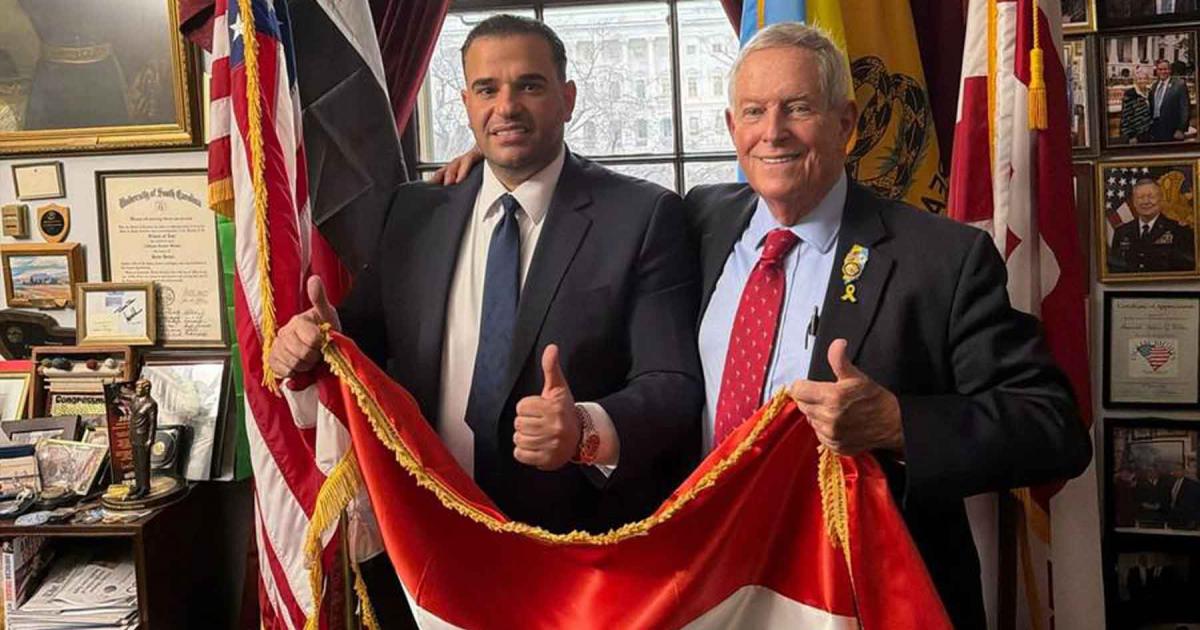
Iraqi politicians and armed groups aligned with Iran have been circulating unverified reports about the imminent removal of the US special envoy to Iraq, reflecting growing tensions between American diplomatic efforts and pro-Tehran factions in Baghdad.
The rumors surrounding the alleged dismissal of US envoy Savaya highlight the intensifying power struggle over Iraq’s political future and the fierce resistance to Washington’s attempts to limit Iranian influence in the country.
Savaya’s appointment by President Trump in October marked only the third time since 2003 that the United States has deployed a special envoy to Iraq, following civil administrator Paul Bremer and Brett McGurk, who coordinated the campaign against Islamic State in 2014. The appointment was widely viewed as an unconventional diplomatic move amid shifting regional priorities.
Since taking office, Savaya has generated significant controversy through his public statements and diplomatic messaging. He has explicitly called for dismantling armed factions operating outside state control, preventing their participation in government formation, and has warned that maintaining the current political arrangement could plunge Iraq back into cycles of instability.
The American envoy has particularly angered pro-Iranian political forces and armed groups, who increasingly view him as a direct threat to their interests and position within Iraq’s political ecosystem. These factions accuse Savaya of attempting to reshape Iraq’s internal balance of power by pressuring the government to disarm militias and exclude them from decision-making centers.
“These efforts are seen by Iran-aligned groups as part of Washington’s broader strategy to reduce Tehran’s considerable influence in Baghdad,” explained a senior Iraqi political analyst who requested anonymity due to security concerns.
Savaya’s diplomatic initiatives have centered on strengthening Iraqi state sovereignty and consolidating security decision-making within official institutions. He has advocated for economic and security reforms designed to decrease Baghdad’s dependence on Iran while promoting international partnerships that would grant Iraq greater political and economic autonomy.
In recent weeks, the envoy has intensified his diplomatic activities as Washington has hardened its stance toward Iran. His efforts have paralleled calls for the Iraqi government to adopt more stringent measures against militias linked to Iran’s Islamic Revolutionary Guard Corps, particularly against the backdrop of President Trump’s threats of potential military action against Iran.
Earlier this month, Savaya participated in high-level discussions at the White House with US Defense Secretary Pete Hegseth and counterterrorism chief Sebastian Gorka. The meeting focused on regional security challenges, the destabilizing role of armed groups, and mechanisms for countering terrorist financing networks in Iraq.
The special envoy has also publicly announced plans to launch a comprehensive review of suspicious financial transactions within Iraq, working in conjunction with the US Treasury Department and the Office of Foreign Assets Control. According to Savaya, this initiative aims to expose financial networks used to undermine economic stability and fund terrorist activities, suggesting that new sanctions could target entities deemed threats to Iraq’s stability.
Iraqi political observers note that the circulation of rumors about Savaya’s dismissal reflects the intensity of both internal and regional struggles over Iraq’s future direction. It also demonstrates the substantial challenges facing US efforts to curtail Iran’s deeply entrenched influence in the country, which has been steadily building since the 2003 US invasion removed Saddam Hussein from power and created a power vacuum that Iran has effectively exploited.
The situation underscores the complex geopolitical landscape in Iraq, where US and Iranian interests continue to clash, with Iraqi sovereignty and stability hanging in the balance.
Fact Checker
Verify the accuracy of this article using The Disinformation Commission analysis and real-time sources.

30 Comments
Silver leverage is strong here; beta cuts both ways though.
Good point. Watching costs and grades closely.
Good point. Watching costs and grades closely.
Production mix shifting toward Disinformation might help margins if metals stay firm.
Good point. Watching costs and grades closely.
Production mix shifting toward Disinformation might help margins if metals stay firm.
Good point. Watching costs and grades closely.
Silver leverage is strong here; beta cuts both ways though.
Good point. Watching costs and grades closely.
Good point. Watching costs and grades closely.
If AISC keeps dropping, this becomes investable for me.
Good point. Watching costs and grades closely.
Good point. Watching costs and grades closely.
Uranium names keep pushing higher—supply still tight into 2026.
Good point. Watching costs and grades closely.
Good point. Watching costs and grades closely.
Uranium names keep pushing higher—supply still tight into 2026.
If AISC keeps dropping, this becomes investable for me.
Good point. Watching costs and grades closely.
Good point. Watching costs and grades closely.
Interesting update on US Envoy Accuses Iran-Linked Militias in Iraq of Spreading Disinformation. Curious how the grades will trend next quarter.
Good point. Watching costs and grades closely.
Production mix shifting toward Disinformation might help margins if metals stay firm.
Good point. Watching costs and grades closely.
Silver leverage is strong here; beta cuts both ways though.
Good point. Watching costs and grades closely.
Silver leverage is strong here; beta cuts both ways though.
Good point. Watching costs and grades closely.
Uranium names keep pushing higher—supply still tight into 2026.
Good point. Watching costs and grades closely.