


Listen to the article
U.S. Imposes Unprecedented Visa Bans on European Digital Regulators
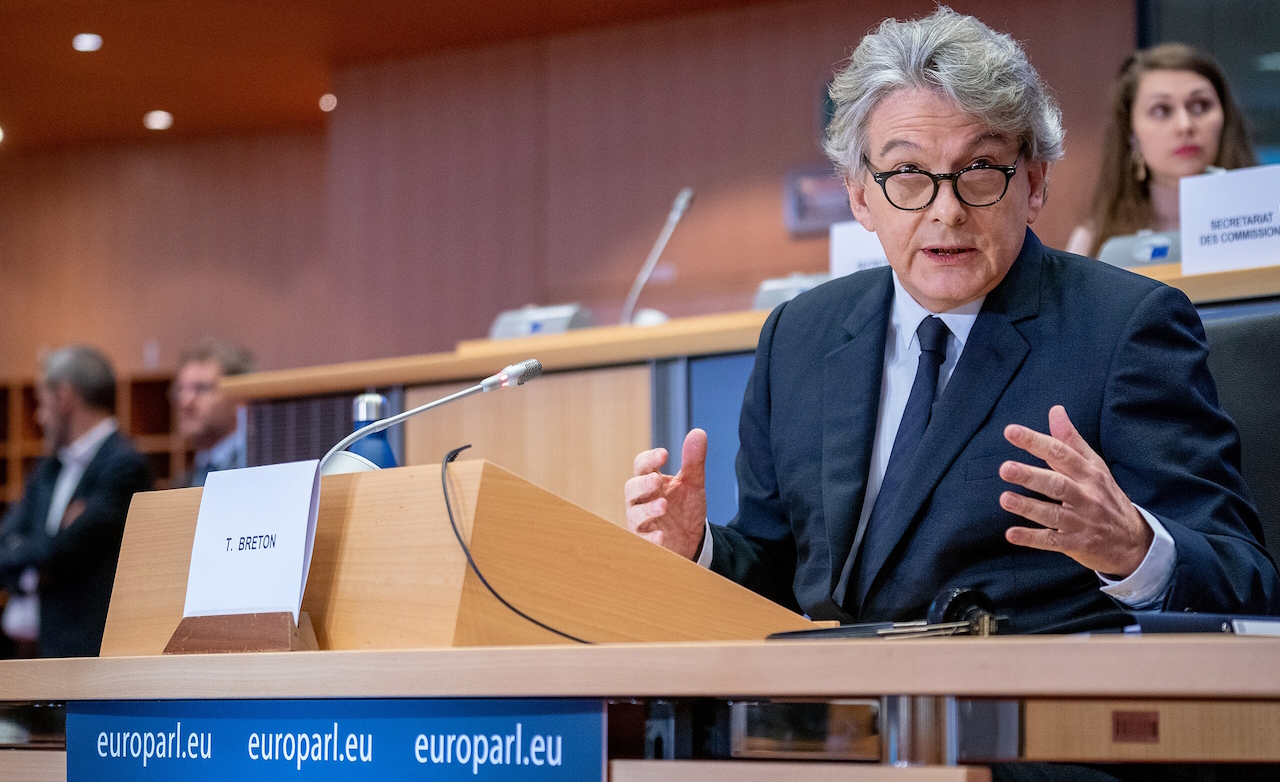
In a dramatic break with diplomatic norms, the U.S. State Department has imposed visa bans on five European figures, including former EU Commissioner Thierry Breton, accusing them of coordinating what Secretary of State Marco Rubio called a “censorship-industrial complex.”
The sanctions, announced Tuesday, target individuals who have played key roles in implementing European digital content regulations and researching online hate speech. Beyond Breton, the list includes executives from prominent research organizations: Imran Ahmed of the Center for Countering Digital Hate, Clare Melford of the Global Disinformation Index, and two leaders from German NGO HateAid.
“The State Department is taking decisive action against five individuals who have led organized efforts to coerce American platforms to censor, demonetize, and suppress American viewpoints they oppose,” Rubio said in the official announcement.
The move represents an extraordinary use of immigration policy as a retaliatory measure against allied regulators and researchers, effectively asserting that U.S. free speech standards should prevail globally. Under Secretary for Public Diplomacy Sarah Rogers, who played a key role in identifying the targets, has previously characterized European digital regulations as ideological tools rather than consumer protections.
The visa bans appear to be a direct response to the European Commission’s recent €120 million fine against X (formerly Twitter) for deceptive verification practices under the Digital Services Act (DSA). The December 5 penalty marked the first major financial enforcement action under the EU’s landmark content moderation law, which Breton helped shepherd into existence during his tenure.
Two days after the fine was announced, X terminated the European Commission’s advertising account, with owner Elon Musk framing the regulatory action as an attack on free speech.
Breton, who famously clashed with Musk over content moderation during UK riots earlier this year, responded to his visa ban on X: “Is McCarthy’s witch hunt back? As a reminder: 90% of the European Parliament — our democratically elected body — and all 27 Member States unanimously voted the DSA.” He added, “To our American friends: ‘Censorship isn’t where you think it is.'”
The sanctions have already triggered legal challenges. Ahmed, a U.S. permanent resident, filed a federal lawsuit against the administration, arguing the ban violates his constitutional rights. A federal judge has granted a Temporary Restraining Order blocking his immediate deportation or arrest, suggesting the administration’s broad application of immigration law could face significant judicial hurdles.
European leaders have united in condemning the measures. French President Emmanuel Macron denounced the bans as “intimidation and coercion aimed at undermining European digital sovereignty,” while European Commission President Ursula von der Leyen reinforced the bloc’s commitment to the DSA, framing it as protection for democracy rather than a threat to speech.
“Freedom of speech is the foundation of our strong and vibrant European democracy. We are proud of it. We will protect it,” von der Leyen stated on social media.
The Global Disinformation Index called the sanctions “an authoritarian attack on free speech and an egregious act of government censorship,” while HateAid emphasized that its work operates strictly within the boundaries of German and European law.
“It is an act of repression by a government that is increasingly disregarding the rule of law and trying to silence its critics by any means necessary,” HateAid said in a statement. “This marks a new escalation: The US government is clearly questioning European sovereignty.”
The dispute threatens to escalate beyond individual sanctions into broader trade tensions. The move fulfills previous tariff threats made by the administration in August 2025, when officials warned that countries enforcing digital regulations deemed discriminatory against U.S. tech firms would face economic and diplomatic consequences.
As the situation develops, analysts suggest the EU may review data transfer agreements or consider reciprocal measures if diplomatic pressure continues to mount. Meanwhile, stalled investigations into X’s compliance with European regulations could potentially be reactivated, further straining transatlantic digital policy relations.
Fact Checker
Verify the accuracy of this article using The Disinformation Commission analysis and real-time sources.

14 Comments
The U.S. visa ban on European digital regulators is a concerning escalation in the ongoing tensions around content moderation and free speech online. While the free speech argument has merit, these officials were simply enforcing their own countries’ laws. Unilateral actions like this are unlikely to resolve the underlying issues.
Well said. Diplomacy and international cooperation will be essential to finding balanced, durable solutions that respect both free expression and the need to address harmful disinformation. Resorting to retaliatory measures risks further damaging crucial transatlantic relationships.
This is a fascinating development in the ongoing tug-of-war between U.S. free speech norms and European approaches to content regulation. While both sides have valid concerns, unilateral actions like this visa ban are unlikely to resolve the underlying differences. More diplomatic engagement will be needed.
Absolutely. These are thorny issues without easy answers. Hopefully this incident will spur renewed efforts at international cooperation and the development of shared principles and frameworks, rather than escalating the conflict further.
This visa ban seems like an aggressive and counterproductive move by the U.S. government. While protecting free speech is important, these European officials were simply doing their jobs in upholding their own laws and values around content moderation. Diplomatic solutions, not unilateral actions, are needed here.
I agree, this decision risks further straining relations between the U.S. and its European allies. A more collaborative and diplomatic approach would be far better for addressing the complex challenges around online content and disinformation, rather than resorting to punitive measures.
From a geopolitical standpoint, this decision seems more like political posturing than a constructive step. Using immigration policy to retaliate against allied regulators sets a concerning precedent. I hope this dispute can be de-escalated through diplomacy rather than further escalating tensions.
I agree, this visa ban feels more like a symbolic gesture than an effective policy. Constructive dialogue and international cooperation will be essential to finding durable solutions to the complex challenges of content moderation and disinformation.
This visa ban decision by the U.S. government seems more like political posturing than a genuine attempt to address the complex challenges around online content and disinformation. While the free speech concerns have validity, these European officials were simply doing their jobs under their own legal frameworks. A more collaborative, diplomatic approach would be far preferable.
I agree, this unilateral action is unlikely to resolve the underlying differences in approach between the U.S. and Europe on these issues. Constructive engagement and the development of shared principles and frameworks would be a much wiser path forward than escalating tensions through retaliatory measures.
This is certainly an interesting development in the ongoing debate around disinformation and content moderation. While free speech is crucial, there are also valid concerns around the spread of harmful misinformation online. It will be important to find a balanced approach that respects both principles.
I agree, this is a complex issue without easy solutions. Reasonable people can disagree on where to draw the line between free speech and content regulation. Diplomatic tensions like this highlight the need for more international coordination and cooperation on these matters.
The U.S. move to ban visas for EU officials involved in digital content regulation is a concerning escalation of tensions. While the free speech argument has merit, these officials were simply doing their jobs in upholding European laws and values. This could further strain transatlantic relations.
You raise a fair point. Unilateral actions like this visa ban, rather than negotiated solutions, are unlikely to resolve the underlying differences in approach to online content. A more collaborative process would be better for all sides.