


Listen to the article
EU Urged to Lead Global Fight Against Rising Climate Disinformation Threat
Climate disinformation has evolved into a significant geopolitical challenge with increasingly sophisticated methods threatening global climate action, experts warn. What began as campaigns to discredit climate science has transformed into complex operations targeting public understanding of climate risks and undermining trust in international cooperation.
The threat has reached such prominence that the Brazilian presidency at COP30 officially placed information integrity on the climate agenda for the first time, launching the Global Initiative for Information Integrity—a clear recognition of the seriousness of the problem.
Today’s climate disinformation landscape involves a broader range of actors than before. Hostile states, fossil fuel industry interests, and emerging AI-driven manipulation techniques form a potent mix that directly threatens progress on global climate goals and societal cohesion.
For the European Union, the stakes are particularly high. Climate disinformation not only undermines domestic support for the bloc’s ambitious climate policies but also creates opportunities for hostile actors to portray EU climate diplomacy as coercive rather than collaborative.
“The EU already brings considerable tools to this challenge as a first mover on technology and digital services regulations,” notes the report, highlighting the bloc’s existing efforts including Foreign Information Manipulation and Interference (FIMI) monitoring within the European External Action Service (EEAS) and support for fact-checking initiatives and media literacy.
However, experts argue these measures aren’t sufficient given the scale of the challenge. The report suggests the EU must step into a more prominent global leadership role, particularly as traditional allies scale back their efforts in this domain.
The closure of the U.S. State Department’s Global Engagement Center (GEC) by the Trump Administration represents a significant setback in the international response to information manipulation. The GEC previously played a crucial role in coordinating responses to foreign information manipulation, supporting allies and civil society, and developing tools to detect deepfakes and other deceptive content.
“Its closure potentially creates a substantial gap in the international response to threats to information integrity,” the report states. “This absence could increase the risk that disinformation campaigns, particularly on issues like climate and energy, spread unchecked.”
This vacuum in leadership presents both a challenge and an opportunity for the EU. With multilateral institutions beginning to recognize information integrity as a core pillar of climate cooperation, implementation remains in early stages, creating space for the EU to assert itself.
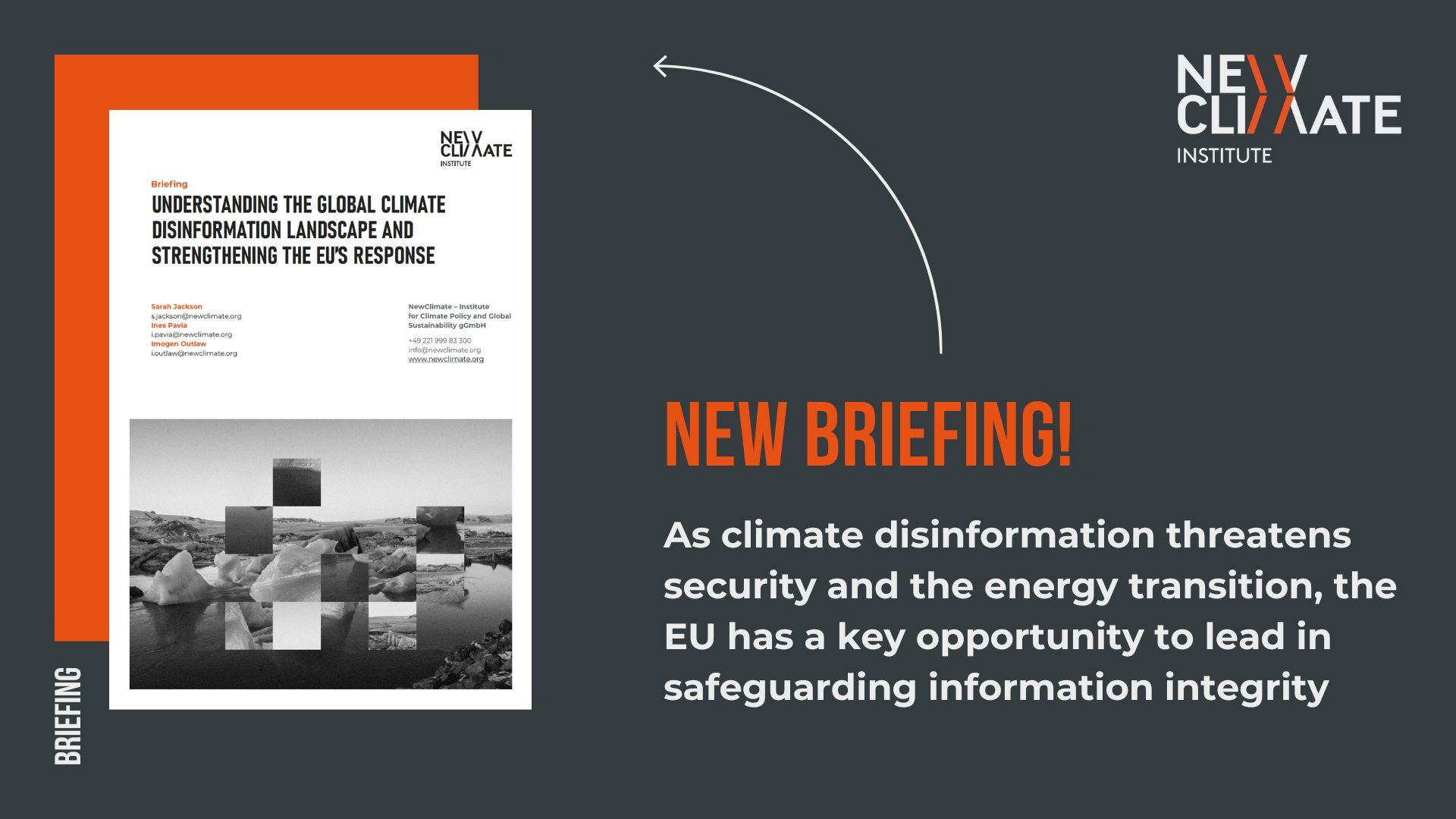
To effectively counter climate disinformation globally, the report outlines a four-point strategy for the EU: deepening multilateral cooperation, enhancing support for partner countries, improving strategic communication, and investing in tools that protect information integrity related to climate action worldwide.
The urgency of this effort is underscored by the evolving nature of climate disinformation. Unlike earlier campaigns that simply denied climate science, today’s disinformation often focuses on creating confusion about solutions, exaggerating the costs of climate action, or promoting fatalism about the possibility of meaningful change.
Market analysts have noted that climate disinformation can also create uncertainty for investors in green technologies and sustainable infrastructure, potentially slowing the transition to a low-carbon economy.
As information manipulation techniques become more sophisticated with AI-generated content making detection more difficult, the EU’s established regulatory framework and experience in digital governance position it well to lead global efforts to safeguard climate information integrity.
The briefing, developed with funding from the European Climate Foundation, emphasizes that protecting the information ecosystem around climate change is now an essential component of successful climate action itself.
Fact Checker
Verify the accuracy of this article using The Disinformation Commission analysis and real-time sources.

16 Comments
This is a critical issue that goes beyond just climate policy. Disinformation erodes trust in institutions and undermines our ability to collectively address global challenges. The EU’s response strategy needs to be comprehensive and coordinated with international partners.
Absolutely. Disinformation is a threat to democracy itself. The EU must take bold action to counter these tactics and safeguard the integrity of information. Collaboration with tech companies and civil society will be essential.
This is a complex challenge that requires a multifaceted approach. The EU must address the root causes of disinformation, such as lack of media literacy and the monetization of misinformation. Strengthening democratic institutions and civic engagement will be crucial.
This is a critical issue that goes beyond just climate policy. Disinformation erodes trust in institutions and undermines our ability to collectively address global challenges. The EU must take a leading role in developing effective countermeasures.
Absolutely. The EU’s response must be proactive, comprehensive, and coordinated with international partners. Failure to act decisively on this issue will have far-reaching consequences for democracy and progress on global issues.
The EU’s response strategy needs to address the full spectrum of disinformation actors, from hostile states to industry interests. Innovative approaches leveraging emerging technologies could help detect and debunk false narratives in real-time.
Agreed. The EU must stay ahead of the curve and anticipate how disinformation tactics will evolve. Collaboration with the tech sector and international partners will be key to developing effective countermeasures.
The EU’s strategy must address the complex web of actors behind climate disinformation, from hostile states to industry interests. Innovative approaches using emerging technologies could help detect and debunk false narratives in real-time.
The EU’s response strategy must be multifaceted and adaptable. Investing in early warning systems, fact-checking initiatives, and public education will be crucial. Collaboration with international partners and the tech sector will be essential to stay ahead of the evolving threat.
As the article notes, climate disinformation has become a geopolitical weapon. The EU must be proactive in identifying and disrupting the networks behind these campaigns. Strengthening media literacy and investing in fact-checking initiatives will be crucial.
Climate disinformation poses a serious threat to global climate action and the EU’s ambitious policies. The EU must be bold in its response, leveraging all available tools to counter these malicious campaigns and protect its citizens.
Absolutely. The EU has a responsibility to lead the way in defending the integrity of information and safeguarding the public’s trust. Failure to act decisively on this issue will have far-reaching consequences.
This is a concerning issue that requires a coordinated, whole-of-society approach. The EU must leverage its convening power to bring together governments, tech companies, civil society, and the public to develop and implement effective countermeasures.
Agreed. The EU’s response must be comprehensive and sustainable. Building public resilience through media literacy and strengthening democratic institutions will be key to countering the long-term effects of disinformation.
It’s alarming to see how climate disinformation has evolved into a sophisticated geopolitical threat. The EU must take a leading role in combating this, as it not only undermines climate progress but also societal cohesion. Proactive strategies to address the complex mix of actors and techniques are crucial.
Agreed. The EU has a responsibility to protect its citizens from such malicious campaigns that sow doubt and division. Investing in public education and media literacy is key to building resilience against these threats.