


Listen to the article
UN Experts Condemn European Push for Special Rapporteur’s Resignation
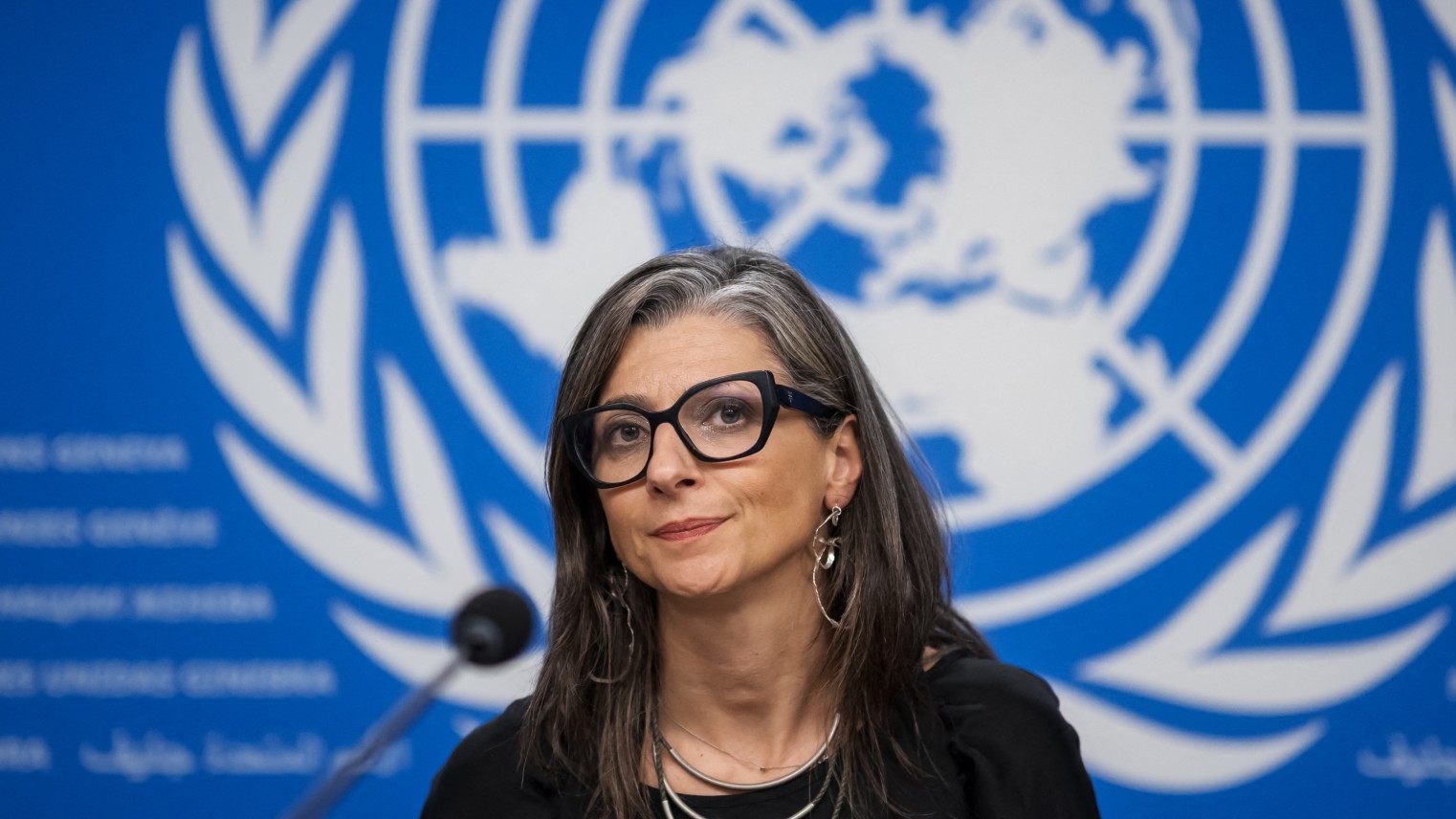
A panel of six United Nations experts issued a strong rebuke Tuesday against several European nations that called for the resignation of Francesca Albanese, the UN Special Rapporteur on Palestine, describing the campaign as “rooted in disinformation.”
The Coordination Committee of the Special Procedures of the Human Rights Council condemned actions by ministers who “rely on manufactured facts and criticise Ms Albanese for statements that she never made at the 17th Al Jazeera Forum.”
Foreign ministers from France, Germany, Italy, Austria, and the Czech Republic had demanded Albanese step down after viewing what the UN panel described as an edited version of her speech delivered at the recent Al Jazeera Forum. The video, circulated by the pro-Israel advocacy group UN Watch, falsely suggested that Albanese had referred to Israel as “the common enemy of humanity.”
In reality, Albanese used the phrase “common enemy” in a different context during her remarks delivered remotely on February 7. “We now see that we as a humanity have a common enemy and the respect of fundamental freedoms is the last peaceful avenue, the last peaceful toolbox that we have to regain our freedom,” she stated, referring to political, military, and economic forces enabling Israel’s military campaign in Gaza rather than the state of Israel itself.
The UN expert panel sharply criticized the European states’ approach, suggesting they redirect their energy toward accountability measures. “Instead of demanding Ms Albanese’s resignation for performing her mandate in very challenging circumstances—including persistent intimidation, coordinated personal attacks and unlawful unilateral sanctions—these government representatives should join forces to hold accountable, including before the International Criminal Court, leaders and officials accused of committing war crimes and crimes against humanity in Gaza,” the committee said in its statement.
The panel further advised that these nations should “scrutinise their own support for unlawful actions allegedly committed by the government of Israel” and “undertake urgent course correction” to “stand on the right side of history.”
This controversy comes amid mounting legal pressure related to the misrepresentation of Albanese’s statements. Last week, a group of French international lawyers filed a formal complaint with the Paris public prosecutor against Foreign Minister Jean-Noel Barrot, accusing him of disseminating false information about Albanese in his call for her resignation.
Albanese has faced significant personal and professional repercussions for her work investigating the Gaza conflict. In July, the United States imposed sanctions on her in connection with her investigations into allegations of genocide in Gaza. These sanctions barred her from traveling to the US and froze her assets there. Albanese told Middle East Eye that the measures have effectively cut her off from the global financial system, impeding her ability to conduct daily transactions.
Since October 2023, Albanese has published three reports characterizing Israel’s military operations in Gaza as genocide and criticizing global economic and political systems supporting Israel’s actions. In a November interview with Middle East Eye’s Expert Witness podcast discussing her report “Gaza Genocide: A Collective Crime,” she accused 63 states of enabling Israeli breaches of international law.
Albanese has been particularly critical of powerful European nations, including Italy, Germany, and France, arguing that despite extensive evidence of atrocities in Gaza and the occupied West Bank, these countries continue providing diplomatic, military, and political support to Israel.
The UN panel’s defense of Albanese highlights growing tensions between international human rights mechanisms and certain Western governments regarding the Gaza conflict, which has resulted in tens of thousands of Palestinian casualties and a humanitarian crisis that UN agencies have described as catastrophic.
Fact Checker
Verify the accuracy of this article using The Disinformation Commission analysis and real-time sources.

18 Comments
The UN panel’s strong rebuke of the ‘disinformation’ campaign against the Special Rapporteur is a timely reminder of the importance of objective, fact-based scrutiny of UN officials and their work. Resorting to edited footage and manufactured claims undermines the credibility of the process.
Well said. Upholding transparency and accountability should be the guiding principles when it comes to evaluating the statements and actions of UN representatives, even on sensitive geopolitical issues. Fact-checking and due process are essential.
Interesting that the UN experts called out the disinformation campaign against the Special Rapporteur. It’s concerning to see governments rely on edited footage to undermine the work of UN officials. Transparency and factual reporting are essential for addressing complex geopolitical issues.
Agreed, the UN panel’s strong rebuke highlights the need for responsible, unbiased scrutiny of such accusations. Fact-checking and due process should guide discussions on sensitive matters like this.
The UN panel’s strong stance against the ‘disinformation’ campaign targeting the Special Rapporteur is a heartening display of principled defense of UN officials. Fact-based dialogue and accountability should be the foundation for addressing complex global issues.
I agree. Resorting to edited footage and false claims to undermine UN officials sets a dangerous precedent. Upholding transparency and objectivity is essential for the UN to effectively fulfill its mandate on sensitive matters like this.
The UN panel’s condemnation of the ‘disinformation’ campaign against the Special Rapporteur is a concerning sign of the increasingly polarized discourse around the Israeli-Palestinian conflict. Fact-based dialogue is essential to find constructive solutions.
I agree. Resorting to edited footage and manufactured claims to attack UN officials undermines the integrity of international institutions. A more measured, evidence-based approach is needed to address this complex geopolitical issue.
It’s concerning to see governments seemingly resort to underhanded tactics to discredit UN officials. The UN panel’s rebuke of the ‘disinformation’ campaign is a reminder of the need for responsible, evidence-based engagement on complex global issues.
Well said. Maintaining the integrity and credibility of international institutions like the UN is crucial, especially when addressing sensitive geopolitical conflicts. A fact-based, impartial approach is the only way to make meaningful progress.
This case highlights the need for a balanced, nuanced approach when it comes to critiquing the work of UN officials. The UN panel’s rejection of the ‘disinformation’ campaign is a welcome call for fact-based discourse, rather than partisan posturing.
Absolutely. Maintaining the integrity of international institutions like the UN requires thoughtful, evidence-based engagement, even on controversial issues. Knee-jerk reactions based on dubious claims undermine constructive dialogue.
This case highlights the importance of verifying information, especially when it comes to sensitive global issues. The UN panel’s rejection of the ‘disinformation’ campaign is a welcome push for transparency and accuracy in public discourse.
Absolutely. Fact-checking and due process should be the foundation for any criticism or accountability measures regarding UN officials and their work. Knee-jerk reactions based on edited footage are counterproductive.
This case highlights the challenges of maintaining impartiality and objectivity when it comes to complex global issues. The UN panel’s condemnation of the ‘disinformation’ campaign is a welcome stand for responsible, evidence-based discourse, rather than partisan attacks.
Agreed. Ensuring the integrity of international institutions like the UN requires a commitment to factual analysis and nuanced understanding, rather than knee-jerk reactions based on edited footage or unsubstantiated claims. Constructive dialogue is the only way forward.
This case illustrates the challenges of balancing criticism and objectivity when it comes to UN officials and their statements on geopolitical conflicts. I hope the truth can be discerned amidst the competing narratives.
Valid point. Maintaining impartiality while addressing sensitive issues is critical for the UN’s credibility. Careful analysis of the facts, rather than partisan posturing, is the best path forward.