


Listen to the article
Canadian University Joins Global Coalition to Support Ukrainian Studies Amid Russian Conflict
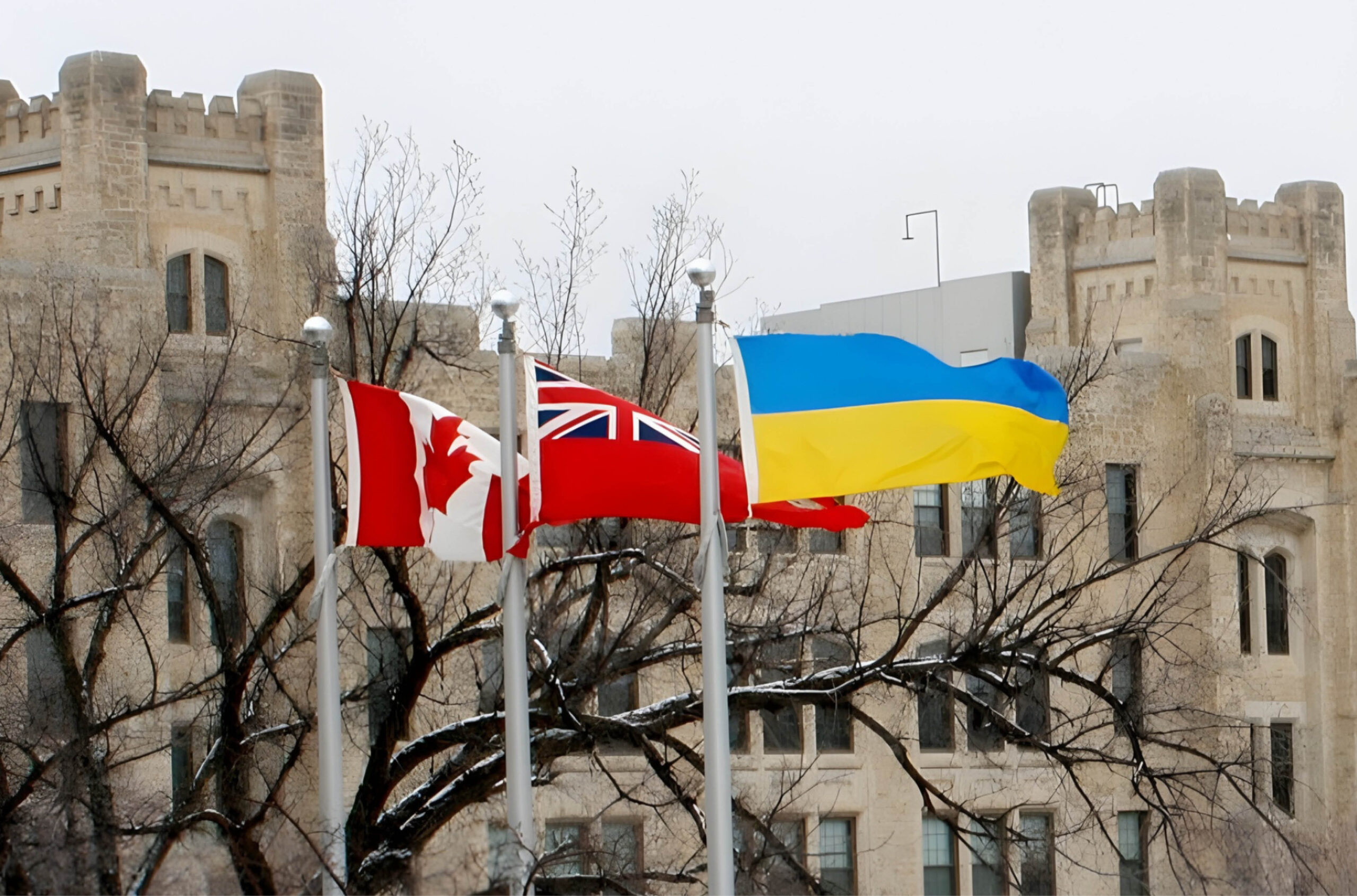
The University of Manitoba has become the first North American post-secondary institution to join a global initiative aimed at expanding Ukrainian studies and countering Russian disinformation campaigns.
The Global Coalition of Ukrainian Studies (GCUS), launched in July 2024 at the initiative of Ukraine’s First Lady Olena Zelenska, now comprises more than 100 academic institutions across six continents. The coalition focuses on strengthening academic collaboration, supporting Ukrainian scholars and students, and promoting accurate scholarship about Ukraine’s history, culture and contemporary reality.
“In the context of Russian aggression against Ukraine, the global academic community has an important role to play,” explained Olha Oseredchuk, head of the coalition’s project office. “It is very important for academic society to speak the truth about Ukraine — our nation and our history.”
The University of Manitoba (UM) formalized its participation by signing a bilingual memorandum of understanding with the coalition in July 2025. B. Mario Pinto, UM’s vice-president of research and international affairs, emphasized the importance of academic solidarity during geopolitical conflicts, noting that the agreement provides “a strong platform for co-ordinating new education and research initiatives related to Ukraine and Ukrainian Canadians.”
The partnership holds particular significance in Manitoba, which is home to approximately 165,000 residents of Ukrainian descent — representing 12 percent of the province’s population. Canada hosts the world’s second-largest Ukrainian diaspora after Russia, a fact that underscores the country’s deep cultural connections to Ukraine.
Olha Budnyk, Advisor to the President of Ukraine on the Fund of the President of Ukraine for the Support of Education, Science, and Sports, highlighted Canada’s historical importance to Ukrainian culture. “Canada is one of the strongest centres of support for Ukraine globally. Here, the Ukrainian diaspora preserved our culture, language and memory during the darkest times for our country, when these were banned at home,” Budnyk stated.
Since Russia’s full-scale invasion in 2022, Manitoba has welcomed nearly 30,000 Ukrainians, including numerous scholars and students who have found academic homes at UM. The university responded to the crisis by launching its Scholars at Risk program, providing funding for 20 Ukrainian academics, waiving application fees, and offering additional support to Ukrainian students.
The university’s Centre for Ukrainian Canadian Studies (CUCS) has played a pivotal role in facilitating UM’s engagement with the coalition. Orest Cap, acting coordinator of the centre, explained that their goal was “to enable academic exchanges and pay more attention to Ukrainian studies around the world. That means interacting through networks, examining programs at other institutions, and identifying resources we can share or exchange.”
Cap noted that Ukrainian studies has experienced a significant surge in international interest following Russia’s invasion, contrasting with previous decades when academic focus often centered on Russia, particularly before the Soviet Union’s collapse. “We have military representatives coming to us to give presentations on Ukraine, for example,” he said, illustrating the broadening audience for Ukrainian studies.
The coalition offers member institutions networking opportunities with Ukrainian universities, access to curated academic resources, and connections with Ukrainian governmental bodies. It is currently developing frameworks for research partnerships and student placements, and is working toward establishing a joint master’s program in Ukrainian studies.
Since joining GCUS, UM has shared online lectures and events, including a November 2025 presentation on the Holodomor — the devastating famine in Soviet Ukraine from 1932 to 1933 that killed millions.
European universities have also embraced the coalition, with four leading Austrian institutions — the University of Klagenfurt, the University of Vienna, the University of Graz, and the University of Innsbruck — joining in June 2025. In the United Kingdom, Cardiff University participated in a specialized Ukrainian Week alongside five other UK universities in November 2025.
Oseredchuk emphasized that while Ukrainian institutions need support, they also bring valuable expertise to the coalition. “Through GCUS, Ukrainian scholars have provided Finnish universities with resources to support the mental health of Ukrainian students, and helped design a week-long Ukraine-focused program for universities in the United Kingdom,” she said.
The coalition was established through the collaborative efforts of the Presidential Foundation for the Support of Education, Science and Sports, the Ukrainian Institute, the Crimean Platform, Ukraine’s Ministry of Education and Science, and its Ministry of Foreign Affairs.
Oseredchuk encouraged more Canadian universities to join the initiative: “If you become a member of the Global Coalition, you support Ukraine — and you support truth.”
Reflecting on universities’ broader responsibilities during times of conflict, Pinto concluded: “Universities are institutions that will still be standing after periods of violence and geopolitical shifts. At the end of the day, academics will continue that mission through collaboration. This is the right thing to do, and we shouldn’t shy away from that responsibility.”
Fact Checker
Verify the accuracy of this article using The Disinformation Commission analysis and real-time sources.

19 Comments
This is an encouraging development. Promoting accurate scholarship on Ukraine is vital, especially when Russia is actively spreading false narratives. Kudos to the University of Manitoba.
Yes, the global academic community has an important responsibility to amplify the truth about Ukraine. This coalition’s work is crucial.
The University of Manitoba’s participation in this initiative is a positive development. Combating disinformation with accurate, scholarly information is crucial during this conflict.
The University of Manitoba’s participation in this global coalition is commendable. Academic institutions have a key role to play in supporting Ukrainian studies and exposing the truth.
Agreed. Expanding Ukrainian studies programs worldwide helps build a more comprehensive understanding of Ukraine’s history, culture, and current situation.
This is an important step in the right direction. Expanding Ukrainian studies programs and promoting factual information is crucial amid Russia’s ongoing aggression.
The University of Manitoba’s participation is a welcome step. Expanding Ukrainian studies programs and promoting accurate scholarship is essential amid Russia’s ongoing aggression.
Absolutely. Academic institutions have a vital role to play in countering false narratives and ensuring the truth about Ukraine is heard worldwide.
It’s great to see Canadian universities taking a stand and joining this international effort to support Ukrainian studies. Combating disinformation requires a coordinated, global response.
Strengthening academic collaboration and promoting accurate scholarship on Ukraine is crucial given Russia’s disinformation campaign. The University of Manitoba’s participation is a positive step.
Agreed. Exposing the truth about Ukraine’s history, culture, and current reality is essential in the face of Russian propaganda.
Glad to see more universities joining this coalition. Countering disinformation with factual, scholarly information is essential during times of war and geopolitical tensions.
This global coalition to support Ukrainian studies is an important initiative. I’m glad to see more universities like the University of Manitoba getting involved.
In the context of the Russia-Ukraine conflict, it’s heartening to see universities around the world join this coalition to support Ukrainian studies and counter disinformation.
This is an important initiative to counter Russian disinformation about Ukraine. Strengthening academic collaboration and promoting accurate scholarship is crucial during this conflict.
Glad to see the University of Manitoba join this global coalition to support Ukrainian studies and counter Russian disinformation. Strengthening academic collaboration is essential.
Absolutely. Academic institutions have a vital role to play in ensuring the truth about Ukraine is heard worldwide, not just Russian propaganda.
The University of Manitoba’s involvement in this global initiative is commendable. Accurate scholarship on Ukraine is vital, especially when Russia is actively spreading false narratives.
Yes, the academic community has a responsibility to amplify the truth and provide a counterweight to disinformation campaigns.