


Listen to the article
The United Kingdom has imposed sanctions on two Georgian television channels, Imedi TV and PosTV, accusing them of disseminating “deliberately misleading information” regarding Russia’s invasion of Ukraine. The sanctions were announced Tuesday as part of a broader package targeting hundreds of individuals and entities primarily focused on Russia’s oil exports and military suppliers.
According to the UK Foreign Office, these Georgian broadcasters were promoting several false narratives, including claims that “the Ukrainian Government and President Zelensky are illegitimate, Ukraine is a ‘puppet’ of the West, Ukraine is a corrupt country and that Ukraine and the West are seeking to destabilise Georgia.”
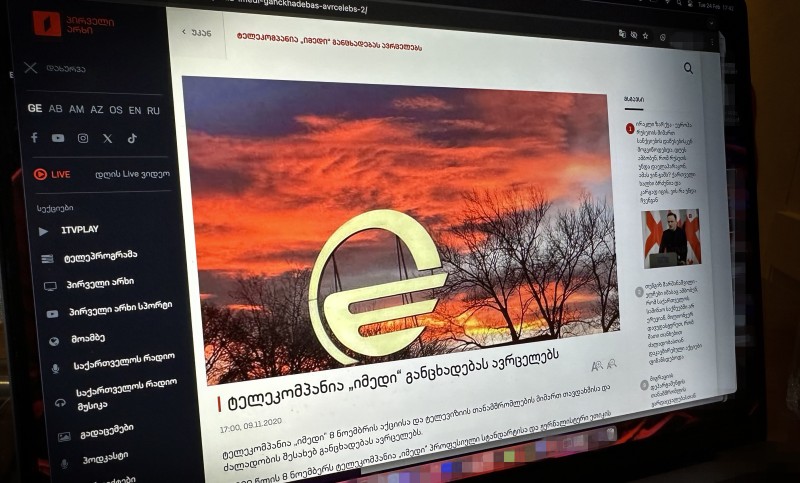
Imedi TV responded defiantly to the sanctions, dismissing them as having “no value” and accusing British authorities of supporting Georgia’s “criminal” former government. The broadcaster pledged to continue its operations, stating it would “serve Georgia and freedom of speech” despite the sanctions.
The timing of these sanctions is notable as they come shortly after a significant ownership change at Imedi TV. According to a share agreement dated January 30, Georgian company Prime Media Global LLC acquired the broadcaster for a nominal sum of 1,000 Georgian lari (approximately $374). Georgian corporate records show that Prime Media Global’s shareholders include a local business figure and members of Imedi TV’s management team.
Prior to this transaction, Imedi TV was owned by Irakli Rukhadze, Benjamin Marson, and Igor Alexeyev, partners at the private equity group Hunnewell Partners. Rukhadze, a U.S. citizen, previously maintained close business ties with Bidzina Ivanishvili, the billionaire founder and honorary chairman of Georgia’s ruling Georgian Dream party. Notably, the United States sanctioned Ivanishvili in December 2024, alleging he was “undermining the democratic and Euro-Atlantic future of Georgia for the benefit of the Russian Federation.”
Earlier this month, Rukhadze explained the divestment from Imedi TV, stating that ownership of the channel was “not of economic interest” and “damages our main business — making investments in the Georgian economy.” He further claimed that under their ownership, the channel had “avoided meddling in political processes” and had helped reduce “the danger of Georgia’s involvement in the war.”
A spokesperson for Hunnewell Partners confirmed to reporters that the firm “has had no involvement in the channel and has fully exited the business” since announcing the sale on February 6.
The sanctions also target PosTV, which corporate records show is majority-owned by Georgian MP Viktor Japaridze, with minority shares held by the channel’s founder and host, Shalva Ramishvili. Ramishvili became controversial in February 2025 after making inflammatory comments about Ukraine, including the statement that “Ukraine’s defeat is our victory.” He also referred to Kyiv as “the mother of Russian cities” and described President Zelensky as “a gathering of crybabies.”
When contacted by Monitori, a Georgian investigative journalism center, Ramishvili dismissed the UK’s allegations as “nonsense,” insisting that “We truly serve Georgia, and Britain has rewarded us with these sanctions for truly serving our country’s sovereignty.”
These sanctions highlight growing international concerns about Russian disinformation campaigns across Eastern Europe, particularly in Georgia, where relations with both Russia and Western allies have been strained in recent years. The measures also underscore the UK’s continued support for Ukraine in its conflict with Russia, while signaling to other media outlets the potential consequences of spreading what Western governments consider to be Russian propaganda.
Fact Checker
Verify the accuracy of this article using The Disinformation Commission analysis and real-time sources.

8 Comments
Interesting to see the UK taking action against Georgian TV channels spreading disinformation about the Ukraine conflict. It’s important to counter false narratives that undermine democratic institutions.
Agreed. Promoting misleading propaganda during a war is highly irresponsible. The sanctions send a strong message that such behavior will not be tolerated.
While freedom of speech is crucial, it shouldn’t be used as a shield to spread blatant lies and propaganda, especially during an ongoing military conflict. These sanctions seem justified to protect the public from disinformation.
It’s concerning to see foreign actors attempting to undermine Ukraine’s government and destabilize the region through coordinated disinformation campaigns. Cracking down on these channels is a necessary step to uphold the truth.
Agreed. Disinformation can have real-world consequences, so decisive action is warranted to prevent the spread of false narratives that could further inflame the conflict.
The timing of these sanctions, following an ownership change at one of the channels, raises some questions. It will be important to monitor whether the new management continues the same disinformation tactics.
Good point. The response from Imedi TV, dismissing the sanctions, suggests they may double down on their current editorial approach rather than change course.
The UK’s sanctions on these Georgian TV channels highlight the growing challenge of combating state-sponsored disinformation campaigns. Maintaining media integrity and accountability is crucial during times of crisis.