


Listen to the article
UK Sanctions Georgian Broadcasters for Alleged Russian Disinformation
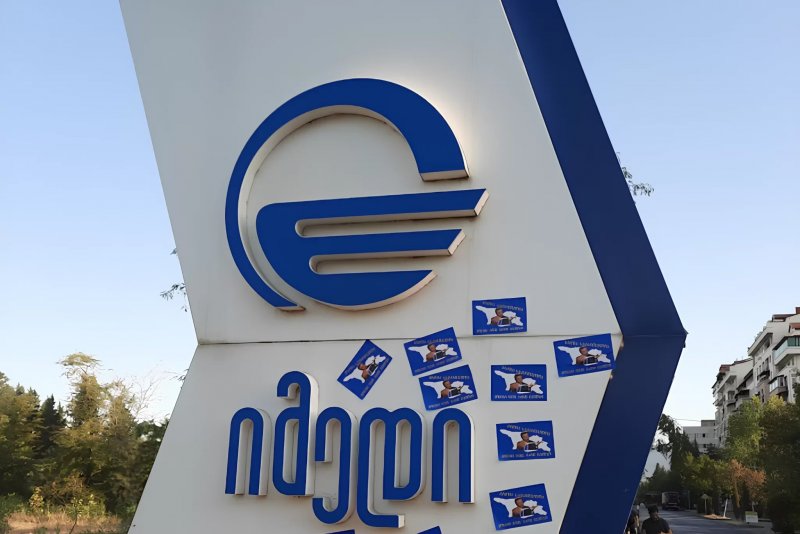
The United Kingdom has imposed sanctions on two Georgian television broadcasters, Imedi and POSTV, designating them as “organizations involved in the spread of Russian disinformation,” according to a statement from the UK government.
The comprehensive sanctions package includes an asset freeze, restrictions on trust services, and director disqualification measures that significantly limit the broadcasters’ ability to operate with any UK connections.
Under the asset freeze provision, all funds and economic resources belonging to these media outlets that are held in the United Kingdom are immediately frozen. British individuals and entities are prohibited from conducting any transactions with the designated organizations or acquiring their assets. The restrictions explicitly forbid making funds available to these broadcasters through direct or indirect means.
The trust services component of the sanctions prevents UK nationals and entities operating in Britain, including legal professionals and consultants, from managing assets or providing services to the sanctioned broadcasters. Additionally, owners and directors of Imedi and POSTV are barred from managing any companies within the United Kingdom.
According to official documentation published on the British government’s website, both media outlets have “deliberately disseminated misleading information about Russia’s invasion of Ukraine” and supported narratives designed to destabilize Ukraine and undermine its territorial integrity.
The UK government specifically cited that the broadcasters “regularly publish content portraying the Ukrainian government and President Zelensky as illegitimate, describing Ukraine as a ‘puppet’ of the West, claiming that Ukraine is a corrupt country, and alleging that Ukraine and the West are seeking to destabilize Georgia.”
The timing of the sanctions has drawn attention in Georgia, as local media immediately connected them to businessman Irakli Rukhadze’s unexpected departure from Imedi earlier this year. In February, Rukhadze announced the sale of the television channel for a symbolic 1,000 lari (approximately $370). The new owner is Ilia Mikelaishvili, who acquired the broadcaster alongside five employees of the channel.
POSTV’s ownership structure reveals potential political connections that may have factored into the UK’s decision. Fifty-two percent of the broadcaster’s shares belong to Viktor Japaridze, who leads the People’s Power party – a political faction that split from the ruling Georgian Dream party. Shalva Ramishvili and Temur Charelashvili each hold 24 percent stakes in the media outlet.
The sanctions come at a sensitive time for Georgia, which has experienced increased tensions with Western allies over its democratic trajectory. The country’s ruling party has faced criticism for perceived pro-Russian policies despite Georgia’s historical aspirations for European and Euro-Atlantic integration.
In response to the sanctions, Imedi issued a defiant statement rejecting the UK’s actions. “For more than 22 years, Imedi has served Georgia and freedom of speech in the country. The British sanctions have no value whatsoever,” the broadcaster declared.
The statement emphasized the channel’s domestic popularity: “The only real assessment of Imedi is the trust of the Georgian people. Thanks to this trust, the channel has for many years maintained its status as the highest-rated television station in Georgia.”
In a pointed reference to past political controversies, Imedi also mentioned a 2007 incident when special forces entered their building during a previous administration. “It is worth recalling that at the time of the takeover of Imedi in 2007, the British authorities did not even express general concern. Moreover, after 2007, the British authorities continued to demonstrate support for a criminal regime that trampled on democracy, human rights, and freedom of speech in Georgia,” the statement concluded.
The UK’s action represents a significant escalation in Western efforts to counter what they perceive as Russian disinformation campaigns operating through media outlets in countries neighboring Ukraine, as the war in Eastern Europe continues into its third year.
Fact Checker
Verify the accuracy of this article using The Disinformation Commission analysis and real-time sources.

7 Comments
These sanctions seem like a strong response, but I wonder about the potential ripple effects on media pluralism and freedom of expression in Georgia. Maintaining an open information environment is crucial, even as disinformation must be addressed.
These sanctions seem intended to disrupt the ability of the Georgian channels to operate with any UK connections. Cutting off access to funds, services, and personnel could significantly undermine their activities.
It will be important to see if this leads to a reduction in the spread of disinformation or if the channels find ways to circumvent the restrictions.
I appreciate the UK taking action to address alleged Russian disinformation campaigns, but the details will be critical. Ensuring the sanctions are proportionate and effective at curbing propaganda while preserving legitimate journalism will be an ongoing challenge.
Curious to know more about the specific evidence that led the UK to designate these channels as involved in Russian disinformation. Transparency around the justification is important for the sanctions to be seen as legitimate.
While countering foreign-backed propaganda is important, the sanctions should be carefully targeted to avoid unintended consequences for press freedom and local media.
Interesting to see the UK taking action against alleged Russian disinformation channels. Sanctions can be a powerful tool to counter the spread of propaganda, though the details will be important to evaluate the effectiveness and proportionality.