


Listen to the article
Parliamentary Committee Warns of Foreign Disinformation Threats, Proposes New Oversight Body
A new report from the Commons Foreign Affairs Select Committee has raised concerns about foreign disinformation campaigns targeting the United Kingdom, placing particular emphasis on the role of influential individuals and social media platforms.
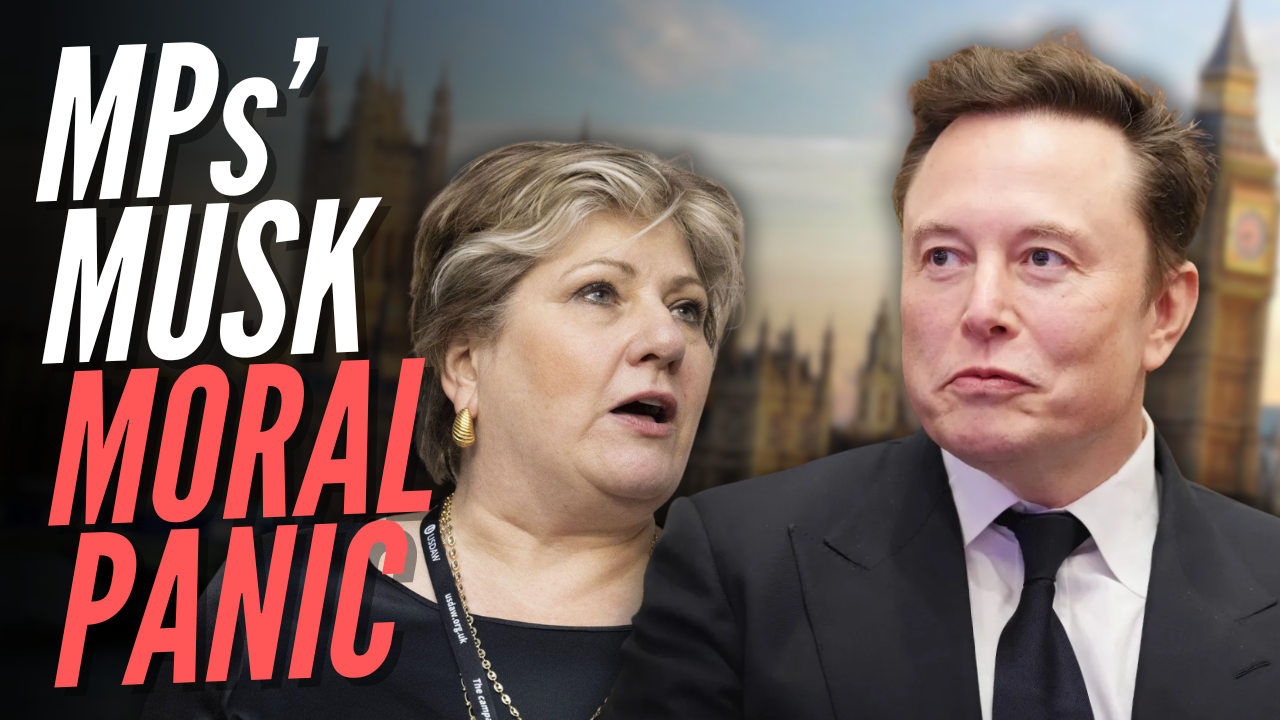
The parliamentary committee’s findings, released amid growing international concerns about information warfare, highlight testimony suggesting that tech billionaire Elon Musk’s influence on British public discourse potentially exceeds that of Russia. This controversial assessment places a private individual alongside nation-states traditionally viewed as sources of coordinated disinformation efforts.
“Elon Musk’s influence is potentially greater in the UK than that of Russia’s,” states the report, citing evidence submitted to the committee. The claim comes as Musk’s ownership of Twitter (now X) continues to spark debates about content moderation policies and the platform’s role in political discourse worldwide.
The committee’s assessment arrives during a period of heightened scrutiny regarding social media’s impact on democratic processes. Since Russia’s documented interference in elections across Western democracies, governments have grappled with how to protect information ecosystems without impinging on free speech principles.
In response to these perceived threats, the report proposes establishing a “National Counter Disinformation Centre,” which would serve as a centralized body to monitor, analyze, and potentially counteract foreign disinformation campaigns targeting British citizens and institutions.
Media and political analysts have offered mixed reactions to the proposal. Proponents argue such a body is essential to protect democratic processes in an age of sophisticated information warfare. Critics, however, have expressed concerns about potential overreach and questioned whether such an entity might be vulnerable to political influence.
Dr. Emma Richardson, a disinformation researcher at King’s College London, explains: “While there’s clear evidence that foreign actors attempt to manipulate public discourse through coordinated campaigns, the challenge lies in creating oversight mechanisms that don’t inadvertently restrict legitimate speech or become tools of partisan influence.”
The report emerges against a backdrop of increasing global efforts to combat disinformation. The European Union has implemented its Digital Services Act, requiring platforms to take more responsibility for content moderation, while the United States continues to debate approaches to social media regulation following successive election cycles marked by information manipulation concerns.
The UK’s approach has thus far been less structured than some of its allies, with responsibilities spread across various departments including the Department for Digital, Culture, Media and Sport, intelligence agencies, and electoral authorities.
Industry observers note that any new regulatory body would face significant challenges in defining its scope. “The line between harmful disinformation and protected political speech is notoriously difficult to draw,” notes Claire Williams, director of the Digital Rights Foundation. “Without careful guardrails, even well-intentioned oversight can chill legitimate discourse.”
The committee’s comparison of Musk to nation-states has particularly sparked debate among media commentators, with some questioning the equivalence drawn between individual influence and state-sponsored disinformation campaigns.
The proposed Counter Disinformation Centre would likely require substantial resources and clear statutory powers to be effective. Similar institutions in other countries have faced challenges in measuring their impact and justifying their operational costs.
As the UK government considers the committee’s recommendations, the fundamental tension remains between protecting information integrity and preserving open discourse. With elections approaching in numerous Western democracies, including potentially in the UK itself, the pressure to address disinformation threats continues to mount.
The government is expected to respond to the committee’s recommendations in the coming months, potentially signaling its approach to information security in an increasingly complex digital landscape.
Fact Checker
Verify the accuracy of this article using The Disinformation Commission analysis and real-time sources.

14 Comments
The UK report’s assessment of Elon Musk’s influence being potentially greater than Russia’s in the UK is certainly a bold claim that warrants close scrutiny. It will be important to carefully examine the underlying data and reasoning before drawing any conclusions.
The UK report’s findings on the potential disinformation risks posed by Elon Musk are certainly thought-provoking. It will be important to thoroughly examine the evidence and implications, rather than jumping to conclusions.
This is a complex and sensitive issue that deserves careful consideration. While the report’s findings are concerning, it’s important to thoroughly examine the evidence and avoid knee-jerk reactions. Maintaining the integrity of public discourse should be the priority.
I agree. Any efforts to address potential disinformation must be balanced and grounded in facts, rather than partisan agendas. Constructive dialogue and objective analysis will be key to finding effective solutions.
The UK’s report highlights the evolving nature of disinformation threats, which can come from both state and non-state actors. Careful analysis is needed to understand the specific risks and develop appropriate responses.
This is a concerning development that highlights the evolving nature of disinformation threats. The growing influence of tech leaders over public discourse is a trend that warrants close monitoring and evidence-based policy responses.
I agree. Maintaining the integrity of democratic processes and public discourse should be the top priority. Balanced, fact-based assessments will be crucial to addressing these complex challenges effectively.
This is a concerning development, if true. The growing power and influence of tech leaders over public discourse is a trend that warrants close monitoring. Rigorous investigation and evidence-based policy responses will be essential.
Absolutely. We must ensure a healthy information ecosystem that empowers citizens, not concentrates undue influence in the hands of any individual or entity. Transparency and accountability will be critical going forward.
This is a complex and sensitive issue that deserves careful consideration. While the report’s findings are concerning, it’s important to maintain a balanced and objective approach. Constructive dialogue and evidence-based analysis will be key to addressing these challenges.
I agree. Any efforts to address potential disinformation must be grounded in facts, rather than partisan agendas. Maintaining the integrity of public discourse should be the priority, even as we grapple with evolving threats.
Interesting report on the potential disinformation risks posed by influential individuals like Elon Musk. It’s important to carefully scrutinize the evidence and implications, rather than jumping to conclusions. Effective oversight and transparency around social media influence will be crucial.
I agree, it’s a complex issue that deserves nuanced analysis. Disinformation from any source, whether individuals or states, can undermine democratic discourse. Balanced, fact-based assessments will be key to addressing these challenges.
The report’s assessment of Elon Musk’s influence being potentially greater than Russia’s in the UK is certainly a bold claim. It will be important to scrutinize the underlying data and reasoning behind this conclusion.