


Listen to the article
Turkey’s Disinformation Law Has Targeted Dozens of Journalists Since 2022
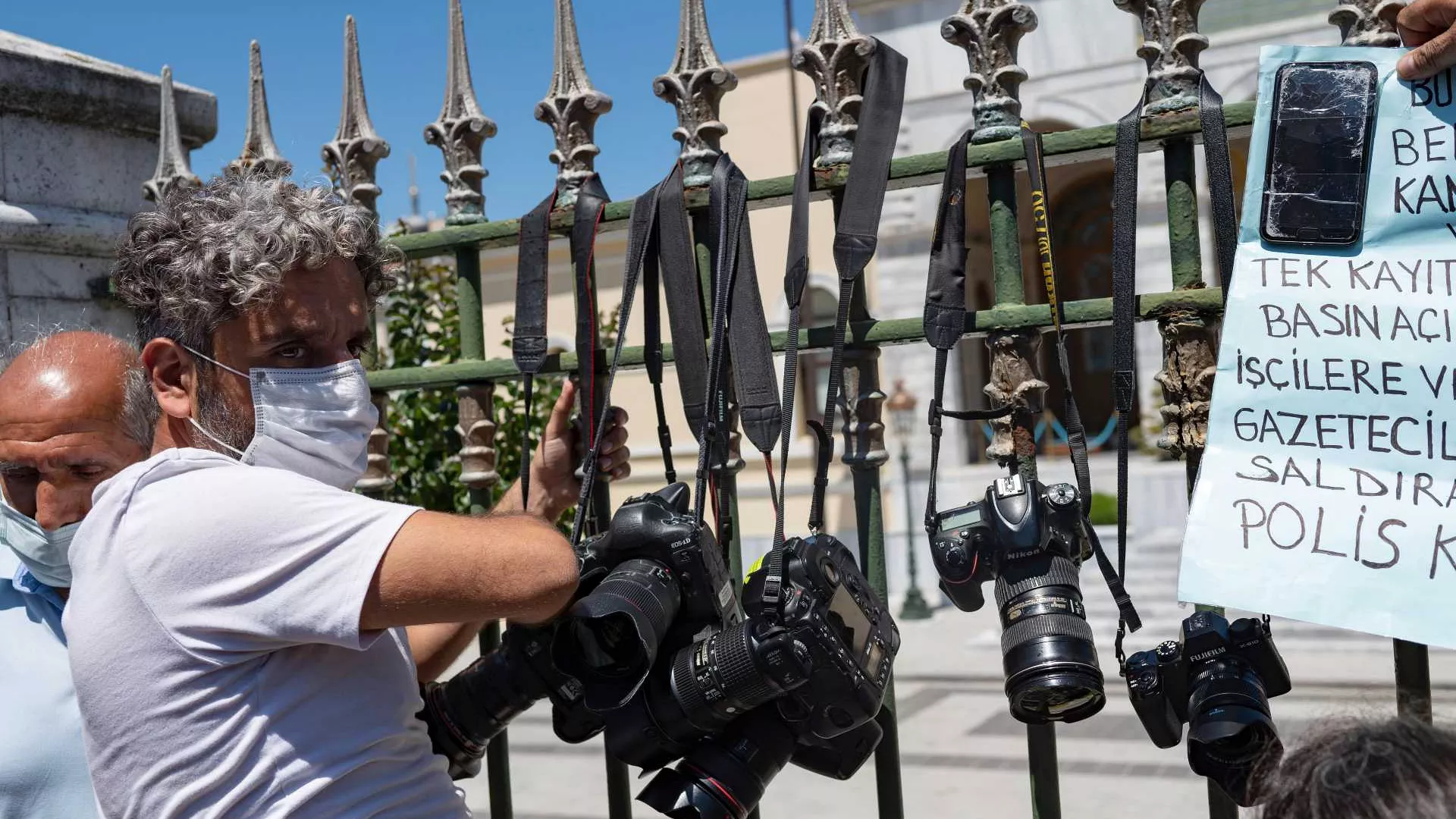
At least 70 journalists have faced investigation under Turkey’s controversial disinformation legislation since its implementation in 2022, according to a recent report by the opposition-aligned BirGün daily. The investigations have resulted in 15 journalists being detained, four placed in pretrial detention, and 27 formally indicted.
The most recent case involves İsmail Arı, a BirGün reporter who was detained on Saturday and subsequently placed in pretrial detention on Sunday. Authorities allege his reporting spread false information, though specific details about the content in question remain limited.
Turkey’s disinformation law, officially enacted in October 2022, added Article 217/A to the Turkish Penal Code, establishing criminal penalties for “publicly spreading misleading information.” Convictions under the law carry prison sentences ranging from one to three years, with enhanced penalties possible under certain circumstances.
Press freedom advocates have consistently criticized the law’s vague wording, arguing it provides prosecutors with excessive discretion to target legitimate journalism. Organizations monitoring media freedom claim the legislation serves as a legal tool to silence critical reporting rather than combat actual misinformation.
“The pattern we’re seeing is deeply troubling,” said a spokesperson from an international press freedom watchdog who requested anonymity. “When journalism that challenges official narratives can be labeled as ‘misleading information,’ it creates a profound chilling effect on the entire media landscape.”
The Turkish government and its allies maintain that the law addresses a genuine need to combat false information, particularly in digital spaces. Feti Yıldız, a senior figure in the far-right Nationalist Movement Party (MHP) that supported the legislation alongside President Erdoğan’s Justice and Development Party (AKP), defended the measure earlier this year, stating it “does not target journalists or legitimate reporting.”
However, documented cases suggest otherwise. Prominent journalists including Tolga Şardan, who reported on alleged judicial corruption in 2023, found themselves detained under the law. Sinan Aygül became one of the first journalists convicted under the legislation, while reporter Alican Uludağ faced detention earlier this year.
Media freedom experts point out that the law compounds existing challenges for independent journalism in Turkey. The country has experienced significant media consolidation in recent years, with most mainstream outlets now under ownership aligned with government interests. Independent outlets like BirGün represent an increasingly rare voice of opposition in this constrained environment.
The legislation has drawn international criticism as well. The European Commission’s annual report on Turkey’s EU accession progress specifically highlighted concerns about the disinformation law and its impact on press freedom. The Council of Europe has similarly expressed alarm over the measure’s broad application.
Turkey’s global standing on press freedom continues to deteriorate amid these developments. In Reporters Without Borders’ (RSF) 2025 World Press Freedom Index, Turkey ranks 159th out of 180 countries evaluated – placing it among the world’s most problematic environments for journalism.
Media analysts note that the law’s implementation has coincided with increased government scrutiny of online content and social media platforms, creating multilayered challenges for information dissemination in Turkey. Digital rights organizations have documented growing instances of content removal requests and account restrictions targeting journalists and news outlets.
As more cases emerge, legal experts warn that the judicial interpretation of what constitutes “misleading information” remains dangerously subjective, creating uncertainty for journalists covering sensitive topics including corruption, government policies, or economic challenges.
Despite mounting pressure, Turkish authorities show no signs of reconsidering the legislation, which remains a cornerstone of the government’s information control strategy as the country navigates ongoing political and economic challenges.
Fact Checker
Verify the accuracy of this article using The Disinformation Commission analysis and real-time sources.

6 Comments
Turkey’s new disinformation law seems ripe for abuse. Vague wording and harsh penalties could make journalists think twice before publishing critical stories. I worry this will erode transparency and accountability in the country.
Agreed, this law appears to give the government far too much leeway to target and silence journalists. A free press is vital for a healthy democracy.
While combating the spread of false information is important, this law in Turkey seems far too broad and open to abuse. Journalists must be able to do their jobs without threat of prosecution for simply reporting the news.
This development in Turkey is very troubling. Journalists should be able to report the facts without fear of retaliation. I hope the international community closely monitors this situation and pressures Turkey to uphold democratic principles.
This is concerning to see Turkey cracking down on journalists under this vague ‘disinformation’ law. It seems like a concerning overreach that could stifle press freedom and legitimate reporting. I hope the authorities apply this law judiciously and with clear justification.
Cracking down on journalists under the guise of fighting ‘disinformation’ is a common tactic used by authoritarian regimes to suppress dissent and criticism. I hope Turkey’s international partners condemn this assault on press freedoms in the country.