


Listen to the article
Türkiye Denies Involvement in U.S. Aircraft Downing as Regional Tensions Escalate
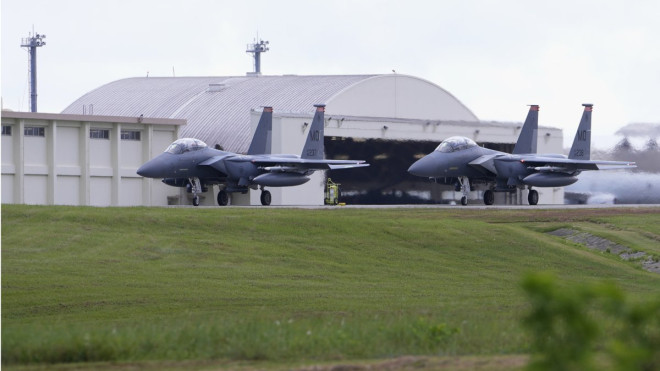
Türkiye’s Directorate of Communication has firmly rejected claims that Turkish-made defense systems were used to down a U.S. F-15 fighter jet over Iran, describing the allegations as “deliberate psychological warfare” aimed at undermining the country’s diplomatic position in the Middle East.
In a statement released Saturday, the Center for Combating Disinformation dismissed social media reports claiming that Türkiye supplied Iran with advanced anti-aircraft and UAV missiles, and that the downed American aircraft was struck by a Turkish-manufactured shoulder-fired air defense system.
“Such baseless allegations constitute deliberate psychological warfare and black propaganda aimed at undermining Türkiye’s constructive role in regional crises, as well as its diplomacy and peace-oriented efforts,” the statement read.
The statement emphasized Türkiye’s commitment to maintaining a “principled stance focused on preserving peace and stability” across the region, warning the public against “speculative claims originating from non-official sources.”
This marks the second time in recent weeks that Türkiye has had to counter disinformation related to the ongoing U.S.-Israel-Iran conflict. Last week, the Center rejected claims that Ankara would side with Iran and potentially make a military incursion into Lebanon.
Despite having close ties with both the United States and Iran, Türkiye has maintained a neutral position in the conflict that erupted on February 28. Instead, the country has positioned itself as a potential mediator, with Foreign Minister Hakan Fidan engaging in extensive diplomatic efforts to help bring an end to hostilities.
On March 29, Türkiye participated in talks hosted by Pakistan, alongside Egypt and Saudi Arabia, aimed at resolving the conflict. Early discussions reportedly centered on proposals to reopen the Strait of Hormuz to shipping, a critical maritime chokepoint for global oil supplies that has been affected by the conflict.
The situation has grown increasingly complex following Iran’s claim on Sunday that it destroyed three U.S. aircraft involved in a search operation for a crew member of the downed F-15E fighter jet. Iran’s military central command, Khatam Al-Anbiya, stated that “two Black Hawk helicopters and one C-130 military transport aircraft were struck and are now burning.” Iranian state media has shared images of charred wreckage scattered across a desert area.
U.S. President Donald Trump, however, announced on Sunday that the second crew member had been recovered and was “SAFE AND SOUND” following the rescue operation. Iranian media reported that strikes during this operation killed five people in southwestern Iran, though it remains unclear whether they were civilians or military personnel.
Türkiye, situated at the crossroads of Europe and Asia and in proximity to the volatile Middle East, faces significant challenges in preserving its neutrality. The country has already experienced direct impacts from the conflict, with a ballistic missile being intercepted by NATO defense systems in Turkish territory on March 30—the fourth such incident since the war began.
Iran has denied firing these missiles. Iranian Foreign Minister Abbas Araghchi spoke with his Turkish counterpart Hakan Fidan last Tuesday, warning of “repeated false-flag operations aimed at undermining regional ties.”
As tensions continue to escalate in the region, Türkiye’s government maintains what it describes as a “peace diplomacy” approach, attempting to engage all parties and promote de-escalation while avoiding direct involvement in the conflict. Analysts note that Türkiye’s strategic geographic position and its diplomatic relationships with multiple parties in the conflict give it potential influence as a mediator, though navigating these complex regional dynamics presents significant challenges.
Fact Checker
Verify the accuracy of this article using The Disinformation Commission analysis and real-time sources.

7 Comments
This situation sounds quite complex and delicate. It’s important to get the facts right and avoid speculation, as the Turkish government has emphasized. Maintaining peace and stability in the region should be the priority.
Agreed, inflammatory rhetoric and unverified claims could easily escalate tensions further. Diplomacy and a measured approach will be key to resolving this matter constructively.
This situation highlights the complex geopolitical dynamics in the Middle East. Türkiye’s role and potential involvement will likely be scrutinized, but a measured, fact-based approach is crucial to avoid further escalation.
Turkey denying any involvement is not surprising, given the geopolitical sensitivities. However, an independent investigation may be warranted to determine the truth and prevent further escalation.
A transparent and impartial inquiry could help provide clarity on the incident and Turkey’s potential role, if any. Maintaining open communication channels will be crucial moving forward.
Türkiye’s emphasis on preserving peace and stability in the region is commendable. De-escalating tensions through diplomatic means should be the priority, rather than making unsubstantiated claims.
The allegation that Turkey supplied Iran with advanced military equipment is a serious one. Turkey’s response to firmly deny this and call it ‘psychological warfare’ is understandable, but the facts need to be established.