


Listen to the article
Turkey has strongly refuted allegations regarding illegal border crossings from Iran, according to a statement released Monday by the Ministry of Foreign Affairs in Ankara.
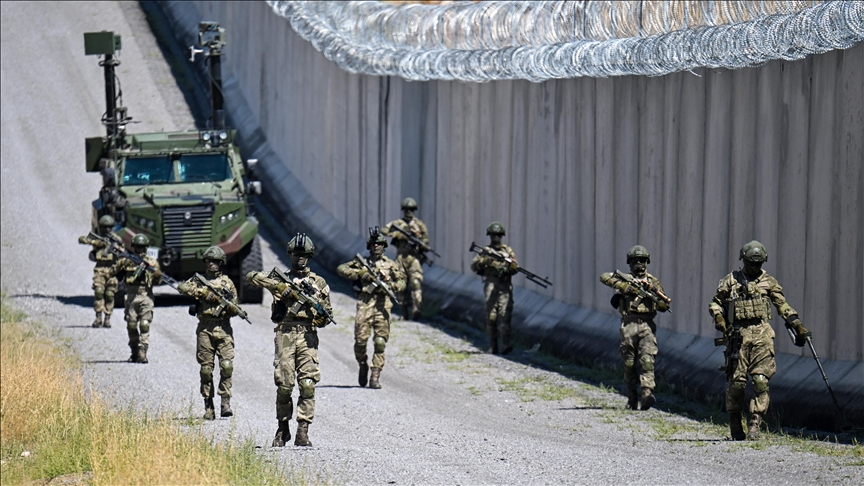
The ministry dismissed recent media reports as “completely unfounded,” stressing that Turkey maintains comprehensive security measures along its eastern border with Iran. These measures include a sophisticated surveillance system complemented by physical barriers designed to prevent unauthorized entry into Turkish territory.
“We categorically reject the baseless claims circulating in certain media outlets suggesting inadequate border control between Turkey and Iran,” the ministry statement read. “Our border security infrastructure represents one of the most advanced systems in the region and operates at maximum efficiency.”
Turkish authorities have invested heavily in border security technology in recent years, implementing thermal cameras, sensor networks, and increased patrol units along the 534-kilometer boundary with Iran. The border region, characterized by mountainous terrain and harsh weather conditions, has historically presented challenges for security forces.
The statement also highlighted Turkey’s ongoing cooperation with international partners on migration management, noting that the country has intercepted over 125,000 irregular migrants attempting to cross its borders in 2023 alone. This represents a 23% increase compared to the previous year, demonstrating enhanced enforcement efforts rather than laxity as the allegations suggest.
“Turkey continues to bear a disproportionate burden in managing regional migration flows,” said a senior security official who requested anonymity due to not being authorized to speak publicly on the matter. “We have allocated significant resources to ensure our borders remain secure while handling humanitarian responsibilities.”
The Iranian-Turkish border has gained increased attention amid global concerns about irregular migration routes connecting Asia to Europe. Turkey, hosting approximately 3.6 million Syrian refugees and significant numbers of migrants from other countries, has frequently emphasized its role as a buffer zone between conflict regions and European nations.
Regional security experts note that Turkey’s geographic position makes it a crucial transit point for migration flows, placing enormous pressure on its border management systems.
“Turkey sits at a critical juncture between multiple regions experiencing political instability,” explained Dr. Mehmet Yılmaz, an international security analyst at Ankara University. “This geographical reality creates inherent challenges for any border management system, regardless of its sophistication.”
The ministry’s statement also addressed concerns raised by European partners about migration flows through Turkey to Europe. It emphasized ongoing cooperation with the European Union under the 2016 migration agreement, despite what Turkish officials describe as insufficient support from European partners.
“We continue to uphold our commitments under international agreements while protecting our national security interests,” the statement continued. “Turkey expects the same level of commitment and cooperation from our international partners.”
Economic implications of the border security debate are significant, as Turkey’s customs operations with Iran represent an important commercial relationship. Bilateral trade between the two countries reached approximately $6.8 billion last year, despite international sanctions against Iran.
Local authorities in Turkey’s eastern provinces have also weighed in on the matter, pointing to the economic and social impact of their proximity to the border. The governor of Van province, which shares the longest stretch of border with Iran, recently highlighted local initiatives to strengthen security while maintaining necessary cross-border economic activities.
As the dispute over border security claims continues, Turkish officials have invited international observers to witness their border protection measures firsthand, expressing confidence in the effectiveness of their multi-layered approach to managing one of the world’s most challenging border regions.
Fact Checker
Verify the accuracy of this article using The Disinformation Commission analysis and real-time sources.

12 Comments
Turkey’s comprehensive response highlights the critical importance of border security, especially in regions with difficult geography. The use of advanced technologies like thermal cameras and sensor networks sounds like a prudent approach to complement physical barriers and patrols.
You make a good point. Integrating multiple layers of security, both physical and technological, is likely the most effective way for Turkey to secure its border with Iran amid the challenging terrain.
Interesting to see Turkey firmly refute these allegations. Maintaining secure borders, especially in challenging terrain, is crucial for national sovereignty. I wonder what specific technologies and measures they’ve implemented to enhance surveillance and prevent unauthorized crossings along the Iran border.
Indeed, the statement highlights Turkey’s significant investments in advanced border security infrastructure. It will be important to monitor how effective these measures are in deterring and detecting any illegal border activity.
It’s good to see Turkey taking a firm stance against these allegations and highlighting their substantial investments in border security technology. Thermal cameras, sensor networks, and increased patrols sound like effective measures to monitor and deter unauthorized border crossings in the challenging terrain.
Agreed. Turkey’s multi-layered approach to border security, combining physical infrastructure and advanced surveillance systems, appears to be a prudent strategy for securing its eastern border with Iran.
Turkey’s firm rejection of the allegations and transparency around their border security measures are commendable. Leveraging advanced technologies like thermal cameras and sensor networks, along with physical barriers, appears to be an effective strategy for monitoring and deterring illegal crossings from Iran in the challenging terrain.
I agree. Turkey’s multi-layered approach to border security, combining physical and technological elements, seems well-suited to the geographic realities of the region. It will be interesting to see how successful these measures are in practice over time.
Denying the allegations outright and providing details on their border security measures demonstrates Turkey’s commitment to protecting its sovereignty. Investing in advanced surveillance systems is a smart move to enhance monitoring and deterrence capabilities along the Iran border.
Absolutely. Turkey’s robust response and transparency around its border security efforts suggest they take this issue very seriously and are dedicated to maintaining control over their territory.
The Turkish government’s categorical rejection of the allegations and detailed explanation of their border security efforts are reassuring. Implementing a sophisticated surveillance system and physical barriers to prevent illegal crossings from Iran seems like a comprehensive approach to safeguarding their territory.
You’re right, Turkey’s response demonstrates a strong commitment to maintaining control over its borders and preventing unauthorized entry. Their investment in cutting-edge technologies is a sensible way to address the unique challenges posed by the mountainous terrain along the Iran border.