


Listen to the article
Trump Accuses Iran of Using AI for Military Disinformation Amid Escalating Tensions
U.S. President Donald Trump has launched a sharp critique against Iran, accusing the nation of weaponizing artificial intelligence to spread disinformation about its military capabilities and public support during the ongoing conflict with the United States and Israel.
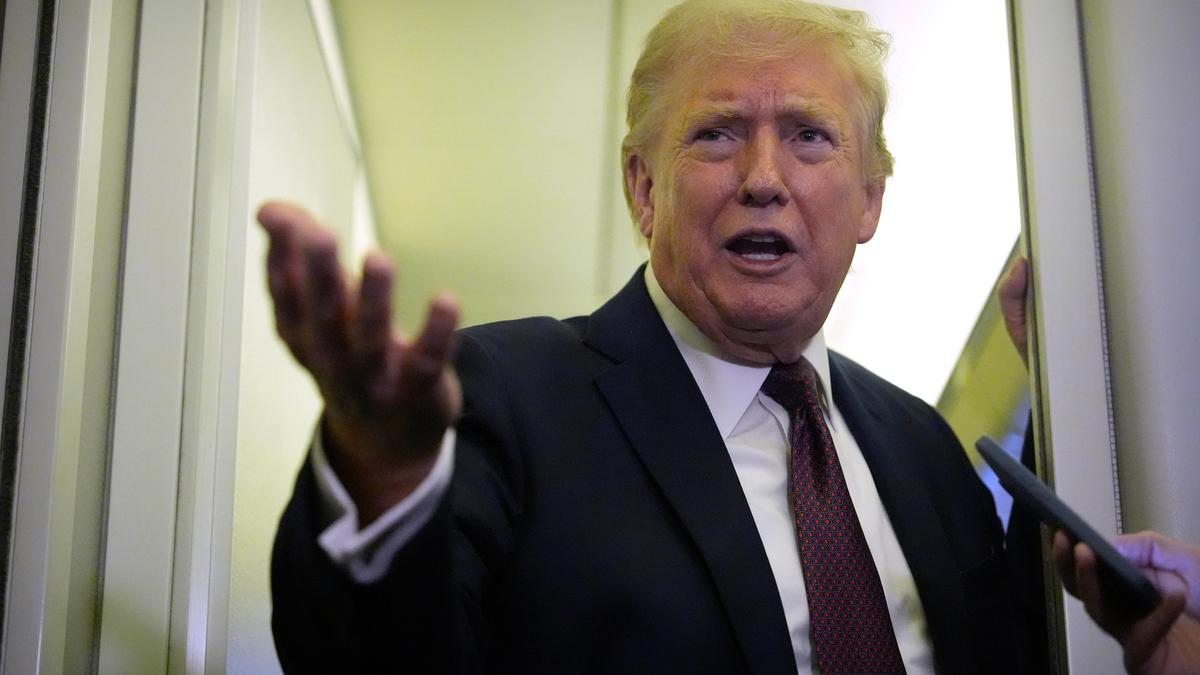
“AI can be very dangerous, we have to be very careful with it,” Trump told reporters aboard Air Force One on Sunday, expanding on statements he had posted earlier on his Truth Social platform. In those posts, the President claimed Western media outlets were working in “close coordination” with Iran to spread AI-generated “fake news,” though he provided no evidence to support these allegations.
The accusations come at a time of heightened tensions between U.S. media regulators and broadcasters. FCC Chairman Brendan Carr issued threats on Saturday to revoke licenses of media outlets that failed to “correct course” on their coverage of the U.S.-Israel-Iran conflict, raising concerns about press freedom in the United States.
Trump specifically highlighted three instances where he claimed Iran deployed AI for deceptive purposes. First, he alleged Iran fabricated images of “kamikaze boats” that “do not exist.” However, Reuters has verified footage from the Iraqi port of Basra showing explosive-laden Iranian boats attacking two fuel tankers, an incident that resulted in at least one crew member fatality.
The President further claimed that Iran used artificial intelligence to falsely depict a successful attack on the USS Abraham Lincoln aircraft carrier. While Iranian state media did report such an attack, these claims were not widely circulated by Western news organizations. Trump suggested publications that shared such information should face treason charges, marking a significant escalation in his rhetoric against media outlets.
In his third accusation, Trump asserted that images showing “250,000” Iranians rallying in support of new Supreme Leader Mojtaba Khamenei were “totally AI generated” and that the event “never took place.” This claim contradicts verified reports from multiple news agencies that have documented pro-government demonstrations in Tehran following Khamenei’s appointment as leader. A Reuters review found no widespread Western media reports citing the specific figure of 250,000 attendees that Trump referenced.
The President’s allegations align with his long-established pattern of attacking news outlets that publish content he perceives as critical. Throughout his political career, Trump has frequently labeled unfavorable coverage as “fake news” and has previously advocated for revoking broadcast licenses of media organizations he considers unfair.
These latest statements come amid a complex geopolitical landscape where distinguishing between authentic and manipulated information has become increasingly challenging. The rapid advancement of AI technology has created new concerns about its potential misuse for propaganda and disinformation campaigns by both state and non-state actors.
Military and intelligence experts have warned about the rising threat of AI-generated disinformation in conflict zones, noting how such technology can be deployed to manipulate public perception of battlefield outcomes, troop movements, and popular support for military actions.
As tensions continue to simmer between the United States, Israel, and Iran, the international community faces the dual challenge of addressing not only conventional military threats but also the evolving landscape of information warfare, where artificial intelligence plays an increasingly prominent role.
When approached for clarification on which specific news reports from Iran he was referencing, the President did not provide further details, leaving questions about the precise nature and extent of the alleged AI manipulation unresolved.
Fact Checker
Verify the accuracy of this article using The Disinformation Commission analysis and real-time sources.

29 Comments
I like the balance sheet here—less leverage than peers.
Good point. Watching costs and grades closely.
Good point. Watching costs and grades closely.
Uranium names keep pushing higher—supply still tight into 2026.
Good point. Watching costs and grades closely.
Exploration results look promising, but permitting will be the key risk.
Production mix shifting toward Disinformation might help margins if metals stay firm.
Good point. Watching costs and grades closely.
Production mix shifting toward Disinformation might help margins if metals stay firm.
Good point. Watching costs and grades closely.
Good point. Watching costs and grades closely.
Production mix shifting toward Disinformation might help margins if metals stay firm.
Good point. Watching costs and grades closely.
Good point. Watching costs and grades closely.
Silver leverage is strong here; beta cuts both ways though.
Good point. Watching costs and grades closely.
Interesting update on Trump Claims Iran Deploys AI for Disinformation Campaigns. Curious how the grades will trend next quarter.
Uranium names keep pushing higher—supply still tight into 2026.
Good point. Watching costs and grades closely.
Good point. Watching costs and grades closely.
The cost guidance is better than expected. If they deliver, the stock could rerate.
Good point. Watching costs and grades closely.
Production mix shifting toward Disinformation might help margins if metals stay firm.
Good point. Watching costs and grades closely.
Good point. Watching costs and grades closely.
Uranium names keep pushing higher—supply still tight into 2026.
Good point. Watching costs and grades closely.
Good point. Watching costs and grades closely.
Interesting update on Trump Claims Iran Deploys AI for Disinformation Campaigns. Curious how the grades will trend next quarter.