


Listen to the article
In an escalation of tensions between the Trump administration and content moderation advocates, the U.S. State Department has imposed sanctions on several foreign individuals, including a former EU commissioner and researchers focused on combating online hate speech and misinformation.
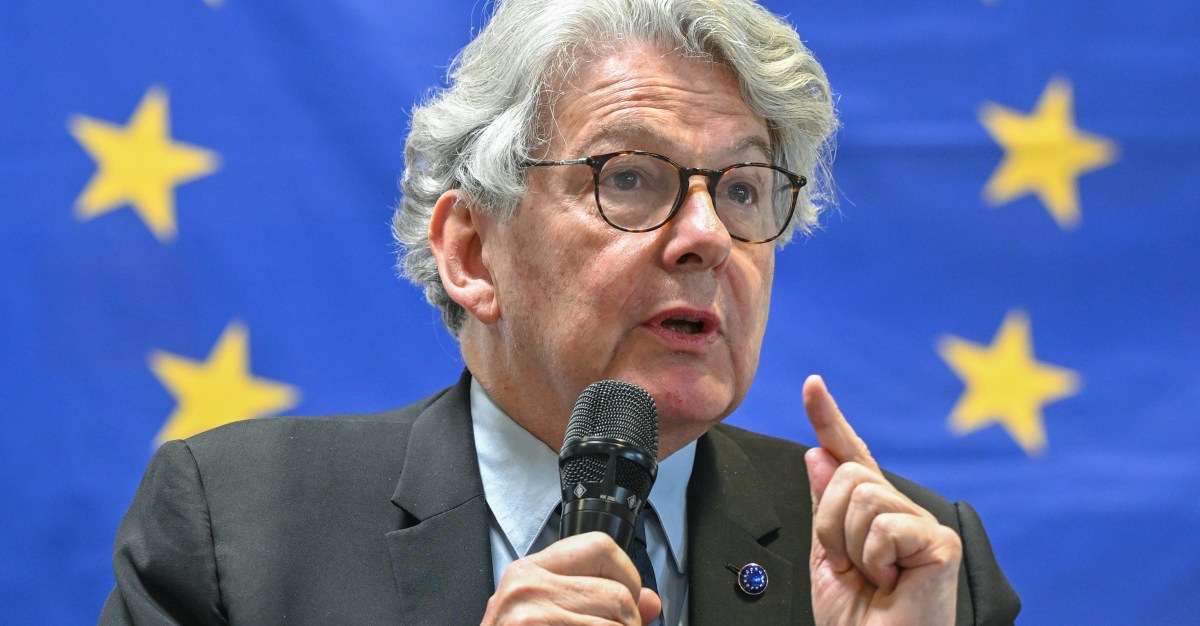
The sanctions, announced Tuesday, bar former EU Commissioner Thierry Breton and four prominent researchers from entering the United States. Secretary of State Marco Rubio issued what many observers characterize as a warning to others in the field, stating that the State Department “stands ready and willing to expand today’s list if other foreign actors do not reverse course.”
Among those targeted is Imran Ahmed, who heads the Center for Countering Digital Hate (CCDH), an organization dedicated to identifying and challenging online hate speech. The CCDH previously found itself at the center of a legal battle with Elon Musk’s X platform (formerly Twitter) earlier this year. That lawsuit, which critics viewed as an attempt to silence the organization, was dismissed by U.S. District Judge Charles Breyer, who wrote that X’s motivation appeared to be to “punish CCDH for CCDH publications that criticized X Corp. — and perhaps in order to dissuade others.”
The State Department’s action also targets Anna-Lena von Hodenberg and Josephine Ballon, who lead HateAid, a German nonprofit that previously sued X in 2023, alleging the platform failed to remove antisemitic content that violated European law. Clare Melford, who leads the Global Disinformation Index, an organization focused on addressing systemic issues enabling the spread of disinformation, rounds out the list of researchers facing sanctions.
The administration framed these measures as “Actions to Combat the Global Censorship-Industrial Complex,” echoing language frequently used by House Judiciary Committee Chairman Jim Jordan and other Republican lawmakers who have criticized fact-checking initiatives and misinformation research applied to social media platforms. This framing suggests alignment with broader conservative concerns about perceived bias in content moderation practices.
This move follows earlier steps taken by the administration to target individuals involved in content moderation. Earlier this month, Reuters reported that the State Department had instructed U.S. consulates to consider rejecting H-1B visa applications from individuals involved in content moderation activities. The administration also recently threatened retaliatory actions against European tech companies like Spotify and SAP, accusing them of “discriminatory” practices in regulating American technology platforms.
The sanctions represent a significant shift in U.S. policy toward content moderation and online safety research, potentially creating a chilling effect on international efforts to combat hate speech and misinformation. Critics argue that these actions could undermine collaborative approaches to addressing problematic online content at a time when digital platforms face increasing scrutiny over their role in amplifying harmful material.
The European Union has been at the forefront of regulating digital platforms through legislation like the Digital Services Act, which requires major online platforms to take more responsibility for illegal and harmful content. Breton, as the former EU Commissioner for Internal Market, played a key role in developing these regulations.
For organizations like the CCDH and HateAid, the sanctions create uncertainty about their ability to collaborate with U.S.-based researchers and institutions. It also raises questions about the future of international cooperation on digital policy issues, particularly as governments worldwide grapple with challenges related to artificial intelligence, data privacy, and platform accountability.
Industry observers note that these developments could further fragment the global internet along geopolitical lines, potentially forcing technology companies to navigate increasingly divergent regulatory environments across different regions.
Fact Checker
Verify the accuracy of this article using The Disinformation Commission analysis and real-time sources.

7 Comments
The mining and energy sectors are heavily impacted by online information and narratives. If this leads to more restrictions on content moderation, it could have significant ramifications for how these industries are perceived and discussed publicly.
Interesting move by the Trump administration. Targeting content moderators seems like a concerning escalation in the battle over misinformation and online speech. I wonder what the broader implications will be for global internet governance.
As someone who follows the mining and commodities space, I’m curious how this move might impact the industries and companies I follow. Could it lead to more restrictions or uncertainty around online discussions and information sharing?
This is a complex issue with valid arguments on both sides. While content moderation is important, I can understand concerns about government overreach and infringement on free speech. It will be important to watch how this situation develops.
I agree, it’s a delicate balance. Freedom of expression is crucial, but so is addressing the real harms of misinformation and hate speech online. I hope cooler heads can prevail and find a reasonable middle ground.
This is a concerning development for the fight against online disinformation. Targeting those working to identify and counter hate speech and misinformation seems like an alarming escalation. I worry about the precedent it sets.
I share your concerns. Effective content moderation is critical, but barring those working in this space from entering the US feels like an overreach. I hope the administration reconsiders this approach.