


Listen to the article
President Trump has accused Iran of weaponizing artificial intelligence to spread disinformation about its military capabilities and domestic support, marking an escalation in tensions between the U.S. administration and media organizations covering the ongoing conflict.
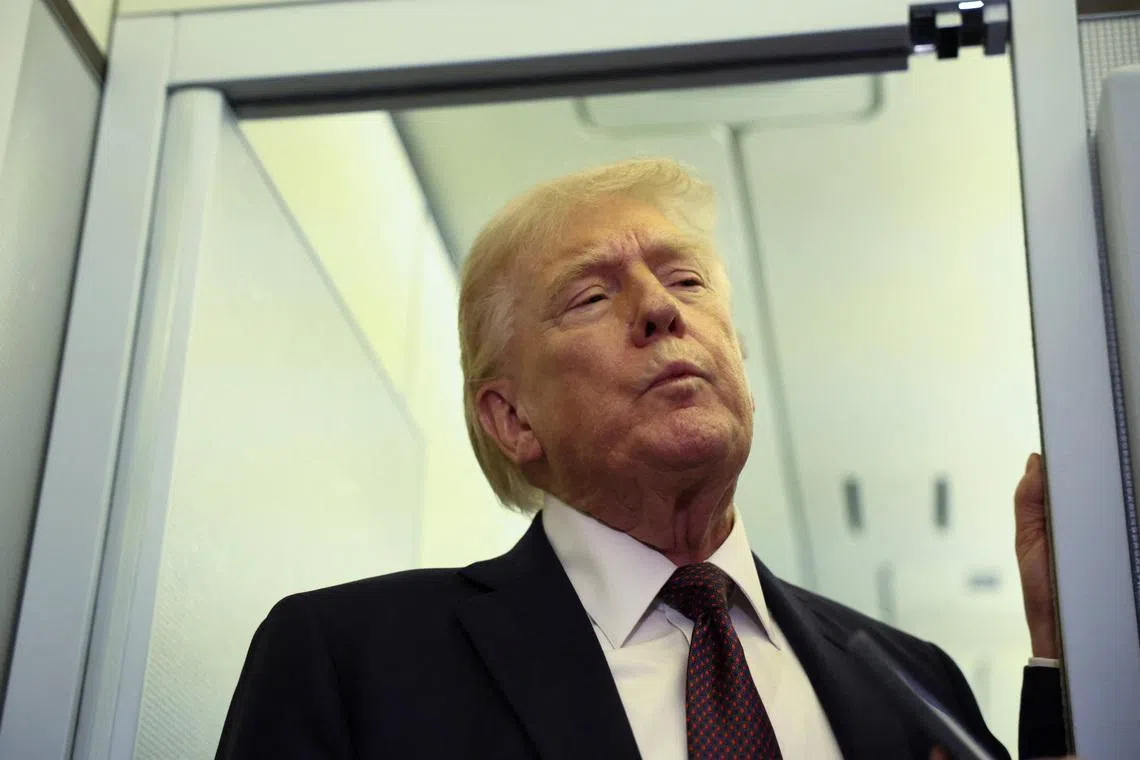
Speaking to reporters aboard Air Force One on March 15, Trump expressed concerns about artificial intelligence technology, stating, “AI can be very dangerous, we have to be very careful with it.” This followed a post on his Truth Social platform where he alleged without evidence that Western media outlets were working in “close coordination” with Iran to disseminate AI-generated “fake news.”
The president highlighted three specific instances where he claimed Iran had deployed AI for deceptive purposes. He alleged that Iran had fabricated images of “kamikaze boats” that do not exist, and accused the country of falsely depicting a successful attack on the USS Abraham Lincoln aircraft carrier. Trump suggested that publications spreading such news should face treason charges.
However, Reuters has verified footage from the Iraqi port of Basra showing explosive-laden Iranian vessels attacking two fuel tankers, resulting in at least one crew fatality. While Iranian state media did claim an attack on the USS Abraham Lincoln, this assertion was not widely reported by Western news outlets.
Trump further contested the authenticity of images showing mass gatherings in support of Iran’s new Supreme Leader Mojtaba Khamenei, calling them “totally AI generated” and claiming the events “never took place.” Yet various news organizations, including Reuters, have published photographs documenting crowds in Tehran following Khamenei’s appointment. A Reuters search found no Western reports specifically citing a figure of “250,000” attendees at such rallies, though multiple pro-government demonstrations have occurred in Iran since the conflict began.
These accusations come amid growing friction between federal regulators and broadcasters. On March 14, Federal Communications Commission (FCC) Chairman Brendan Carr threatened to revoke the licenses of broadcasters who did not “correct course” in their coverage of the U.S. and Israel’s conflict with Iran.
The president’s statements align with his long-standing pattern of criticizing news media outlets for coverage he perceives as unfavorable. Throughout his presidency, Trump has repeatedly called for revoking the licenses of broadcast organizations he views as unfair to his administration.
The controversy highlights broader concerns about the role of artificial intelligence in modern information warfare. As AI technology advances, the potential for creating convincing false narratives and manipulated media presents significant challenges for journalists, fact-checkers, and the public. The situation underscores the growing difficulty in verifying information during international conflicts, where competing narratives often clash.
The tensions between the administration and media organizations also raise questions about press freedom and regulatory oversight. The FCC’s authority to regulate broadcast licenses based on content decisions has historically been limited by First Amendment protections, making Chairman Carr’s threats particularly noteworthy.
As the conflict with Iran continues to unfold, the dispute over media coverage and the alleged use of AI to spread disinformation adds another layer of complexity to an already volatile international situation. The controversy comes at a time when distinguishing between authentic and manipulated media is becoming increasingly challenging, even for experienced news organizations.
Trump did not provide specific examples of the news reports from Iran that he was referencing, leaving questions about the precise nature of his allegations unanswered.
Fact Checker
Verify the accuracy of this article using The Disinformation Commission analysis and real-time sources.

14 Comments
This is a concerning development that highlights the need for robust safeguards and oversight when it comes to the use of emerging technologies like AI. I hope the administration can provide clear evidence to support their claims and outline a comprehensive strategy to address this threat.
Well said. The mining and energy sectors, along with other critical industries, must be vigilant against the risks of AI-driven disinformation campaigns. Proactive, collaborative solutions will be key.
While I don’t have a strong opinion on the validity of these specific claims, the broader issue of AI-powered disinformation is certainly troubling. As someone who follows mining and energy news, I’ll be watching this story closely to see how it unfolds.
Agreed. The potential for AI to be misused in this way is a concern that extends well beyond any single industry or geopolitical conflict. A coordinated, global response may be necessary.
As someone with a background in the mining and energy sectors, I’m deeply concerned about the potential for AI-driven disinformation to disrupt these industries. Transparency and accountability will be essential to addressing this issue effectively.
Absolutely. The integrity of information is paramount, especially in sectors that are vital to the global economy. I hope policymakers take a proactive, collaborative approach to mitigate these risks.
While I’m skeptical of unsubstantiated claims, the use of AI for malicious purposes like spreading disinformation is a real concern that needs to be taken seriously. I hope rigorous investigations can shed light on the truth of these allegations.
Agreed, a thorough, fact-based approach is essential. The potential impacts on commodity markets and public perception make this an important issue to follow closely.
This is a complex and nuanced topic, as the line between legitimate use of AI and malicious manipulation can be blurry. I look forward to seeing how this story develops and what strategies are proposed to counter the threat of AI-powered disinformation campaigns.
Indeed, the responsible use of emerging technologies like AI is a critical challenge facing society. Constructive dialogue and evidence-based solutions will be key.
This is a concerning development if true. The use of AI to spread disinformation is a serious threat to public discourse and trust in media. I hope the administration can provide concrete evidence to support these claims.
Agreed, verifying the sources and methods used is crucial. AI can be a powerful tool, but it must be deployed responsibly and transparently.
As someone who follows mining and energy news closely, I’m curious to see how this story unfolds. The allegations around AI-generated ‘fake news’ are alarming and raise important questions about information warfare and national security.
Absolutely. The implications for the mining and energy sectors could be significant if disinformation campaigns are indeed targeting these industries.