


Listen to the article
Russia’s Wikipedia Edit Wars Target Estonia, EU Leaders in Information Offensive
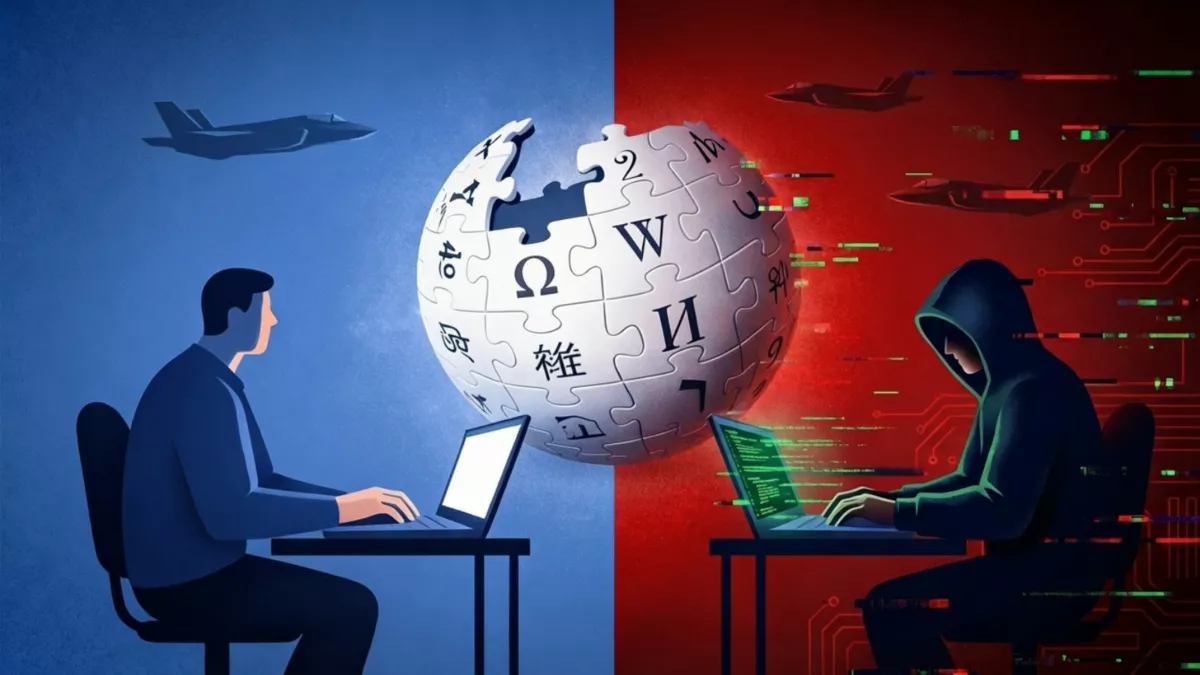
As Wikipedia approaches its 25th anniversary in 2026, the collaborative encyclopedia faces an escalating challenge from coordinated edit campaigns attempting to rewrite history and embed Kremlin-aligned narratives into one of the world’s most trusted reference sources.
Founded on principles of volunteer collaboration, neutrality and verifiable sources, Wikipedia has evolved into an influential global knowledge platform. But in recent years, it has become a battleground for geopolitical information warfare, with Russia’s full-scale invasion of Ukraine in 2022 intensifying these conflicts.
The most visible manifestations are “edit wars” – prolonged conflicts where opposing groups repeatedly overwrite articles to control historical narratives. Estonia and its former prime minister Kaja Kallas have emerged as frequent targets in this digital offensive.
Edit wars exploit Wikipedia’s open editing model when contributors repeatedly change content rather than resolving disputes through discussion. While Wikipedia officially discourages such behavior and emphasizes consensus-building, coordinated editors employ tactics designed to exhaust good-faith contributors through procedural maneuvering and administrative complaints.
The strategy isn’t focused on winning single arguments but wearing down opposition, freezing pages at favorable moments, and normalizing contested language. Once an article is locked or protected, the version in place gains perceived legitimacy, even when it reflects distorted viewpoints.
Multiple investigations have documented a sharp increase in Wikipedia manipulation following Russia’s invasion of Ukraine. Both Russian-language Wikipedia and sections of the English version have become arenas for systematic narrative control, particularly as independent Russian media outlets were shut down.
Estonia provides a clear example of how these edit wars serve both historical revisionism and political influence operations. Since 2022, English-language Wikipedia articles about Estonia’s history, statehood, and political leadership have faced sustained pressure from coordinated editing networks.
One recurring tactic involves changing the birthplaces of hundreds of Estonian public figures from “Estonia” to “Estonian SSR, Soviet Union.” This seemingly minor edit carries significant implications, as it reinforces Russian claims that the Baltic states voluntarily joined the USSR – directly contradicting Estonia’s position, EU and NATO countries’ stances, and international law that recognizes Soviet occupation rather than legitimate incorporation between 1940-1991.
Historical topics have also been targeted. The Estonian War of Independence (1918-1920) has been repeatedly reframed as an “offensive campaign” or “separatism from Russia” – language that mirrors contemporary Kremlin rhetoric about sovereign states formerly under Russian control.
High-profile figures like Kaja Kallas have proven especially vulnerable to manipulation. Her Wikipedia page has repeatedly been edited to reflect Russian-aligned interpretations of history and geopolitics. At strategic moments, the page was locked with these contested narratives in place, preventing corrective edits. Page protection mechanisms, originally designed to prevent disruption, instead helped preserve distorted content.
Wikipedia’s significance extends far beyond its direct readership. As a top-ranking source in search results and a default reference for journalists, students, policymakers, and the public, it shapes global understanding of historical and current events. For Kremlin-aligned actors, this makes Wikipedia an invaluable strategic target.
The stakes have risen even higher with artificial intelligence. Recent studies indicate that Wikipedia serves as one of the most cited sources for large language models like ChatGPT, functioning as a foundational knowledge base. This creates a new concern: manipulating articles today may influence how future technologies understand and reproduce historical narratives, a practice experts call “LLM grooming.”
Estonia’s experience demonstrates how smaller states with complex histories involving Russia are particularly vulnerable to these information operations. The subtle alterations – downplaying occupation, reframing wars, questioning democratic legitimacy – can gradually erode collective understanding of history and present-day aggression.
The rise in Wikipedia edit wars since 2022 reflects a sophisticated evolution in information warfare tactics. Rather than deploying obvious propaganda, actors now utilize procedural, platform-native manipulation methods that exploit the very openness that makes collaborative knowledge platforms valuable.
As long as open-knowledge resources continue to shape how societies understand history and politics, Wikipedia will remain contested terrain in the broader landscape of information conflict.
Fact Checker
Verify the accuracy of this article using The Disinformation Commission analysis and real-time sources.

8 Comments
Interesting to see how Wikipedia has become a battleground for information warfare. Preserving neutrality and verifiable sources seems critical as these edit wars escalate.
Agreed. The open editing model is both a strength and a vulnerability that malicious actors can exploit to push narratives.
This highlights the challenges of maintaining an objective, collaborative platform like Wikipedia in an age of online disinformation. Moderating these ‘edit wars’ must be a constant struggle.
Absolutely. Wikipedia’s core principles of neutrality and reliance on verifiable sources are essential bulwarks against information manipulation.
The Wikipedia Wars reveal the high stakes of controlling historical narratives in the digital age. Upholding editorial standards while dealing with coordinated bad actors is no easy task.
It’s concerning to see Russia’s information offensive targeting Wikipedia, one of the most trusted online knowledge sources. Maintaining the integrity of this platform is crucial.
Agreed. The open editing model that makes Wikipedia so valuable also leaves it vulnerable to manipulation. Robust moderation and community engagement are key.
This article underscores the vital importance of information integrity in the digital age. Wikipedia’s principles of neutrality and verifiability must be staunchly defended.