


Listen to the article
Indonesian President Prabowo Subianto has directed his administration to prepare legislation aimed at combating disinformation and foreign propaganda, a move that has sparked concerns about potential threats to freedom of expression in the country.
According to Yusril Ihza Mahendra, the coordinating minister of law, human rights, immigration and correctional services, such a law is essential to protect national interests from harmful narratives. However, critics warn that without precise definitions of “disinformation” or “national interest,” the proposed legislation could create a dangerous regulatory vacuum.
The National Commission on Human Rights (Komnas HAM) has established standards defining disinformation as deliberately disseminated false information. However, in today’s complex information landscape where various stakeholders—including governments, academics, research institutions, and indigenous communities—compete to establish different versions of truth, a government-mandated reality could effectively silence legitimate discourse.
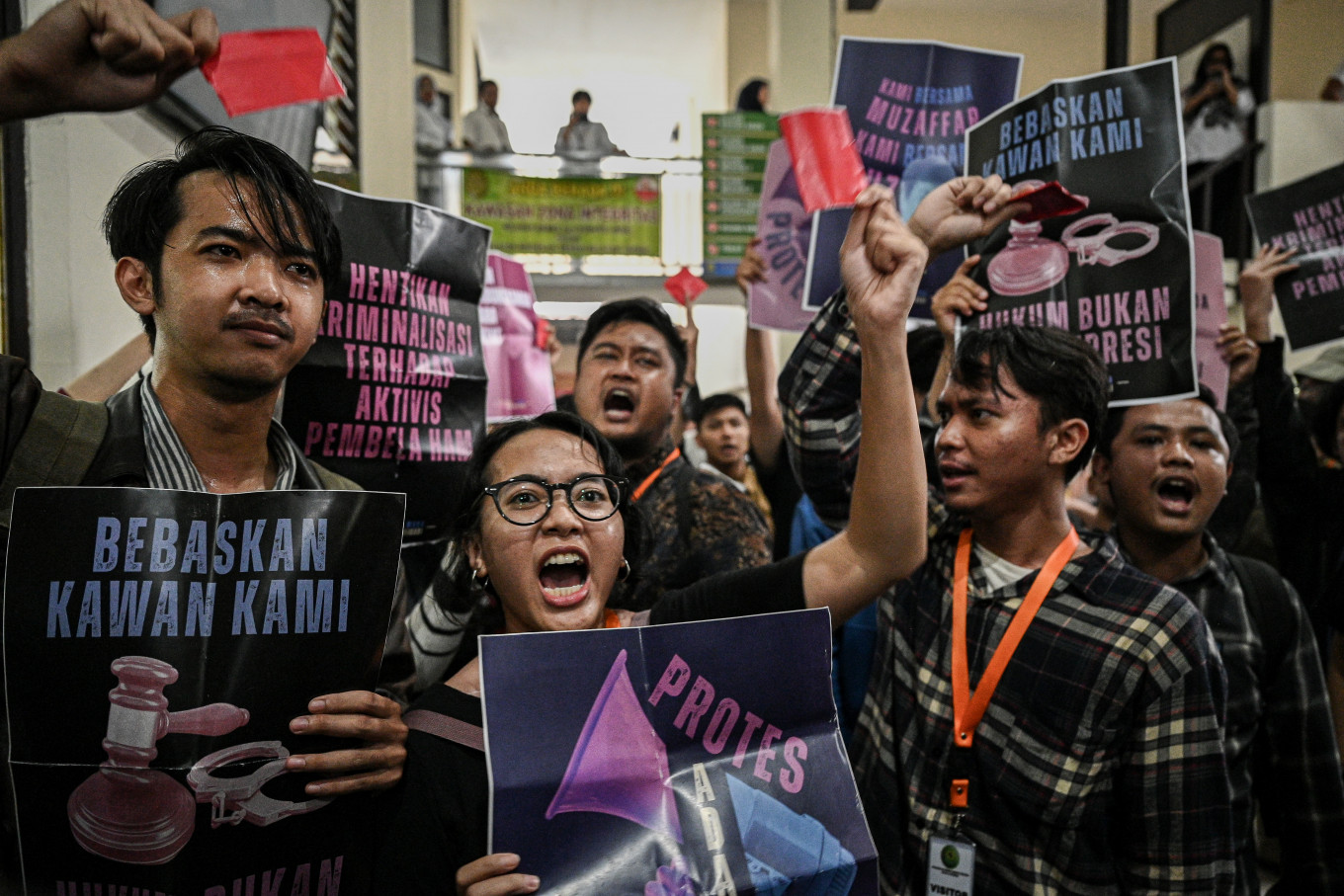
Recent incidents have already raised red flags about the potential for overreach. In late August 2025, authorities detained hundreds of protesters on incitement charges for what many observers considered a legitimate exercise of freedom of expression. These actions have intensified concerns that the proposed legislation could be weaponized against government critics.
Indonesia’s digital transformation has been remarkable in recent years. Data from the Indonesian Internet Providers Association (APJII) reveals that internet users in the country reached 229 million in 2025, representing an internet penetration rate exceeding 80 percent of the population. This rapid digital expansion has fundamentally transformed how Indonesians access and share information.
However, this digital growth has not been matched by corresponding improvements in digital literacy. In fact, Indonesia’s digital literacy score dropped to 49.28 points in 2025, indicating that many citizens may struggle to critically evaluate online content. This widening gap between access and literacy creates fertile ground for both the spread of actual misinformation and potential government overreach in regulating content.
Media experts and civil rights advocates point out that in the current digital environment, information monopolies have been dismantled, with every citizen now functioning as both a consumer and producer of content. If the government gains sweeping powers to label contradictory information as “foreign propaganda,” it could effectively establish an information monopoly that runs counter to constitutionally protected rights.
These rights—including the right to know and access information—are explicitly protected under both Indonesia’s Press Law and the Law on Public Information Disclosure. Legal scholars argue that the proposed legislation risks undermining these established protections and could represent a significant backsliding in Indonesia’s democratic progress since the post-Suharto reform era.
Regional context adds another dimension to these concerns. Several Southeast Asian nations, including Singapore, Vietnam, and Thailand, have implemented similar laws that critics say have been used to suppress political dissent and control public discourse. Indonesia, once celebrated for its relatively open media environment compared to some neighbors, now appears to be considering a path that might align with more restrictive regional approaches.
Business observers note that an overly restrictive information environment could also impact Indonesia’s digital economy, currently one of the fastest-growing in Southeast Asia. Tech companies and investors typically shy away from markets with unpredictable content regulations that might expose them to legal liabilities.
As the administration moves forward with drafting this legislation, lawmakers face the challenge of balancing legitimate concerns about foreign interference and harmful disinformation with the fundamental rights of citizens to free expression. The outcome will likely shape Indonesia’s information landscape for years to come, with significant implications for democratic governance in Southeast Asia’s largest nation.
Fact Checker
Verify the accuracy of this article using The Disinformation Commission analysis and real-time sources.

10 Comments
This is a concerning development that deserves close scrutiny. Protecting national security is important, but not at the expense of fundamental rights like freedom of expression. The details of this bill will be crucial.
Absolutely. The government must ensure that any anti-disinformation efforts do not inadvertently empower censorship and undermine democratic discourse.
This is a complex issue without easy answers. On one hand, misinformation can be deeply damaging. But overly broad laws risk infringing on free expression. The government will need to tread very carefully.
Well said. Balancing security concerns with fundamental rights is a delicate challenge. Robust public debate and oversight will be crucial.
This disinformation bill raises valid concerns over free speech and government overreach. Defining ‘disinformation’ and ‘national interest’ will be a delicate balance to strike. Transparency and oversight will be crucial to prevent abuse of these laws.
Agree, the potential for misuse is concerning. Clear definitions and robust protections for legitimate discourse will be essential.
The proposed law raises red flags about potential government overreach. While combating harmful disinformation is important, vague definitions could lead to the silencing of legitimate voices and dissent.
Agreed. The risk of abuse is high, and the government must be held accountable to ensure these laws are not used to consolidate power and control the narrative.
While combating harmful misinformation is important, these laws must be carefully crafted to avoid stifling legitimate debate and criticism. Maintaining an open information landscape is vital for a healthy democracy.
Absolutely. Overzealous censorship in the name of ‘national interest’ can do more harm than good in the long run.