


Listen to the article
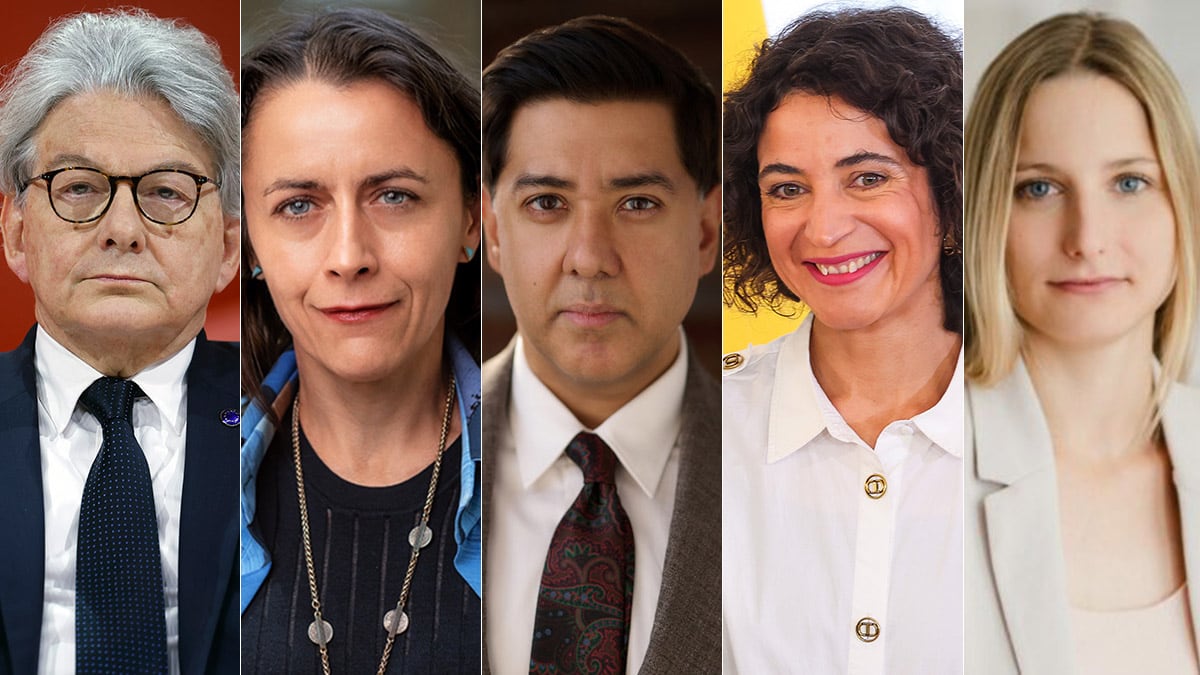
In a dramatic escalation of tensions between the United States and Europe over digital content regulation, the Trump administration has banned five European citizens from entering the U.S., citing their involvement in what Secretary of State Marco Rubio described as “organized efforts to coerce American platforms to censor, demonetize, and suppress American viewpoints.”
The ban, announced just before Christmas, has sparked accusations of politically motivated retaliation against individuals connected to the enforcement of the EU’s Digital Services Act (DSA), legislation designed to hold tech companies accountable for content moderation and transparency.
Among those targeted is Clare Melford, a 52-year-old British resident who leads the Global Disinformation Index (GDI). She discovered her visa status had changed through an email, followed by messages from family and colleagues informing her that U.S. Under Secretary of State Sarah B. Rogers had publicly named her on social platform X.
“It was a shock. It’s never nice to be singled out like that, especially hours before Christmas Eve, when all you want to do is wrap presents and peel vegetables,” Melford told EL PAÍS. She received official notification on December 24 that her trip to the U.S. had been denied without explanation.
Former European Commissioner Thierry Breton, the most prominent figure among those banned, has already taken legal action. The Trump administration specifically cited Breton as “a mastermind of the Digital Services Act,” the EU regulation that has recently resulted in significant fines against tech platforms, including a $120 million penalty imposed on Elon Musk’s X in December.
The timing and targets of these sanctions have raised concerns that they’re directly connected to Musk’s influence within the Trump administration. Musk served as a key adviser to Trump’s campaign and was a major financial contributor.
“This is about Big Tech. We know that Elon Musk doesn’t like us — he sued us two years ago, and we won the case. This time, he preferred to push the nuclear button. He’s called his friends in the White House and asked them to get us out of the way,” said Imran Ahmed, director of the Center for Countering Digital Hate (CCDH).
Ahmed, the only sanctioned individual who currently resides in the United States, faces potentially severe consequences. His organization has documented increases in extremist content on X since Musk’s takeover and recently collaborated with The New York Times on an investigation into problematic AI-generated imagery on Musk’s Grok platform.
Unlike the other sanctioned Europeans, Ahmed has secured a temporary legal reprieve. On December 24, his legal team obtained a federal court order blocking his potential detention or deportation until March 2026. “You can’t remove someone with permanent legal residency without going through the courts. And there, facts matter,” Ahmed said.
The European Parliament has responded forcefully to the sanctions, particularly regarding Breton’s case, calling it “an unacceptable personalization of EU policy, a dangerous precedent for the independence of the European Institutions and an attack on the EU’s regulatory sovereignty.”
For Anna-Lena von Hodenberg and Josephine Ballon of HateAid, a Berlin-based organization that supports victims of online hate speech, the sanctions have already had tangible consequences. “Two important financial partners have withdrawn their support in the last month,” said von Hodenberg, forcing organizational changes to protect their operations.
The targeted Europeans uniformly reject the accusation of censorship. “We do not censor. We do not boycott. We only investigate and share our data with interested parties,” said Melford, while von Hodenberg characterized the sanctions as part of a broader attempt to “obstruct the application of regulations, specifically the DSA, to U.S. companies.”
The conflict highlights growing transatlantic tensions over digital governance and the immense influence of American tech platforms in global politics. The European Union continues to advance regulatory frameworks aimed at holding tech giants accountable, while the new U.S. administration appears increasingly aligned with Silicon Valley interests.
“They are trying to silence our research,” Ahmed concluded. “I think that strengthens the resolve, of both myself and the other four European citizens banned by the United States, to keep working, because if we are bothering [the White House], that means we are doing something right.”
Fact Checker
Verify the accuracy of this article using The Disinformation Commission analysis and real-time sources.

10 Comments
Hmm, it’s concerning to see the US taking such a hardline stance against European anti-disinformation efforts. While content moderation is a thorny issue, barring individuals seems like an extreme measure that could backfire. I hope cooler heads can prevail here.
You make a fair point. Ratcheting up tensions through bans is unlikely to resolve the underlying disagreements. A more collaborative approach may yield better results for all sides.
The EU’s Digital Services Act aims to increase tech transparency and accountability. While reasonable people can disagree on the approach, banning individuals over it seems like an overreaction. I wonder if there are diplomatic solutions that could ease these tensions.
Agreed, there has to be a better way to address these complex issues than banning people. Open dialogue and compromise would be a more constructive path forward.
This news raises important questions about the balance between free speech and content regulation. While the EU’s rules may not align with the US approach, barring individuals seems like an overly punitive response that could undermine broader cooperation. I wonder what the long-term implications will be.
Agreed, the long-term impacts are concerning. These issues require nuanced, good-faith dialogue, not unilateral actions that risk escalating tensions further.
This is a concerning escalation of tensions over content regulation. It’s worrying to see people barred from the US for their work combating misinformation. I hope this doesn’t set a dangerous precedent of retaliation against anti-disinformation efforts.
You raise a good point. The free flow of information and ideas is crucial, so any perceived crackdown on anti-misinformation efforts is troubling.
The clash over content regulation and misinformation is a complex, global issue without easy answers. While I can understand concerns on both sides, banning individuals seems like a counterproductive approach that could backfire. Hopefully the parties can find a way to constructively address these challenges.
Well said. An open, collaborative process is more likely to yield durable solutions than unilateral actions. I hope cooler heads can prevail and find a middle ground on these thorny issues.