


Listen to the article
The Rising Threat of Misinformation in India’s Digital Landscape
In an increasingly connected India where over 806 million people have internet access and 491 million actively use social media platforms, the spread of misinformation has emerged as a critical national challenge. Both the UN Global Risk Report 2024 and the World Economic Forum have identified disinformation as the world’s most significant current threat – a reality India is experiencing firsthand.
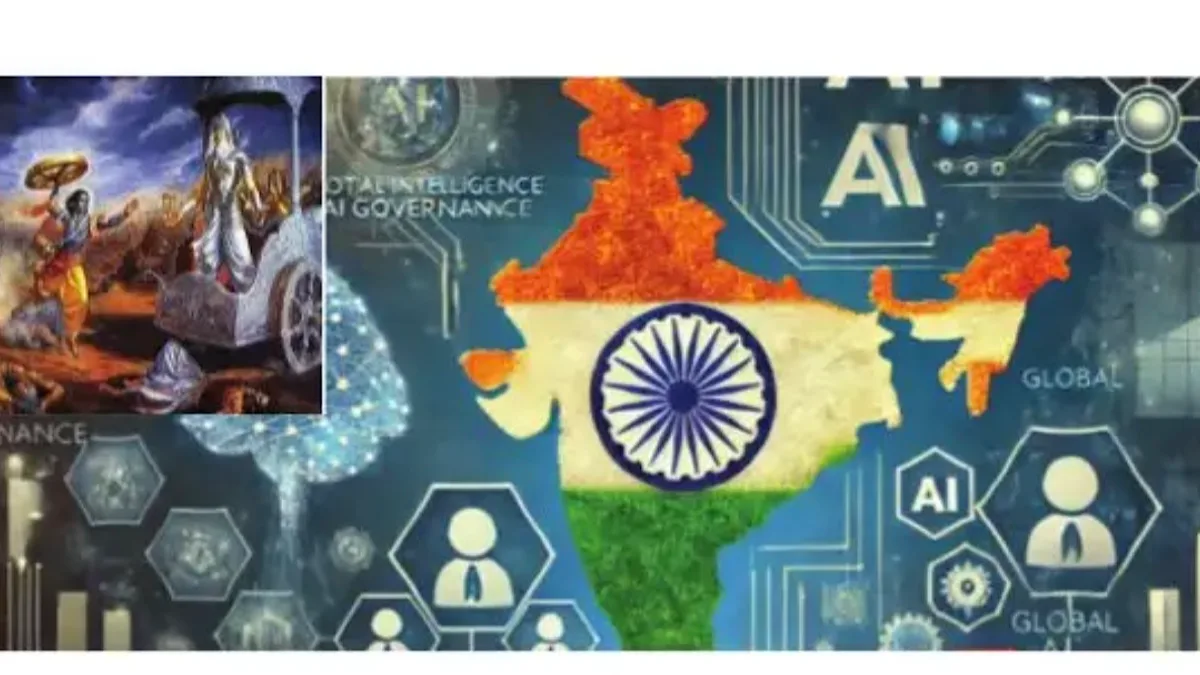
The consequences of misinformation are deeply rooted in Indian cultural narratives. The Mahabharata itself depicts how a strategic half-truth led to the defeat of the invincible Dronacharya, illustrating how manipulation of information can have profound consequences. Today’s digital landscape provides a modern parallel, as citizens increasingly fall prey to misleading content from trusted sources, influencers, and those sharing similar ideological positions.
India’s linguistic and cultural diversity, combined with political polarization and social divisions, creates fertile ground for disinformation to flourish. The COVID-19 pandemic highlighted this vulnerability when India recorded the highest volume of health-related misinformation globally. False claims about miracle cures and conspiracy theories surrounding vaccines contributed significantly to vaccine hesitancy among the public.
The political sphere has been particularly affected, with propaganda-driven social media campaigns and manipulated videos fueling communal tensions and shaping voter perceptions. Recent scholarly research has established direct links between religious violence and political misinformation circulated on digital platforms. Such trends undermine the foundations of trust, harmony, and multiculturalism that underpin India’s democratic framework.
Perhaps most alarming are the real-world consequences. India has witnessed multiple incidents of mob violence triggered by false rumors circulated online. These echo historical precedents like the Rwandan genocide, where radio broadcasts played a pivotal role in inciting violence. Political experts have also documented how disinformation can significantly alter election outcomes, threatening democratic processes.
The media industry, traditionally considered truth’s guardian, has compromised its ethical practices in this era of misinformation. India’s continually declining position in the Press Freedom Index reflects a shrinking space for independent journalism. Television networks, driven by rating competitions, have increased polarizing debates and selective framing of events, while digital outlets manipulate algorithms to drive traffic through unverified but viral content.
This environment has fostered deep cynicism among India’s youth – the demographic most connected to digital information channels and most vulnerable to online manipulation. Recent events across South Asia demonstrate how social media can transform grievances into political crises, as seen in Nepal, Sri Lanka, and Bangladesh, where digital mobilization contributed to government changes.
The emergence of generative AI presents an additional challenge in the battle against misinformation. These technologies can produce convincing deepfakes, synthetic voices, and hyper-realistic images that are increasingly difficult to detect. In a country with low digital literacy levels, AI-generated content has the potential to mislead millions within minutes.
India has established legal frameworks to combat misinformation. Section 353 of the Bharatiya Nyaya Sanhita 2023 criminalizes the propagation of fabricated assertions or rumors, particularly through electronic means. The Intermediary Guidelines & Digital Media Ethics Code Rules (2021) requires platforms to remove unlawful content. However, enforcement remains inconsistent, and attempts to establish government fact-checking units have faced opposition over concerns about free speech restrictions.
Addressing this challenge requires a multifaceted approach. Information, media, legal, civic, and political literacy must be prioritized. Partnerships between government sources, libraries, information centers, and AI-powered monitoring systems can help control the spread of false information. Citizens need training in critical thinking to evaluate information before sharing it.
As Mahatma Gandhi wrote in Young India: “An error does not become truth by reason of multiplied propagation, nor does truth become error because nobody sees it.” In an era where misinformation threatens democratic foundations, preserving truth requires coordinated action from government, media, technology platforms, and citizens alike.
Fact Checker
Verify the accuracy of this article using The Disinformation Commission analysis and real-time sources.

22 Comments
If AISC keeps dropping, this becomes investable for me.
Good point. Watching costs and grades closely.
Good point. Watching costs and grades closely.
Interesting update on The Age of Misinformation: Navigating Truth in Modern Times. Curious how the grades will trend next quarter.
Good point. Watching costs and grades closely.
Good point. Watching costs and grades closely.
Exploration results look promising, but permitting will be the key risk.
Good point. Watching costs and grades closely.
Good point. Watching costs and grades closely.
Production mix shifting toward Disinformation might help margins if metals stay firm.
Uranium names keep pushing higher—supply still tight into 2026.
Good point. Watching costs and grades closely.
Good point. Watching costs and grades closely.
Production mix shifting toward Disinformation might help margins if metals stay firm.
Good point. Watching costs and grades closely.
I like the balance sheet here—less leverage than peers.
If AISC keeps dropping, this becomes investable for me.
Good point. Watching costs and grades closely.
Good point. Watching costs and grades closely.
Nice to see insider buying—usually a good signal in this space.
Good point. Watching costs and grades closely.
Silver leverage is strong here; beta cuts both ways though.