


Listen to the article
Taiwan Refutes Disinformation Campaign Claiming Imminent Gas Shortage
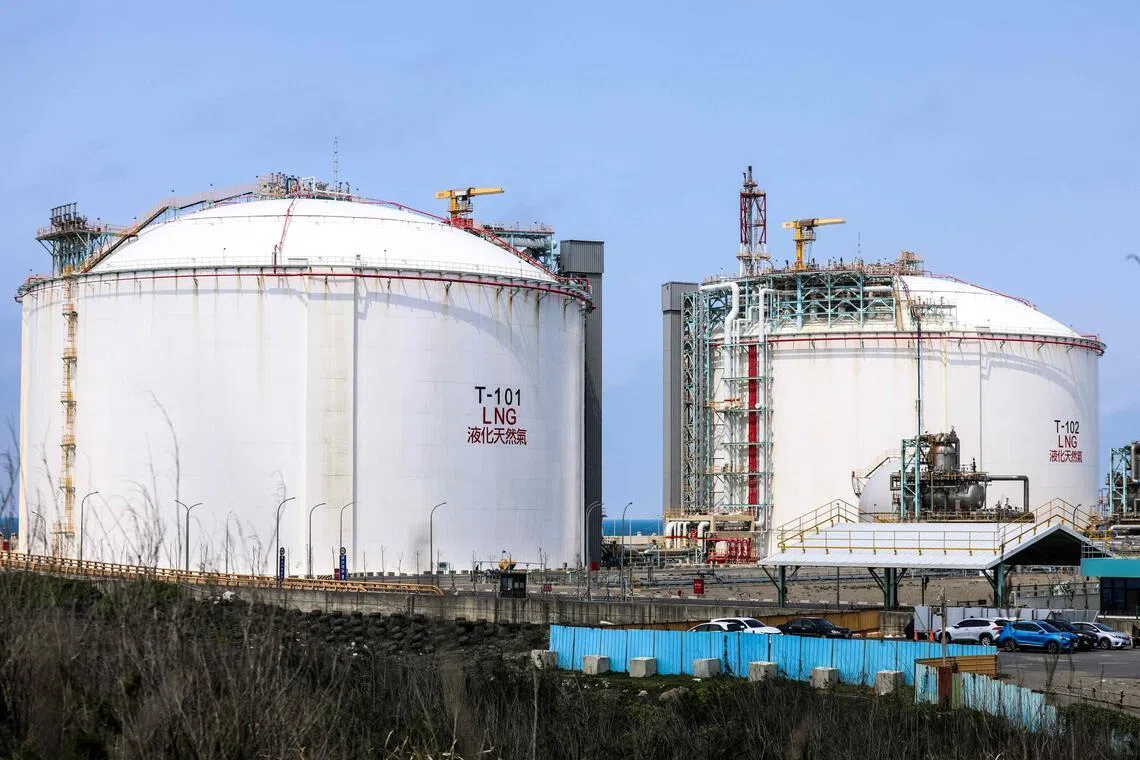
Taiwanese officials are fighting back against a wave of false social media claims that the island is on the verge of running out of natural gas due to Middle East conflict disruptions. The disinformation campaign, which has gained thousands of views on Chinese-language platforms, warns that Taiwan will exhaust its liquefied natural gas (LNG) supplies within 11 days and face widespread blackouts.
AFP fact-checkers have identified approximately two dozen posts from China-based Douyin accounts promoting this narrative, many using identical video scripts. The false claims specifically point to Iran’s restrictions on tankers traveling through the Strait of Hormuz as the cause of the purported energy crisis.
“They claimed that we would run out of gas – that is simply impossible,” Minister of Economic Affairs Kung Ming-hsin stated in a recent Facebook video. He clarified that Qatar supplies only about one-third of Taiwan’s LNG, meaning “roughly 60 to 70 percent is basically not a problem.”
Taiwan’s security agencies report they’re monitoring fuel-related disinformation spread by both “Taiwanese collaborators” and Chinese media sources. Officials have detected AI-generated content on YouTube and TikTok pushing a “consistent narrative” about Taiwan facing a “very dire situation” if it were to be “encircled.”
“It works by creating scenarios to make people in Taiwan… feel concerned about the government, or keep imagining that if a blockade were to happen one day, we would lose confidence in energy,” security officials explained.
This disinformation targeting Taiwan follows a pattern seen elsewhere. Earlier in March, Iran’s Tasnim news agency published an altered graphic falsely claiming Australia had just 18 days of petrol supplies remaining – half the actual figure, according to fact-checkers.
Such claims are particularly potent in Taiwan, where China’s increasing military activity and the threat of a potential blockade have heightened concerns about energy security. LNG plays a critical role in Taiwan’s energy mix, accounting for 47.8 percent of the island’s power generation.
Professor Yeh Tsung-kuang from National Tsing Hua University explained the nuance missing from the false claims: “Taiwan’s maximum LNG inventory is only 11 days, but that does not mean the island will run out of fuel or face outages within that time period.” He emphasized Taiwan’s diversified supply chain, noting, “We also have other sources such as Russia, Australia and the United States.”
Taiwan’s Ministry of Economic Affairs has outlined multiple contingency plans if Middle East disruptions continue. These include utilizing non-Middle Eastern gas sources, coordinating with similar buyers like Japan and South Korea, and purchasing “existing fuel.” The ministry acknowledged that 22 LNG vessels would typically pass through the now-contested Strait of Hormuz in March and April but assured the public that alternative arrangements were in place.
The disinformation campaign appears to have political motivations. Beijing’s Taiwan Affairs Office suggested last week that “peaceful reunification could provide better protection” for Taiwan’s energy security with a “strong motherland” as its backing. Taiwan’s Deputy Economy Minister Ho Chin-tsang dismissed this proposition as “impossible” and part of “cognitive warfare.”
Joseph Webster, a senior fellow at the Atlantic Council’s Global Energy Center, characterized Beijing’s offer as “a political drive” to undermine Taiwan’s confidence in its energy security. “This disinformation is either explicitly or implicitly a part of that larger campaign,” he noted.
Energy experts acknowledge that Taiwan does face some genuine challenges. Professor Liang Chi-yuan from National Central University’s Center for Taiwan Economic Development pointed out that the island has relatively low LNG storage capacity compared to other Asian countries, which could make these narratives more believable to some.
Both Webster and Liang agreed that if the Middle East conflict continues long-term, Taiwan would face stronger competition and higher prices for global LNG supplies, representing “a significant vulnerability in terms of Taiwan’s energy weakness.” However, they emphasized that the current claims of imminent energy collapse are clearly false.
Fact Checker
Verify the accuracy of this article using The Disinformation Commission analysis and real-time sources.

8 Comments
It’s smart of Taiwan to get out ahead of this disinformation campaign. Nipping these false narratives in the bud before they can gain more traction is crucial. Transparency around the facts of their gas supply situation is the right approach.
I’m glad the Taiwanese authorities are on top of this and not letting the false claims spread unchecked. Maintaining reliable energy supplies is crucial, so it’s important to quickly debunk any attempts to sow panic or uncertainty around that. Kudos to the government for the transparency.
Interesting to see Taiwan dealing with this energy-related disinformation campaign. It’s concerning how quickly these kinds of false narratives can spread, especially on social media. Kudos to the government for their swift response and efforts to provide accurate information.
Interesting to see Taiwan pushing back against this disinformation campaign. Seems like a classic case of trying to sow panic and uncertainty, likely for political reasons. Good on the government for setting the record straight on the gas supply situation.
Curious to know more about Taiwan’s energy mix and how reliant they are on LNG imports. The claim that 60-70% of their supply is unaffected by the Middle East situation is reassuring, but I’d be interested in the full breakdown of their sources.
That’s a good point. Understanding Taiwan’s energy security in more detail would provide helpful context here. The government’s ability to quickly refute the disinformation is certainly encouraging, but more information on their supply chain diversification would be insightful.
This type of coordinated disinformation is really concerning, especially when it comes to critical infrastructure and energy security. Taiwan appears to have the situation under control, but it highlights the need for vigilance against malicious actors trying to cause disruption.
This seems like a classic case of using social media to spread politically-motivated misinformation. Good on the Taiwanese authorities for proactively addressing it. Maintaining energy security is vital, so I’m glad they’re not letting these false claims go unchallenged.