


Listen to the article
Digital Disinformation Campaigns Target Syria’s Path to Stability
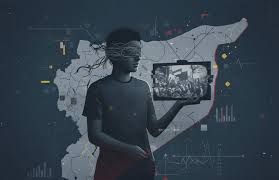
In the midst of Syria’s gradual movement toward territorial reunification and political stability, coordinated digital disinformation campaigns continue to undermine progress by stoking sectarian tensions and creating false narratives. These efforts aim to erode public trust in Syria’s emerging governance structures while attempting to maintain territorial fragmentation across the country.
Recent weeks have witnessed multiple instances of manufactured crises designed to convince specific ethnic and religious communities that international support exists for their separatist aspirations. Security and media analysts note that these campaigns follow a predictable pattern: minor events are grossly exaggerated, informal meetings are presented as official policy positions, and coordinated social media accounts amplify misleading content.
One prominent example occurred last Wednesday when an informal briefing held in Washington D.C. was misrepresented across social media as a major U.S. policy shift toward Syria. The event, which addressed issues related to religious minorities including Druze and Christian communities, was organized by small lobbying organizations with limited influence, including “Druze Nexus” and the “Worldwide Druze Public Affairs Committee.”
Despite receiving only symbolic sponsorship from Congresswoman Marilyn Stutzman and carrying no legislative authority, the briefing was portrayed across social platforms as official recognition of sectarian grievances and potential U.S. support for separatist ambitions. False claims circulated widely that the session had recognized a “massacre against the Druze” or granted “self-determination” to minority populations.
“This wasn’t an official congressional session or even a committee hearing,” noted regional analyst Khaled Al-Qudah. “It was essentially a lobbying event with no policy implications, yet it was presented as a major diplomatic breakthrough for certain factions.”
A similar pattern emerged following a February 10 hearing of the House Foreign Affairs Committee titled “Syria at a Crossroads.” Though the actual hearing emphasized Syrian territorial unity and the importance of integrating military structures into the central government, selective quotes and mischaracterizations were widely shared to suggest the opposite.
These disinformation efforts have particularly targeted developments in Suweida province and the northeastern Jazeera region, where a recent agreement between the Syrian government and Syrian Democratic Forces (SDF) has created opportunities for reintegration. Media campaigns have attempted to sow doubt about implementation details and create uncertainty about the future governance of these regions.
According to Hazem Al-Mazouni, an investigative journalist specializing in political communication, the mechanics of these campaigns follow established patterns of information warfare: “Thousands of coordinated accounts share identical misleading content, which is then picked up by partisan media outlets citing ‘private sources’ to manufacture credibility. The final stage involves targeted advocacy that deliberately inflames sectarian and ethnic tensions.”
Security analysts believe these campaigns serve multiple strategic purposes. By creating the illusion of international support for separatist aspirations, they help maintain the status quo in regions where militias continue to operate outside government control. The campaigns also align with regional interests seeking to keep Syria fractured and prevent economic recovery.
“Political actors without genuine popular support or convincing platforms rely on disinformation when truthful information and logical arguments fail to advance their cause,” Al-Qudah explained. “The ultimate goal is to undermine trust in institutions and prevent the development of a positive environment conducive to state rebuilding.”
As Syria continues its gradual path toward reintegration, these information operations represent a significant challenge to stability. While their immediate impact may be limited, the cumulative effect threatens to deepen social divisions and complicate efforts to restore unified governance across the country.
Fact Checker
Verify the accuracy of this article using The Disinformation Commission analysis and real-time sources.

14 Comments
The use of social media to amplify misleading content is deeply concerning. These attempts to erode public trust and maintain fragmentation could have severe consequences for Syria’s stability and reunification. I hope the international community can find ways to support Syria’s efforts to counter these disinformation campaigns.
Agreed, this is a complex challenge that requires a coordinated response. Strengthening local governance and empowering communities to resist disinformation may be part of the solution.
Exaggerating minor events and distorting policy positions is a classic disinformation tactic. I hope Syria can withstand these attempts to erode public trust and maintain stability. Transparent governance will be key.
Agreed. Building resilience against digital disinformation requires vigilance from both authorities and the public. Fact-checking and media literacy will be essential.
It’s disheartening to see these attempts to undermine Syria’s progress toward stability and reunification. Stoking sectarian tensions through false narratives is a dangerous game. I hope the international community can find ways to support Syria’s recovery and counter these disinformation efforts.
Agreed, the situation is very concerning. Strengthening Syria’s governance structures and empowering local communities to resist these tactics may be part of the solution.
It’s troubling to see these coordinated attempts to undermine Syria’s progress through disinformation. Stoking sectarian tensions and creating false narratives is a dangerous tactic. Transparent, accountable governance and robust fact-checking will be crucial to counter these efforts and support Syria’s path to stability.
You make a good point. Building resilience against digital disinformation will require a multifaceted approach, including international cooperation and support for Syria’s recovery efforts.
It’s concerning to see these coordinated disinformation campaigns undermining progress in Syria. Maintaining territorial fragmentation through false narratives is a worrying tactic. I wonder how the international community can better support Syria’s path to stability and reunification.
You raise a good point. Verifying information and countering misleading claims will be crucial to prevent these campaigns from derailing Syria’s recovery.
The use of coordinated social media campaigns to amplify misleading content is very concerning. Maintaining territorial fragmentation through false narratives could have serious consequences for Syria’s path to reunification. Robust fact-checking and public awareness will be crucial.
You’re right, this is a worrying tactic. Disinformation can be difficult to counter, but transparency and media literacy efforts may help build resilience against these campaigns.
Coordinated digital disinformation campaigns are a serious threat to Syria’s path forward. Maintaining territorial fragmentation through false narratives is a troubling tactic. Transparent, inclusive governance and robust fact-checking will be crucial to counter these efforts.
You make a good point. Building resilience against disinformation requires a multifaceted approach, including media literacy initiatives and international support for Syria’s recovery.