


Listen to the article
Bangladesh Elections Face Coordinated Disinformation Campaign as Voters Head to Polls
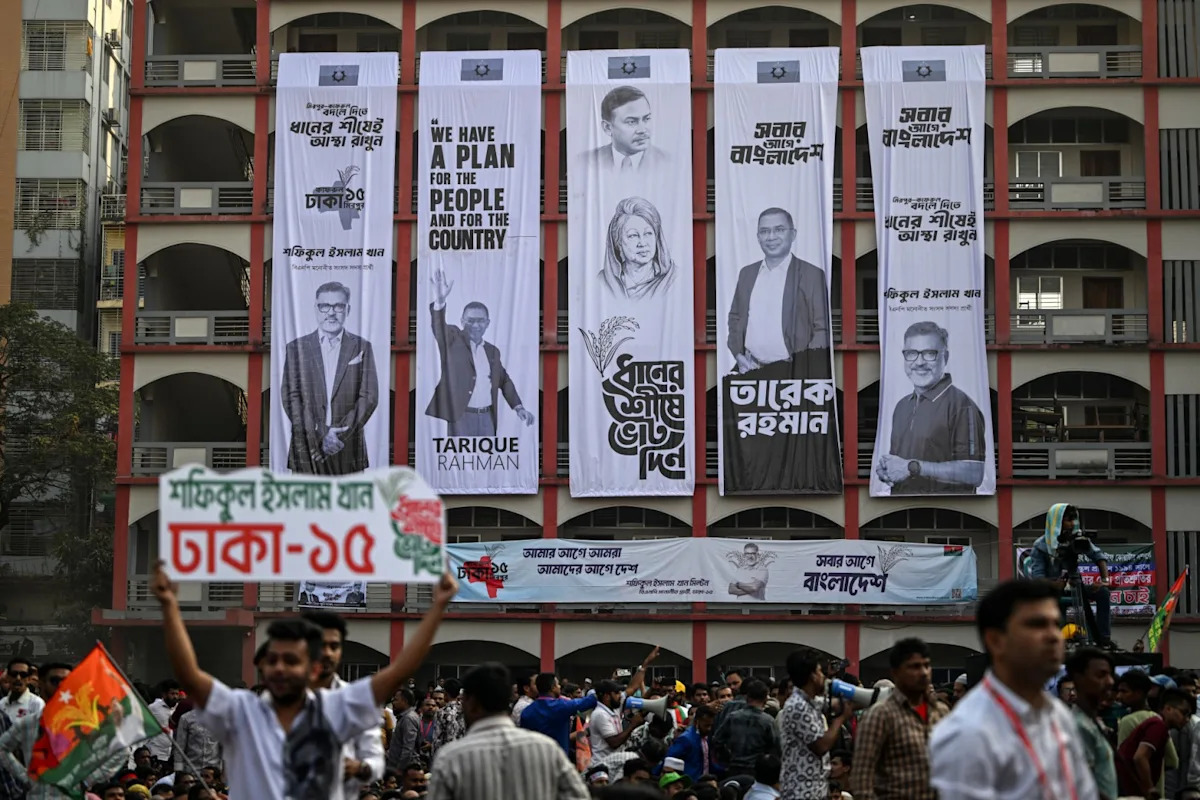
Bangladesh’s electorate will cast their ballots on February 12 in what analysts describe as an election threatened by an unprecedented wave of disinformation, with much of it originating from neighboring India.
The Muslim-majority nation of 170 million is preparing for its first election since the student-led uprising in 2024 that toppled Sheikh Hasina. The former prime minister fled to India, where she has been hosted since by the Hindu-nationalist government.
The problem has become so severe that authorities have established a special unit to combat false content. Interim leader and Nobel Peace Prize laureate Muhammad Yunus raised the alarm in January during a call with UN rights chief Volker Turk, citing a “flood of misinformation surrounding the elections” from both foreign and local sources.
A significant portion of the disinformation focuses on alleged attacks against Bangladesh’s minorities, particularly Hindus, who comprise most of the country’s 10 percent non-Muslim population. This has fueled mass posting of claims on social media using the hashtag “Hindu genocide.”
However, official police statistics released in January reveal that out of 645 incidents involving minority groups in 2025, only 12 percent were classified as having a sectarian motive, contradicting the narrative of widespread religious persecution.
The US-based Center for the Study of Organized Hate reports tracking more than 700,000 posts from over 170,000 accounts on X (formerly Twitter) claiming “Hindu genocide” between August 2024 and January 2026.
“We have tracked coordinated Indian disinformation online, falsely alleging large-scale violence against Hindus in Bangladesh,” said Raqib Naik, head of the think tank. “More than 90 percent of this content originated from India, with the remainder linked to associated Hindu nationalist networks in the UK, US, and Canada,” he told AFP.
The sophistication of the disinformation campaign has reached new heights with the widespread use of artificial intelligence. AFP Fact Check has debunked numerous examples of AI-generated content, including a video showing a woman who had lost her arm urging people not to vote for the Bangladesh Nationalist Party (BNP), which many consider a frontrunner in the election.
Another fabricated video features a Hindu woman claiming that people of her faith have been instructed to vote for the Islamist party Jamaat-e-Islami or face exile to India. Of hundreds of AI-generated videos documented by AFP on platforms like YouTube, Facebook, TikTok, and Instagram, very few carry AI disclaimers.
The surge in disinformation follows years of repression under Hasina’s rule, when opposition was crushed and outspoken voices silenced, creating a vacuum that misinformation has rushed to fill.
“We are noticing a huge amount of fake information compared to other times,” said Miraj Ahmed Chowdhury, who heads the Dhaka-based research organization Digitally Right. He attributes the increase to the accessibility of free AI tools that make creating sophisticated fakes easier.
The impact of this disinformation campaign has spilled over into other areas of Bangladesh-India relations. In one notable incident, social media outrage by Hindu fundamentalists against the lone Bangladeshi cricket player in India’s domestic IPL league resulted in his contract being canceled. The controversy escalated to the point that Bangladesh’s national team pulled out of this month’s T20 World Cup in India.
While analysts attribute much of the disinformation to Indian sources, there is no evidence that the Indian government has organized these media campaigns. India’s foreign ministry has acknowledged a “disturbing pattern of recurring attacks on minorities” by “extremists in Bangladesh” but maintains it supports “free, fair, inclusive and credible elections.”
Bangladesh’s Election Commission spokesman Md. Ruhul Amin Mallik said authorities are collaborating with Meta and have established a unit to monitor social media posts, but the sheer volume of content makes this a daunting task. “If our team detects any content as harmful and misleading, we instantly announce it as fake information,” Mallik said.
Election expert Jasmine Tuli, a former election commission official, warned that AI-generated images pose a particular threat in Bangladesh, where smartphone penetration is high—over 80 percent in urban households and nearly 70 percent in rural areas—but digital literacy remains relatively low.
“It is a big threat for a country like Bangladesh, since people don’t have much awareness to check the information,” Tuli said. “Due to AI-generated fake visuals, voters get misguided in their decision.”
Fact Checker
Verify the accuracy of this article using The Disinformation Commission analysis and real-time sources.

10 Comments
Interesting that much of the disinformation appears to be originating from neighboring India. This cross-border information warfare is extremely concerning and could have destabilizing regional implications.
Yes, the involvement of foreign actors in a national election is very troubling. Bangladesh will need strong diplomatic pressure and technical assistance to effectively counter these malicious foreign influence operations.
The allegations of ‘Hindu genocide’ seem highly questionable and likely an attempt to inflame tensions. Election authorities must ensure these baseless smears don’t manipulate voter sentiment. Transparency and fact-based reporting will be crucial.
Good point. Inflammatory rhetoric like ‘genocide’ is a common tactic in disinformation campaigns. Voters should be wary of such charged language and seek out credible, objective sources of information.
The scale of the disinformation problem is quite alarming, with a ‘flood’ of false claims flooding social media. Establishing that dedicated anti-disinformation unit was a prudent move, but they will face an uphill battle.
It’s crucial that Bangladeshi voters can cast their ballots in a free and fair environment, without being swayed by intentional falsehoods. Rigorous fact-checking and public education campaigns will be vital to safeguarding the integrity of this election.
Absolutely. Ensuring access to credible information and countering misinformation should be top priorities for election officials. The future of Bangladesh’s democracy depends on it.
Concerning to see coordinated disinformation campaigns targeting the upcoming Bangladesh election. Spreading false narratives about minority groups could seriously undermine the democratic process. Authorities will need to stay vigilant in combating these malicious efforts.
Agreed, disinformation can be incredibly damaging, especially around elections. Hopefully the government’s special unit can effectively counter the flood of false claims before they gain traction.
Kudos to the interim leader for raising awareness of this serious issue at the UN. Combating foreign-backed disinformation will require a coordinated, multi-pronged effort by Bangladeshi authorities and international partners.