


Listen to the article
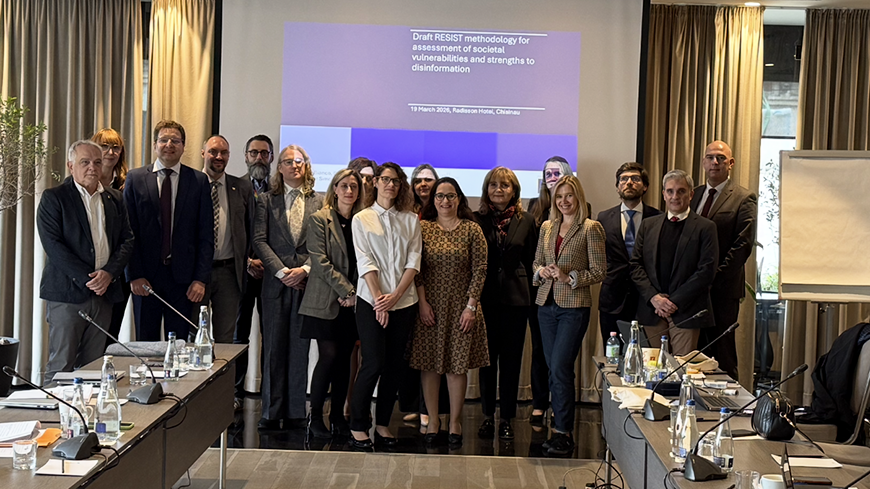
European nations convened in Moldova’s capital this week to launch a collaborative framework for combating one of democracy’s most persistent threats: disinformation. The Council of Europe workshop, held in Chișinău on March 19, brought together representatives from nine European countries to adapt the RESIST methodology for assessing and strengthening societal resilience against false information campaigns.
The gathering marks a significant shift in how European nations are approaching information warfare, moving from reactive measures to proactive vulnerability assessment and resilience building. At the core of the initiative is the RESIST methodology, a structured approach that enables countries to map contextual indicators and evaluate existing policies in media, culture, education, and youth engagement.
“What makes the RESIST approach distinctive is its comprehensive nature,” explained one participant at the workshop. “Rather than simply identifying disinformation after it spreads, we’re helping countries understand their unique vulnerabilities and strengths across multiple sectors.”
Representatives from ministries, regulatory authorities, and public institutions emphasized the need for coordinated response mechanisms that bridge government, media, and civil society. The methodology provides participating nations with a step-by-step process to evaluate risk factors and resilience capacities, creating what officials described as “a solid evidence base” for future policy dialogue.
The initiative comes at a crucial moment for European democracies, as disinformation campaigns grow increasingly sophisticated, leveraging artificial intelligence, deep fakes, and targeted social media strategies to undermine public trust in institutions. The cross-border nature of these threats has made international cooperation essential.
“Information disorders don’t respect national boundaries,” noted one regulatory authority representative. “A false narrative can originate in one country but cause significant damage in another within hours. Our response must be equally borderless.”
The EEA and Norway Grants, co-funders of the project, have prioritized strengthening democratic institutions against emerging threats. Their investment in the RESIST project reflects growing recognition that disinformation represents a fundamental challenge to European democratic values and processes.
The workshop in Moldova served as the launch pad for piloting the methodology in participating countries, each with their unique media landscapes and vulnerability profiles. Officials acknowledged that effective strategies must be tailored to national contexts while maintaining cross-border coordination.
“What works in Romania might not work in Lithuania or Croatia,” one participant observed. “But the underlying framework helps us speak the same language when discussing threats and solutions.”
Particularly concerning to many participants was the targeting of electoral processes, with several European nations facing elections in the coming year. The methodology specifically addresses how disinformation undermines democratic participation and informed voting.
Beyond immediate election concerns, workshop participants discussed longer-term resilience building through education systems, media literacy programs, and supporting independent journalism. The RESIST framework includes evaluating these structural elements as part of comprehensive vulnerability assessment.
The event concluded with participating countries agreeing to implement pilot assessments using the methodology, with results to inform a data-driven policy dialogue at future gatherings. Officials emphasized that successful implementation will require sustained political commitment and cross-sectoral cooperation.
“This isn’t a one-time exercise,” noted a Council of Europe representative. “Building resilience against disinformation requires ongoing assessment, adaptation, and action across government, media, and civil society.”
The initiative represents part of the broader “RESIST: Strengthening societal resilience to disinformation in Europe” project coordinated by the Council of Europe’s Division for Cooperation on Freedom of Expression. As participants left Chișinău, the focus shifted to translating the workshop’s theoretical discussions into practical implementation across participating nations.
Fact Checker
Verify the accuracy of this article using The Disinformation Commission analysis and real-time sources.

10 Comments
The comprehensive nature of the RESIST methodology seems promising. Tackling disinformation requires a holistic approach that addresses vulnerabilities across multiple sectors.
Mapping contextual indicators and evaluating existing policies across media, culture, education, and youth engagement is a comprehensive approach. Tackling disinformation requires looking at the broader ecosystem, not just individual incidents.
I wonder if the RESIST methodology incorporates any mechanisms for incorporating input from civil society and grassroots organizations. Their perspectives could provide valuable insights.
Strengthening resilience against disinformation is a critical challenge facing democracies today. The RESIST framework’s focus on proactive vulnerability assessment and cross-sector policy development seems like a promising approach.
I’m curious to learn more about how the RESIST methodology works in practice and how it can be tailored to different national contexts.
Collaborative efforts like this workshop in Moldova are crucial. Sharing best practices and lessons learned can help strengthen the global response to disinformation campaigns.
Do you know if there are plans to make the RESIST framework and any associated tools publicly available? That could facilitate wider adoption and adaptation.
The shift from reactive to proactive measures is a welcome development. Identifying vulnerabilities and building resilience is likely more effective than playing catch-up with evolving disinformation tactics.
It’s encouraging to see European nations collaborating on this issue. Disinformation poses a serious threat to societal cohesion and democratic institutions, so a coordinated, evidence-based response is essential.
Do you know if the RESIST framework has been applied in other regions besides Europe? Understanding its broader applicability would be helpful.