


Listen to the article
ECOWAS Leads Fight Against Disinformation in West Africa Through Media Training
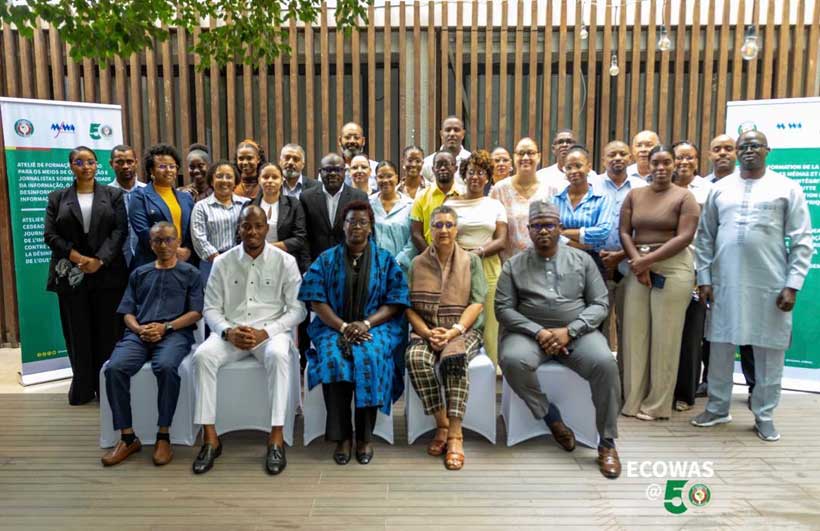
The Economic Community of West African States (ECOWAS) Commission has launched a comprehensive initiative to combat the growing threat of disinformation in the West African region. In late January 2026, the Commission’s Directorate of Communication organized a two-day regional training program in Cabo Verde, bringing together journalists and media practitioners from across the region.
The training program represents a strategic response to the escalating challenge of false information that threatens democratic governance and regional stability. By equipping media professionals with advanced tools and techniques for detecting and countering disinformation, ECOWAS aims to strengthen the foundation of informed public discourse across West Africa.
“The integrity of information is the first step in getting back to basics,” said Mamadou Moustapha Seck, Deputy Coordinator of the ECOWAS national office, during the opening ceremony. Seck emphasized that media professionals must “exercise self-restraint, rise above partisan contingencies and clamour, and uphold the principles of ethics and professional conduct” before disseminating information.
This initiative comes at a critical time for the region, as disinformation campaigns have increasingly complicated governance challenges and threatened democratic institutions across West Africa. The training aligns directly with the first pillar of ECOWAS’ Vision 2050—peace, security, and stability—adopted in 2022 as the organization’s strategic framework.
The program was developed through collaboration between multiple stakeholders, including Joël Ahofodji, Acting Director of Communications at the ECOWAS Commission; Jonas Tylewski, Director of Communications at the German Embassy in Senegal; and Dr. Impraim Kojo, Director of Programs at the Media Foundation for West Africa (MFWA).
During the sessions, participants received specialized training in media and information literacy, fact-checking methodologies, responsible digital tool usage, and ethical journalism standards. These skills are considered essential for maintaining public trust in an era where false information can spread rapidly through social media platforms and other digital channels.
“Dissemination of unverified information is dangerous,” warned Tylewski, who reaffirmed Germany’s commitment through its international development agency GIZ to support ECOWAS and its member states in promoting accurate information as a “fundamental pillar of peace and democracy in West Africa.”
The German government’s involvement highlights the international recognition of disinformation as a transnational challenge requiring coordinated responses. Through GIZ, Germany has provided technical and financial support to enhance media resilience across the region.
Mrs. Kelly Lopes, ECOWAS Resident Representative in Cabo Verde, emphasized the strategic importance of the media as “a pillar of democratic governance and social cohesion,” noting that information integrity is essential for maintaining public trust and regional stability.
The training represents one component of a broader strategy by ECOWAS to institutionalize information integrity throughout West Africa. By building capacity among journalists and media outlets, the Commission aims to create a more resilient information ecosystem capable of withstanding deliberate attempts to mislead the public or incite division.
Dr. Kojo Impraim of the Media Foundation for West Africa stressed that the ultimate goal is to “strengthen democracy, counter the spread of fake news, and safeguard peace in the region.” The Foundation’s involvement brings valuable expertise in media development and press freedom advocacy to the initiative.
ECOWAS officials indicated that this training program is part of a long-term commitment to supporting professional and ethical media systems across the region. The Commission plans to expand these efforts in coming months, with additional training sessions scheduled for other member states.
By addressing disinformation through media capacity building, ECOWAS demonstrates a recognition that regional security and stability increasingly depend on maintaining a healthy information environment where citizens can access reliable, factual reporting. The initiative reflects the growing consensus among regional bodies worldwide that information integrity constitutes an essential element of modern governance frameworks.
Fact Checker
Verify the accuracy of this article using The Disinformation Commission analysis and real-time sources.

14 Comments
Combating disinformation requires a multifaceted approach, and ECOWAS is taking an important step by focusing on strengthening media skills and professionalism. Fostering ethical, fact-based journalism is crucial for West Africa’s democratic future.
I’m curious to see how the journalists and media practitioners who participated in this training program will apply their new knowledge and techniques in their daily work. Their role in countering false narratives is critical.
In an era of increasing information warfare, initiatives like this ECOWAS media training program are essential. Strengthening the ability of journalists to uphold ethical standards and combat disinformation is crucial for West Africa’s future.
I hope this training program helps empower media professionals across the region to become more resilient against the spread of false narratives. Reliable information is the foundation of good governance and social stability.
Disinformation erodes public trust and undermines democratic institutions, so I’m glad to see ECOWAS taking this issue seriously. Equipping media professionals with the right tools to identify and debunk false information is a wise investment.
Disinformation poses significant risks to governance and security, so I’m glad to see ECOWAS taking proactive measures to address this challenge. Equipping journalists with the right tools and techniques is a smart strategy.
It’s crucial that media professionals maintain high ethical standards and resist partisan agendas when reporting on sensitive issues. This training program could help reinforce those principles across West Africa.
Combating disinformation is a complex challenge, but ECOWAS is taking a proactive approach by focusing on media skills and professionalism. Equipping journalists with the right tools to detect and counter false information is a smart strategy.
In an age of rampant online misinformation, initiatives like this ECOWAS media training are increasingly important. Strengthening the ability of journalists to identify and counter false narratives is a valuable investment in the region’s future.
Kudos to ECOWAS for recognizing the urgent need to combat disinformation in West Africa. Empowering media professionals with the right skills and tools is a smart approach to safeguarding democratic discourse.
I hope this training program has a lasting impact and helps foster a more informed and engaged citizenry across the region. Reliable information is the foundation of good governance.
While the rise of disinformation is a global challenge, it’s encouraging to see regional organizations like ECOWAS taking proactive steps to address the problem. This media training initiative could be a model for other parts of the world.
Combating disinformation is crucial for upholding democratic values and social stability. This ECOWAS initiative to train media professionals on detecting and countering false information is a welcome step in the right direction for West Africa.
Strengthening media skills and professionalism is key to ensuring access to reliable information. It will be interesting to see the long-term impact of this program on improving public discourse in the region.