


Listen to the article
India’s National Security Experts Debate Need for Centralized Information Warfare Command
Strategic and intelligence officials within India are engaged in a growing internal debate about what many describe as a critical gap in the nation’s security architecture: the absence of a dedicated, centralized mechanism for managing information and disinformation warfare at a strategic level.
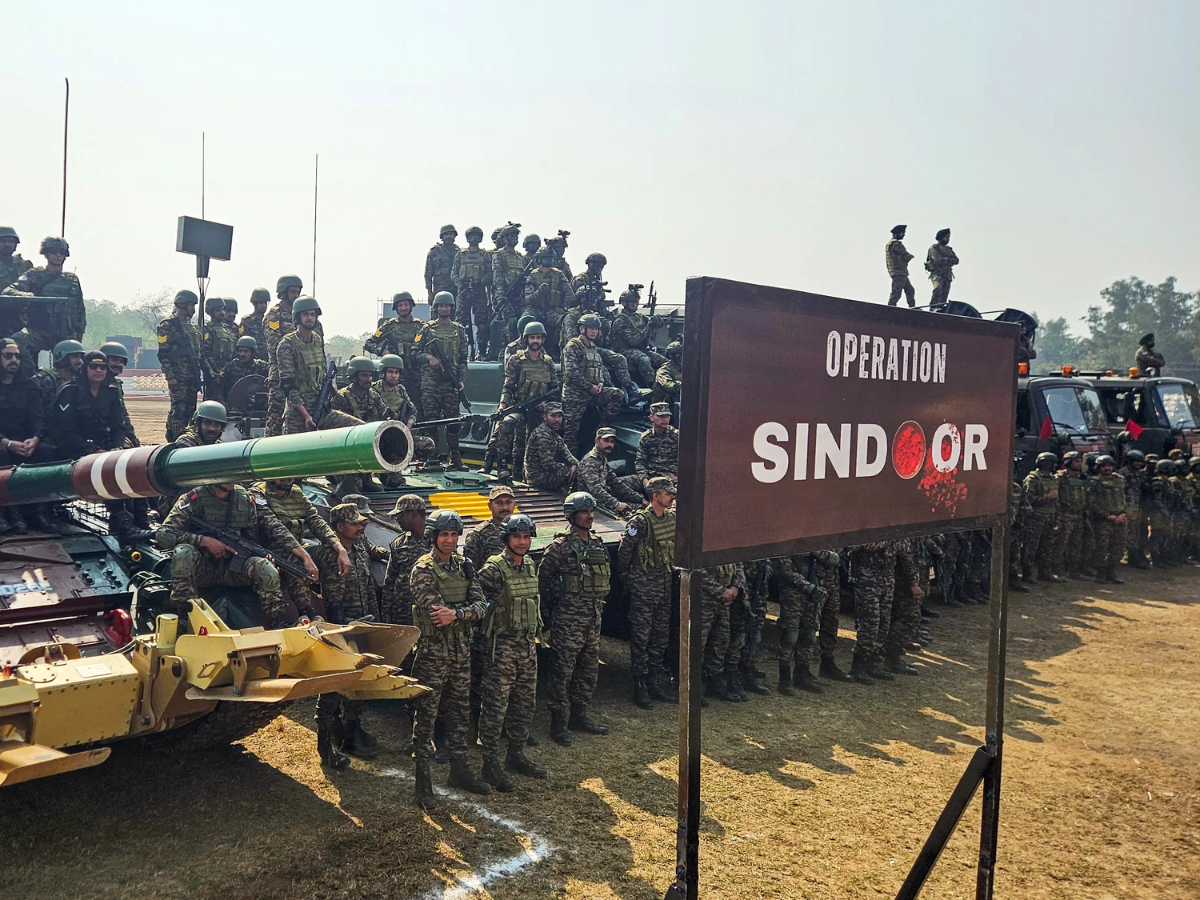
The discussions have intensified following Operation Sindoor, with some experts arguing that while India achieved its military objectives, it failed to effectively communicate these successes to domestic and international audiences. According to officials familiar with internal assessments, the issue is not with India’s operational intelligence networks, counter-terrorism capabilities, or cyber infrastructure, which are considered institutionally mature.
Instead, the concern centers on the lack of a specialized command exclusively tasked with detecting, countering, and when necessary, executing disinformation operations as a deliberate instrument of state power. Currently, messaging functions are scattered across various ministries, armed forces public relations units, and intelligence-linked communication cells, often operating without a unified doctrine or clear chain of command.
This fragmented approach became particularly evident during Operation Sindoor, when adversarial information campaigns reportedly moved faster and with greater narrative coherence than India’s official communications. While military and intelligence channels effectively pursued operational objectives, perception management unfolded in a more disjointed manner.
Analysts within the system emphasize that narrative cycles now evolve in minutes rather than days, and adversarial ecosystems are specifically structured to exploit this speed differential. Those advocating for reform argue that India’s current posture remains largely reactive rather than pre-emptive, with disinformation being countered episodically, often after harmful narratives have already gained significant digital traction.
“Responsibilities are distributed across agencies without a single command authority empowered to integrate psychological operations, media strategy, cyber monitoring, and offensive information measures into unified strategic planning,” noted one official who requested anonymity due to the sensitive nature of these discussions. “When lapses occur, no one is held accountable because no one is designated as ultimately responsible.”
Sources indicate that while the government has allocated substantial resources—reportedly in the billions of rupees—to augment its disinformation warfare capabilities, it has yet to establish a single dedicated agency to coordinate these efforts.
Proponents of structural reform frequently reference the media and information wing of Pakistan’s military, specifically the Directorate General of Inter-Services Public Relations under the Pakistan Army, as an example of institutional integration. This entity functions not merely as a press office but as a structured information apparatus that incorporates narrative shaping, rapid-response communication, and psychological framing into military planning.
Officials emphasize that the comparison is not about institutional imitation but about recognizing a capability asymmetry in the cognitive domain. The emerging argument suggests that contemporary conflict operates across three simultaneous planes: physical operations that shape territory, cyber operations that impact infrastructure, and cognitive operations that influence perception.
Within this framework, information dominance should not be treated as merely a supplementary public relations function but as a parallel theater of conflict requiring dedicated doctrine, trained personnel, offensive and defensive mandates, and clearly defined rules of engagement.
Those advocating for reform contend that without a centralized command architecture for information warfare, India risks entering future conflicts with superior kinetic capacity but diminished narrative coherence—a potentially critical vulnerability in an era where public perception often shapes strategic outcomes as much as battlefield success.
Whether these internal debates will translate into substantive institutional restructuring remains to be seen, but the discussion reflects growing recognition within India’s security establishment of the evolving nature of modern warfare beyond traditional military domains.
Fact Checker
Verify the accuracy of this article using The Disinformation Commission analysis and real-time sources.

10 Comments
The lack of a specialized information warfare command does seem like a potential gap in India’s security architecture. Given the growing importance of the information domain, this is an issue they’ll likely need to address.
Absolutely. Disinformation and influence operations are becoming increasingly sophisticated tools of statecraft. Streamlining the response could give India an edge.
This is an interesting debate. Managing information warfare and countering disinformation seems like a critical capability for any modern military. I can see the rationale for having a dedicated command to handle this strategically.
Agreed, a centralized mechanism could help coordinate efforts and ensure a coherent national response. Curious to hear more about the pros and cons of this approach.
Establishing an information warfare command seems like a reasonable step, but the devil will be in the details. Ensuring proper authorities, capabilities, and coordination with other agencies will be key to making it effective.
Interesting that the issue doesn’t seem to be with India’s technical capabilities, but rather the lack of a dedicated command structure. Centralization could improve coordination, but might also create new bureaucratic hurdles.
Good point. There’s a tradeoff between coordination and agility that will need to be carefully considered. Streamlining information warfare efforts is important, but not at the expense of responsiveness.
The article raises some valid concerns about India’s ability to effectively counter disinformation and communicate its strategic successes. A centralized information warfare command could be a solution, but the details would be critical.
I’m a bit skeptical about creating a new bureaucratic structure to handle information warfare. Wouldn’t it be more efficient to leverage existing capabilities and coordination across different agencies?
This debate highlights the complex challenges countries face in the information age. Balancing operational capabilities, strategic messaging, and countering adversarial narratives requires a nuanced and adaptable approach.