


Listen to the article
U.S. State Department Imposes Visa Sanctions on European Officials Over Alleged Censorship
The U.S. State Department escalated tensions with European allies on Tuesday by imposing visa sanctions on five individuals, including a former top European Union official, for what it described as organized efforts to censor American viewpoints online.
Secretary of State Marco Rubio announced the sanctions, accusing the targeted individuals of leading efforts “to coerce American platforms to censor, demonetize, and suppress American viewpoints they oppose.” The move represents a significant intensification in the Trump administration’s opposition to European digital content regulations.
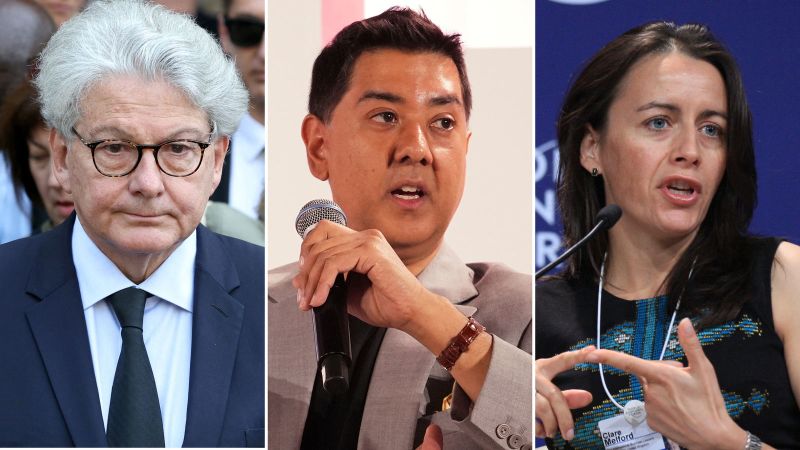
Among those sanctioned is Thierry Breton, the former European Commissioner who played a key role in developing the Digital Services Act (DSA), a comprehensive EU law requiring tech platforms to reduce illegal and harmful content. Breton has publicly clashed with X owner Elon Musk over compliance with these regulations.
Responding to the sanctions on social media, Breton asked, “Is McCarthy’s witch hunt back?” referencing Senator Joseph McCarthy’s controversial anti-communist investigations of the 1950s. “To our American friends: ‘Censorship isn’t where you think it is,'” he added on X.
The State Department also targeted Imran Ahmed, CEO of the Center for Countering Digital Hate, an organization that researches online hate and disinformation. Undersecretary of State Sarah Rogers characterized Ahmed as a “key collaborator with the Biden Administration’s effort to weaponize the government against U.S. citizens.” Rogers specifically cited the organization’s 2022 “Disinformation Dozen” report, which identified 12 individuals, including current HHS Secretary Robert F. Kennedy Jr., as responsible for the majority of anti-vaccine content on social media.
Clare Melford, CEO of the Global Disinformation Index, was also sanctioned. Rogers accused Melford’s organization of using U.S. “taxpayer money to exhort censorship and blacklisting of American speech and press.” The Global Disinformation Index describes its mission as strengthening “the systems that make the internet safer by working with governments, industry, and civil society.”
In response, a GDI spokesperson told CNN that the sanctions represent an “authoritarian attack on free speech and an egregious act of government censorship.” They added: “The Trump Administration is, once again, using the full weight of the federal government to intimidate, censor, and silence voices they disagree with. Their actions today are immoral, unlawful, and un-American.”
Two employees from the German organization HateAid, which combats online hate and disinformation, were also included in the sanctions.
The State Department indicated these individuals will be “generally barred from entering the United States,” and the Department of Homeland Security could initiate removal proceedings against certain individuals, “which renders such individuals deportable.”
This action follows months of criticism from top Trump administration officials toward European digital regulations. The latest State Department human rights report alleged “significant human rights issues” in allied nations including the United Kingdom, France, and Germany over “serious restrictions on freedom of expression.”
The sanctions particularly highlight tensions between the U.S. administration and European regulators over the Digital Services Act. In August, Breton sent Musk a letter reminding him of X’s legal obligations under the DSA ahead of his interview with Donald Trump.
Vice President JD Vance previewed this policy direction in February during his speech at the Munich Security Conference, where he criticized what he described as European censorship efforts. Vance claimed that leaders had “threatened and bullied social media companies to censor so-called misinformation,” and compared such efforts to “Soviet-era” tactics.
Rubio issued a warning that the sanctions list could expand, stating: “The State Department stands ready and willing to expand today’s list if other foreign actors do not reverse course.”
The move signals growing tensions between the United States and European nations over digital governance and free speech principles, potentially complicating transatlantic relations on broader policy issues.
Fact Checker
Verify the accuracy of this article using The Disinformation Commission analysis and real-time sources.

18 Comments
Interesting development in the ongoing tension between the US and EU over digital content regulations. It will be important to monitor how this plays out and whether it further strains transatlantic relations.
The US seems to be taking a hardline stance against perceived censorship of American viewpoints. This could escalate into a wider dispute over sovereignty and free speech online.
This move by the US government represents a significant escalation in its efforts to push back against perceived censorship of American viewpoints by European authorities. The implications for US-EU relations could be significant.
As this dispute evolves, it will be important for both sides to engage in good faith discussions and seek to find a mutually acceptable compromise, rather than resorting to unilateral actions that could further inflame tensions.
The US seems to be taking a very strong stance against what it views as censorship of conservative or pro-American viewpoints by European officials. This could have broader implications for US-EU relations.
It will be important for both sides to clearly articulate their positions and find a way to address these concerns through diplomatic channels rather than unilateral actions.
The sanctions targeting European officials over alleged censorship of American viewpoints online is a striking development in the ongoing transatlantic tensions over digital governance. This could have far-reaching consequences for US-EU relations.
Given the high-stakes nature of this issue, I hope the relevant parties can find a way to constructively engage and develop a shared understanding, rather than escalating the dispute through punitive measures.
The sanctions on the former EU official and disinformation group leaders represent an escalation in the ongoing debate over free speech, content moderation, and national sovereignty online. This is a complex issue with valid arguments on both sides.
As these disputes play out, I hope the US and EU can find a way to collaborate and develop mutually acceptable frameworks for regulating online content while preserving core democratic principles.
This move by the State Department seems to be part of a broader push by the US government to challenge perceived censorship and content moderation practices that it sees as unfairly targeting American voices. The implications could be far-reaching.
It will be crucial for all parties to engage in good faith and seek to find common ground, rather than further escalating tensions through unilateral actions.
I’m curious to hear more details on the specific alleged censorship activities that led to these sanctions. What evidence does the US have, and how does it view the EU’s content moderation framework?
The EU’s Digital Services Act is a complex and controversial piece of legislation. It will be interesting to see how Breton and other EU officials respond to these accusations from the US government.
The sanctions targeting the former EU official and disinformation group leaders highlight the growing transatlantic divide over digital governance. This is a complex issue without easy solutions, and I hope both sides can work to find a constructive way forward.
Given the high stakes involved, including potential impacts on free speech and national sovereignty, this situation warrants close monitoring and analysis by all stakeholders.
This sanctions move represents a significant shift in the US government’s approach to content moderation and digital regulations. It signals a more aggressive posture toward perceived infringement of American free speech online.
I wonder if this could lead to further retaliation or escalation between the US and EU on these issues. Maintaining an open and constructive dialogue will be crucial to avoid a wider rift.