


Listen to the article
Serbian authorities have found no evidence linking Ukraine to the recent attempted sabotage of a major gas pipeline connecting Serbia and Hungary, according to a report from Kurir. The discovery comes at a sensitive time during Hungary’s election period, where energy security has become a contentious political issue.
Security officials recently discovered explosive devices planted near the pipeline in northern Serbia, just kilometers from the Hungarian border. The backpacks containing explosives were reportedly found several hundred meters from the pipeline near Tresnjevac in the Kanjiza district, raising immediate security concerns in both countries.
Djuro Jovanic, head of Serbia’s Military Security Agency, has firmly rejected suggestions that Ukraine was behind the plot. “This is false. The manufacturer of the explosives does not mean that they are the executor or instigator,” Jovanic stated in an official briefing.
Though markings on the explosives indicated U.S. origin, Jovanic dismissed any implications of American involvement. “Will anyone now claim that this is somehow beneficial to the U.S. at this moment? The Serbian army is a serious institution, and it will carry out any task,” he emphasized, pushing back against geopolitical speculation.
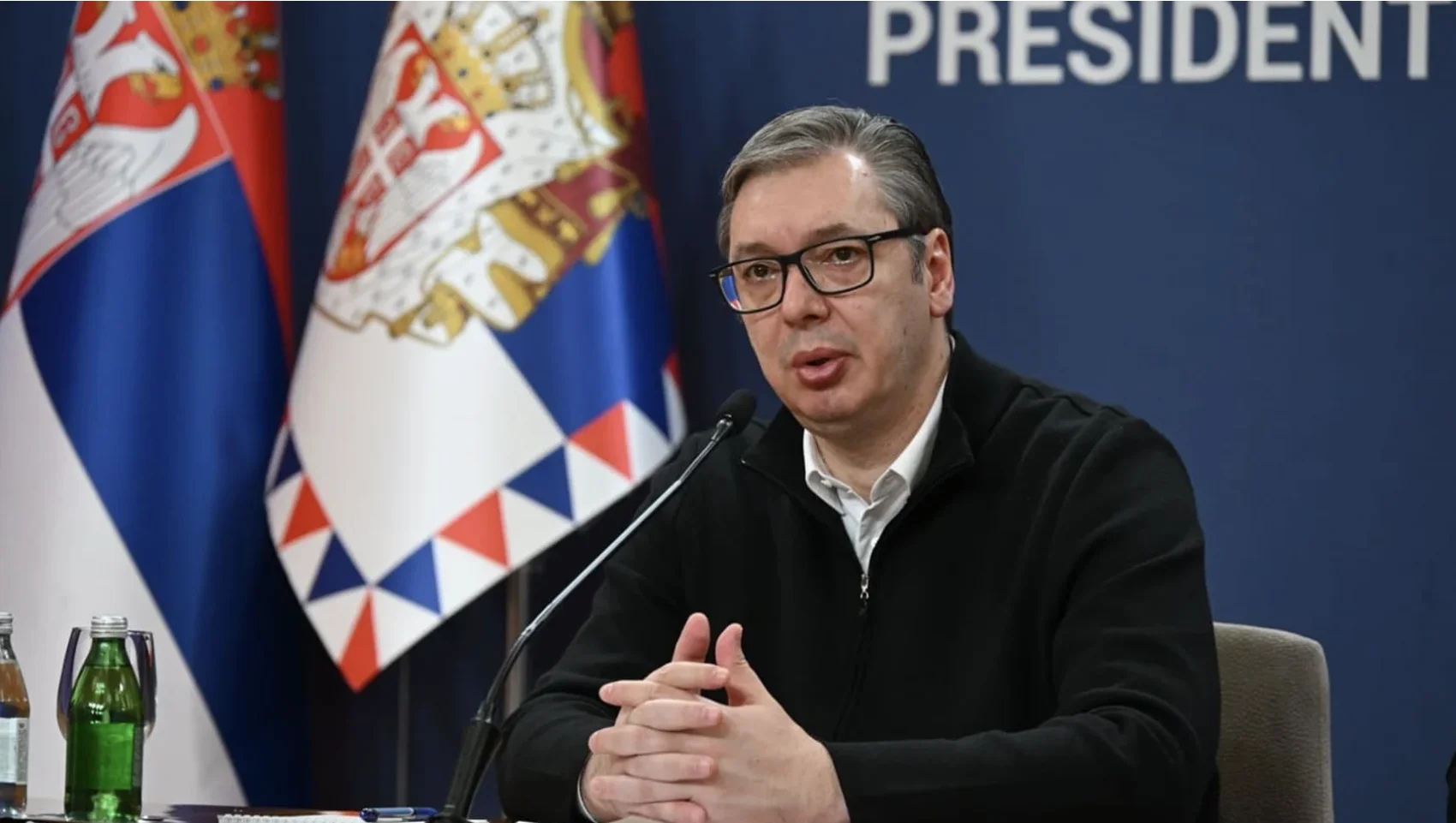
The incident occurred against a backdrop of escalating tensions between Hungary and Ukraine. Following the discovery, Serbian President Aleksandar Vučić held urgent talks with Hungarian Prime Minister Viktor Orbán, after which Hungarian Foreign Minister Péter Szijjártó made explosive claims about Ukrainian involvement in what he characterized as an “oil blockade” against Budapest.
Szijjártó went further, alleging Ukrainian responsibility for previous attacks on pipeline infrastructure that passes through Russia, specifically referencing the TurkStream pipeline system that supplies Russian gas to Turkey and parts of southeastern Europe.
The TurkStream pipeline represents a critical piece of energy infrastructure in the region, allowing Russia to export natural gas to southern Europe while bypassing Ukraine. Any disruption to this pipeline would have significant implications for energy security in multiple European countries, particularly Hungary, which relies heavily on Russian gas imports.
Jovanic’s categorical denial appears designed to prevent Serbia from being drawn into the wider geopolitical tensions surrounding Russia’s invasion of Ukraine. He emphasized that the Serbian military “does not interfere in political processes, neither in Serbia nor in other countries,” signaling Belgrade’s desire to maintain neutrality in the dispute.
Energy politics has become central to Hungary’s relationship with both Russia and Ukraine. Prime Minister Orbán’s electoral campaign has leaned heavily on anti-Ukraine messaging, positioning himself as a protector of Hungarian interests against what he portrays as Western pressure to support Ukraine at the expense of Hungary’s economy and energy security.
Analysts note that Russia has strong incentives to maintain Orbán’s position as a friendly voice within the European Union. Throughout the Ukraine conflict, Hungary has consistently opposed or delayed EU sanctions against Moscow, blocked military aid packages to Kyiv, and reportedly shared sensitive information from closed EU deliberations with Russian intelligence services.
The pipeline incident highlights the vulnerability of critical energy infrastructure in Eastern Europe, where many countries remain dependent on Russian gas despite efforts to diversify energy sources following Russia’s full-scale invasion of Ukraine in 2022.
Serbian authorities continue their investigation into the attempted sabotage, with Jovanic promising a thorough and objective probe. Security around key energy installations throughout the region has reportedly been enhanced in response to the incident.
The case underscores how energy infrastructure has become a flashpoint in Europe’s evolving security landscape, with pipelines increasingly seen not just as economic assets but as potential targets in wider geopolitical conflicts.
Fact Checker
Verify the accuracy of this article using The Disinformation Commission analysis and real-time sources.

8 Comments
Interesting development in the Serbia-Hungary pipeline sabotage case. It’s good to see Serbian authorities taking a measured, fact-based approach and not jumping to conclusions about Ukraine’s involvement. Transparency and thorough investigations are crucial in sensitive geopolitical matters like this.
Agreed. The origin of the explosives is an intriguing detail that deserves further scrutiny, without making unfounded accusations. Maintaining regional stability and energy security should be the priority here.
It’s prudent of Serbian officials to refrain from premature conclusions about Ukraine’s involvement in this pipeline incident. Jumping to accusations without solid evidence could further inflame regional tensions. A fact-based, impartial investigation is the best way forward.
Agreed. Maintaining objectivity and focusing on securing the pipeline, rather than political posturing, is the responsible approach. Cooler heads must prevail to ensure the region’s energy and economic stability.
This pipeline incident seems to have become entangled in Hungary’s heated election season. Allegations of sabotage can easily be politicized, so it’s reassuring to see Serbia’s security agency taking an impartial stance based on evidence. Preventing further escalation will be key.
You make a good point. With energy security being a major campaign issue in Hungary, it’s crucial that the investigation remains objective and avoids being hijacked for political gain. Transparency from all sides will be crucial.
The attempted sabotage of critical energy infrastructure is always concerning. I’m glad to see Serbian authorities taking a measured, fact-based approach to the investigation, rather than rushing to point fingers. Maintaining regional stability and energy security should be the top priorities here.
The attempted sabotage of critical energy infrastructure is always a serious concern. I’m glad to see Serbian authorities taking this threat seriously and conducting a thorough probe, rather than rushing to point fingers. Maintaining regional stability should be the top priority here.