


Listen to the article
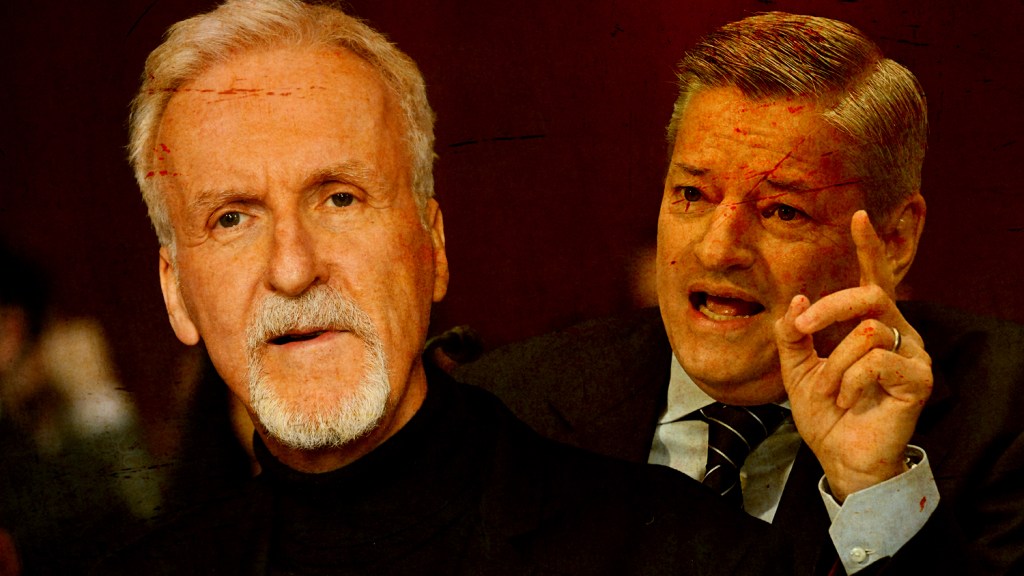
In a surprising turn in the ongoing battle for Warner Bros. assets, Netflix co-CEO Ted Sarandos has expressed dismay over director James Cameron’s criticism of the streaming giant’s potential acquisition, calling it part of a “disinformation campaign” orchestrated by rival bidder Paramount.
Cameron, the acclaimed director behind blockbusters like “Avatar” and “Titanic,” recently sent a letter to Senator Mike Lee (R-UT) warning that Netflix’s success in purchasing Warner Bros. key assets would be “disastrous for the theatrical motion picture business.” The letter effectively endorsed Paramount’s competing $108 billion hostile takeover bid without explicitly naming it.
“I was particularly surprised,” Sarandos told Fox Business’s “The Claman Countdown” on Friday, visibly frustrated by Cameron’s allegations. The streaming executive took particular issue with Cameron’s claim that Netflix had promised a “ridiculously short” 17-day theatrical release window for films.
“I met with James personally in late December and laid out for him our 45-day commitment to theatrical exhibition of films and to the Warner Brothers slate,” Sarandos explained. “I have talked about that commitment in the press countless times. I swore under oath in front of the Senate Subcommittee on Antitrust that that’s what we would be doing.”
Sarandos stopped short of calling Cameron a liar but made his feelings clear: “I’m particularly surprised and disappointed that James chose to be part of the Paramount disinformation campaign that’s been going on for months about this deal.”
The Netflix executive emphatically denied ever suggesting the shorter window Cameron referenced in his letter. “I have never even uttered the words ’17-day window.’ So I don’t know where it came from or why he would be part of that machine,” Sarandos said.
The conflict highlights the high stakes in the entertainment industry’s ongoing consolidation, with streaming platforms and traditional studios battling for content libraries and intellectual property. Warner Bros., with its vast catalog of films, TV shows, and characters, represents a particularly valuable prize in this landscape.
Industry observers note that Cameron’s intervention isn’t entirely surprising given his well-documented passion for theatrical exhibition. The director has consistently championed the big-screen experience throughout his career, with his films “Avatar” and “Avatar: The Way of Water” breaking box office records partly due to their spectacular visual effects designed specifically for theater viewing.
However, Cameron’s relationship with Paramount adds an interesting dimension to his criticism of Netflix. As previously reported, Paramount is set to distribute Cameron’s upcoming project “Hit Me Hard and Soft,” a Billie Eilish concert film scheduled for release in May. This business connection raises questions about potential conflicts of interest in Cameron’s opposition to Netflix’s bid.
The public sparring between Sarandos and Cameron occurs against the backdrop of a rapidly evolving media landscape. Streaming platforms have increasingly embraced theatrical releases as a way to attract prestigious filmmakers and qualify for awards consideration, while traditional studios have launched their own streaming services to compete in the digital space.
Netflix, once strictly a streaming-only company, has gradually expanded its theatrical footprint in recent years. The company has released films like Martin Scorsese’s “The Irishman,” Alfonso Cuarón’s “Roma,” and more recently “Maestro” and “The Killer” in theaters before they appeared on the platform. However, many theater chains and filmmakers remain skeptical of the company’s long-term commitment to theatrical exhibition.
As the battle for Warner Bros. assets continues, the industry watches closely to see how this high-profile disagreement between two of entertainment’s most powerful figures might influence the outcome of the bidding war and shape the future relationship between streaming platforms and traditional theatrical distribution.
Fact Checker
Verify the accuracy of this article using The Disinformation Commission analysis and real-time sources.

8 Comments
This debate over Warner Bros. assets and the theatrical release window is a complex issue with no easy answers. It’ll be important for all stakeholders to engage in constructive dialogue to find a mutually beneficial solution.
This dispute over Warner Bros. assets is a microcosm of the broader tension between the streaming and traditional movie business models. It’ll be intriguing to see how it unfolds and what implications it has for the industry.
The disagreement between Sarandos and Cameron highlights the evolving dynamics in the entertainment industry. As streaming becomes more dominant, reconciling the interests of various stakeholders will be crucial.
Sarandos’ claim of a 45-day theatrical commitment seems reasonable, but Cameron’s concerns about the impact on the theatrical business are understandable. Finding the right compromise will be key.
The war of words between Sarandos and Cameron highlights the high stakes involved in the battle for Warner Bros. Both sides have valid points, and finding the right balance will be crucial for the future of the industry.
It’ll be interesting to see if Sarandos and Cameron can find common ground or if this dispute escalates further. The outcome could have significant implications for the future of film distribution and exhibition.
Interesting developments in the war for Warner Bros. assets. It’ll be curious to see how this plays out between streaming giants and traditional media companies. The theatrical release window debate is an important issue to watch.
Cameron seems to be taking a firm stance on preserving the traditional theatrical model. It’ll be interesting to hear Sarandos’ perspective on finding the right balance between streaming and cinema.