


Listen to the article
Russia’s Ukraine War Tests NATO’s Resolve as Euro-Atlantic Order Faces Strategic Challenge
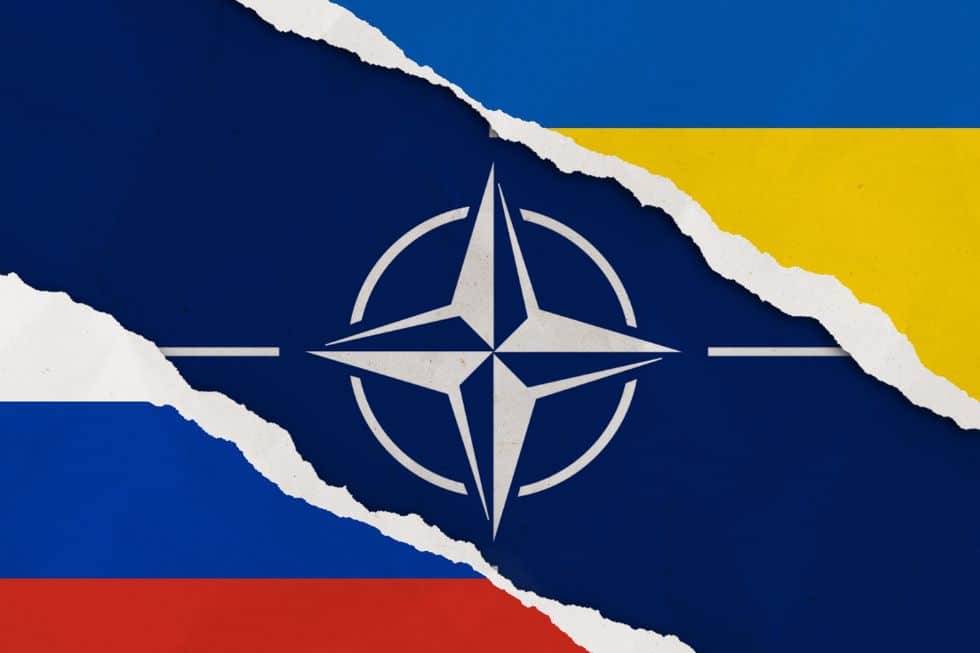
Russia’s ongoing war in Ukraine represents far more than a regional conflict, security experts warn. Rather, it constitutes a comprehensive assault on the Euro-Atlantic security architecture that has maintained relative stability in Europe since the Cold War’s end.
Moscow has deployed a sophisticated hybrid warfare strategy that extends well beyond traditional military operations. While Russian forces continue ground operations in eastern Ukraine, the Kremlin simultaneously wages campaigns across multiple domains: launching cyberattacks against Ukrainian infrastructure, spreading disinformation through state media, manipulating energy supplies to pressure European economies, and employing nuclear rhetoric to deter Western intervention.
“This isn’t merely about territorial conquest,” explains a senior NATO official speaking on background. “It’s about demonstrating that borders and sovereignty can be rewritten through force and that the West lacks the resolve to prevent it.”
Particularly concerning is Russia’s revised nuclear doctrine, which has lowered the threshold for nuclear weapon deployment against non-nuclear states receiving support from nuclear powers. This posture aims to constrain NATO decision-making and create hesitancy in Western capitals about providing more substantial military assistance to Kyiv.
Western sanctions, while imposing some costs on Moscow, have fallen short of expectations. Russia has managed to stabilize its wartime economy through various means – exploiting loopholes in oil price caps, operating a “shadow fleet” of tankers, and cultivating energy partnerships with countries that have refused to join sanctions regimes, particularly in Asia and the Middle East.
“The economic pressure was supposed to force Russia to recalculate,” notes Dr. Elizabeth Shackelford, former U.S. diplomat and foreign policy analyst. “Instead, Moscow has demonstrated remarkable adaptability while betting on Western fatigue in the long run.”
NATO itself faces significant internal challenges that complicate its response. Despite reinforcing its eastern flank with additional troops and equipment, the alliance continues to struggle with uneven defense spending among member states and divergent political priorities. Some members prioritize direct confrontation with Russia, while others emphasize diplomatic off-ramps and de-escalation.
Russia actively exploits these divisions through targeted provocations – including drone incursions into NATO airspace, cyberattacks on member states’ infrastructure, and disinformation campaigns designed to inflame domestic political tensions within Western democracies.
The conflict has implications far beyond Eastern Europe. Russia has deepened military cooperation with Iran, which has supplied Moscow with Shahed drones and other weapons systems. The Kremlin has also strengthened ties with destabilizing actors in Africa and the Middle East, creating a multi-regional challenge to Western interests that stretches limited attention and resources.
“We’re witnessing a coordinated attempt to overextend NATO’s capacity to respond effectively across multiple theaters,” explains Dr. Mariana Budjeryn, a nuclear security expert at Harvard’s Belfer Center. “The goal is to create enough simultaneous pressure points that the alliance must prioritize some regions over others.”
For frontline NATO members like Poland and the Baltic states, Ukraine’s fate has existential implications. Their governments have repeatedly warned that Russian success in Ukraine would inevitably lead to further aggression along NATO’s eastern border.
Security experts emphasize that NATO’s credibility now hinges on actions rather than words. The alliance must demonstrate accelerated force mobility, sustained defense investment, and a willingness to impose costs on Russia that exceed its capacity to absorb them.
“Deterrence is fundamentally about shaping adversary expectations,” notes former NATO Supreme Allied Commander James Stavridis. “If Moscow concludes the alliance is prone to delay, division, or risk aversion, the likelihood of further Russian adventurism increases substantially.”
Some European leaders have proposed alternative “security guarantees” for Ukraine outside the NATO framework. However, critics argue these arrangements lack the binding authority and deterrent weight of NATO’s Article 5 collective defense commitment.
As the conflict approaches its third year, security analysts increasingly view it not as a temporary crisis awaiting diplomatic resolution, but as a fundamental test of whether the rules-based international order can withstand determined assault from an authoritarian power willing to use force to reshape it.
“This war will determine not just where borders lie on Europe’s map,” concludes a senior European defense official, “but whether power or principle will govern European security for decades to come.”
Fact Checker
Verify the accuracy of this article using The Disinformation Commission analysis and real-time sources.

10 Comments
This is a concerning development. Russia’s hybrid warfare tactics threaten to undermine the post-Cold War security framework in Europe. The West must remain vigilant and united in its response.
Agreed. Russia is clearly testing the resolve of NATO and the broader Euro-Atlantic community. A coordinated, multilateral approach will be crucial to deter further aggression.
I’m curious to see how NATO and its partners respond to this evolving threat. Maintaining a strong and united front will be critical, but it won’t be easy given the complex and multifaceted nature of Russia’s approach.
That’s a good point. Crafting an effective deterrence strategy against Russia’s hybrid warfare will test the adaptability and cohesion of the Euro-Atlantic security architecture.
The use of disinformation, cyberattacks, and energy manipulation as part of Russia’s strategy is particularly troubling. These tactics create instability and sow division within targeted countries.
Absolutely. Countering these hybrid threats will require significant investments in cybersecurity, strategic communications, and energy resilience across the region.
Russia’s revised nuclear doctrine is especially concerning. The lowering of the threshold for nuclear weapon deployment could have serious escalatory consequences. Careful crisis management will be essential to prevent miscalculation.
Agreed. The nuclear dimension adds an extremely high-stakes element to this conflict that will require clear communication and effective risk reduction measures on all sides.
This article provides a comprehensive overview of the complex security challenges posed by Russia’s hybrid warfare tactics. Addressing these threats will require a multifaceted, coordinated response from NATO and its partners.
Well said. Vigilance, unity, and adaptability will be key as the Euro-Atlantic community works to uphold the principles of sovereignty and territorial integrity in the face of Russia’s destabilizing actions.