


Listen to the article
Caught Between Powers: Study Reveals Russian Disinformation Tactics in Mongolia
A groundbreaking study by DW Akademie and the Nest Center for Journalism Innovation and Development has uncovered sophisticated Russian disinformation campaigns targeting Mongolia, revealing how foreign influence operations exploit the country’s unique geopolitical position.
Mongolia, despite being one of the world’s most sparsely populated countries, boasts a rich and complex media landscape. This diversity, while enabling access to various perspectives, has created fertile ground for foreign disinformation actors, particularly as the nation navigates its position between Russia and China.
The study, conducted by the Nest Center and its subsidiary, the Mongolian Fact Checking Network, documents how Russian disinformation has infiltrated Mongolian discourse through various channels, with Facebook—the country’s primary news source—being a major target.
“Russia has the power to undermine Mongolia’s information integrity and it has since at least 2022,” said Patrick Benning of DW Akademie. “We have not seen this level of coordination when it comes to countries of more minor significance in the region.”
Senior fact-checker Bilguun Shinebayar, who helped edit the study, identified Russia’s primary motivation: “Russia is involved in disinformation campaigns for one key reason: to keep Mongolia under its control and to ward off other powers.”
A recent example highlighted in the research involves a uranium mining agreement between Mongolia and France. Russian actors flooded Mongolian social media with disinformation about alleged dangers of the project. Researchers believe this had less to do with environmental concerns and more with Russia viewing the agreement as a threat to its sphere of influence, as Russia has its own uranium mines and is pushing for Mongolia to join the Russian-led Eurasian Economic Union.
The study identifies four distinct Russian disinformation strategies: “firehose of falsehood” (sharing multiple narratives across issues), “operation doppelganger” (mimicking trusted news sources), “operation overload” (overwhelming fact-checkers with fake requests), and “flooding the zone” (creating multiple narratives to confuse specific audiences).
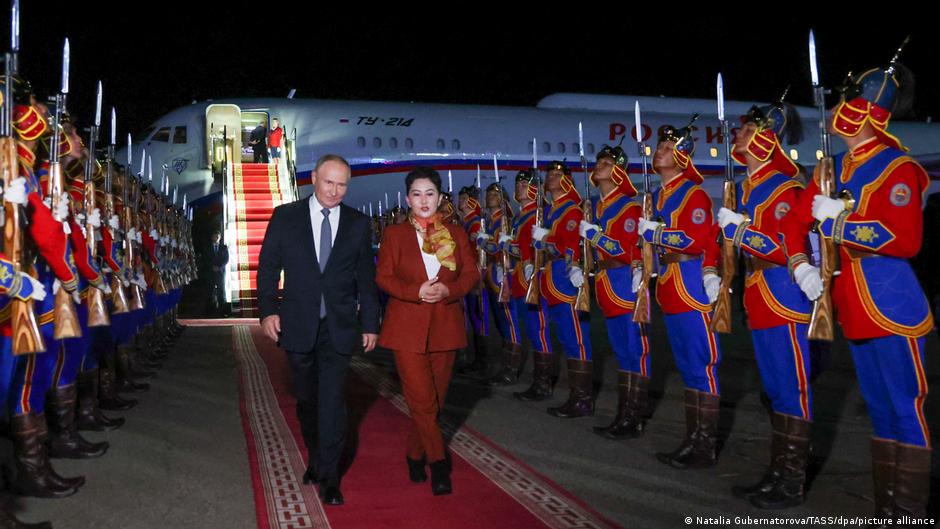
These tactics peak during significant moments in Mongolian-Russian relations, notably around Russian President Vladimir Putin’s visit to Mongolia in September 2024. The disinformation campaigns cover diverse topics including pro-Russian sentiment, the war in Ukraine, the Israel-Hamas conflict, and anti-Chinese rhetoric.
Dulamkhorloo (Duuya) Baatar, head of the Nest Center, has personally experienced the effects of these campaigns, with disinformation actors labeling her a “foreign agent” and using photos of her with Filipino Nobel Prize-winning journalist Maria Ressa to discredit her work.
One particularly effective disinformation theme involves anti-vaccine messaging. “We don’t know why, but making people anti-vaccine is the goal of disinformation actors,” Baatar noted. This has significantly impacted public health initiatives, including two failed attempts to implement the HPV vaccine, which could prevent cervical cancer. “According to a recent investigation, 4,000 deaths over the past decade can be connected to HPV, something that was preventable,” Baatar said.
Mongolia’s challenging position between two powerful neighbors is further complicated by China’s different but equally potent approach to influence. While Russia focuses on distortion and disruption, China emphasizes positive image-building through official channels. The study found that China primarily promotes pro-Chinese policies aimed at enhancing the country’s prestige.
This was evident when China halted all imports to Mongolia following the Dalai Lama’s visit in 2016. “You couldn’t even get baby formula,” Baatar recalled, demonstrating China’s willingness to use economic leverage to achieve political goals.
Mongolia has adopted a “third neighbor” policy, attempting to maintain positive relations with both Russia and China while developing ties with other nations. However, this delicate balancing act raises questions about potential “elite captures” – Mongolians who spread foreign propaganda not for financial gain but because they’ve internalized false narratives.
“We want to look into potential elite captures at the policymaking level,” Baatar said, suggesting a direction for future research.
As Mongolia navigates its complex relationship with its powerful neighbors, understanding these sophisticated disinformation tactics becomes crucial not just for the country’s information integrity but for its sovereignty and democratic future.
Fact Checker
Verify the accuracy of this article using The Disinformation Commission analysis and real-time sources.

12 Comments
This study sheds important light on the scale and coordination of Russia’s disinformation campaigns. While small nations like Mongolia may seem like unlikely targets, the stakes are high when it comes to protecting democratic institutions and public discourse.
Agreed. The findings underscore the need for a comprehensive, multi-stakeholder approach to combating disinformation. Engaging policymakers, tech companies, civil society, and the public will be crucial in safeguarding Mongolia’s information environment.
As a resource-rich nation, Mongolia’s geopolitical importance extends beyond its population size. Russia’s desire to undermine Mongolia’s information environment is likely driven by strategic interests. Maintaining an independent, well-informed Mongolian public is crucial.
You’re right. Mongolia’s position between Russia and China makes it a prime target for foreign influence operations. Developing robust media literacy programs and supporting investigative journalism will be key to building resilience against disinformation.
The diversity of Mongolia’s media landscape is a double-edged sword. While it enables access to different perspectives, it also creates opportunities for bad actors to spread disinformation. Rigorous fact-checking and media regulation will be essential.
You make a good point. Facebook’s dominance as a news source in Mongolia is particularly concerning, as social media platforms can be breeding grounds for the rapid spread of falsehoods. Addressing this issue should be a top priority.
It’s alarming to see the level of coordination in Russia’s disinformation efforts, even targeting countries of ‘minor significance’ like Mongolia. This underscores the need for international cooperation and a unified response to combat these threats.
Absolutely. Mongolia’s vulnerability to foreign influence highlights the global nature of the disinformation challenge. Strengthening international partnerships and sharing best practices will be crucial in protecting information integrity worldwide.
This is a concerning development. Russia’s disinformation campaigns are clearly expanding their reach, even to smaller nations like Mongolia. It’s crucial that the Mongolian public remains vigilant and has access to reliable, fact-based information.
Agreed. Mongolia’s unique geopolitical position makes it vulnerable to foreign influence operations. Strengthening media literacy and supporting independent journalism will be key to combating these threats.
It’s concerning to see Russia expanding its disinformation efforts to Mongolia, a country with a complex geopolitical position. Strengthening media literacy and support for independent journalism will be critical to preserving Mongolia’s information integrity.
You make a good point. Mongolia’s diversity of media sources can be both a strength and a vulnerability. Rigorous fact-checking and transparency in media ownership will be essential to combat the spread of false narratives.